
If you have just received a radon test result, your first question is probably: what does pCi/L mean, and is my number bad? The short version: pCi/L stands for picocuries per liter, the standard American unit for measuring how much radioactive radon gas is in your air. The number tells you how many radioactive decay events are happening in every liter of air you breathe — and once you understand the scale, a confusing lab report turns into a clear decision about your home.
This article breaks down the unit itself, where the EPA action level of 4.0 pCi/L comes from, how American and international measurements compare, and what to actually do at each reading.
Picocuries Per Liter, Translated Into Plain English
A curie is a unit of radioactivity named for pioneering physicist Marie Curie. It represents an enormous amount of radiation, so indoor air is measured in picocuries — trillionths of a curie. One picocurie per liter means that in a single liter of air, roughly two radon atoms decay and release radiation every minute. At 4 pCi/L, that is about eight or nine radioactive decay events per minute in every liter of air in the room — thousands of tiny bursts of radiation passing through your lungs every hour, around the clock.
That is why a number that sounds tiny — trillionths of anything — still matters. Radon decay releases alpha radiation, the most biologically damaging type when it originates inside your lungs, and exposure compounds over years of breathing.
Where the EPA Action Level of 4.0 pCi/L Comes From
The EPA set 4.0 pCi/L as its action level in part because it is the level at which mitigation technology can reliably and affordably reduce radon in almost any home — not because 3.9 is safe and 4.1 is dangerous. Risk rises continuously with concentration. The EPA itself recommends considering mitigation between 2.0 and 4.0, and the World Health Organization suggests acting at 2.7 pCi/L. The honest scientific consensus is that no level of radon is completely risk-free; the goal is to get as low as practically achievable.
For context on risk: the EPA estimates that lifetime exposure at 4 pCi/L produces about 7 lung cancer cases per 1,000 people who never smoked — and about 62 per 1,000 among smokers, because radon and tobacco damage multiply each other.
Reading Your Number: A Practical Scale
| Reading (pCi/L) | What It Means | Recommended Action |
|---|---|---|
| 0.4 | Typical outdoor air | None — this is the baseline |
| Under 2.0 | Below national indoor average range | Retest every 2 years |
| 2.0 – 3.9 | Elevated; EPA says consider fixing | Retest and weigh mitigation |
| 4.0 and above | At or above the EPA action level | Mitigate — do not wait |
| 8.0 and above | Twice the action level | Mitigate promptly; retest after |
Two caveats make this table more useful. First, radon fluctuates — day to day, season to season — so a single short-term test is a snapshot, not a verdict. Readings near a decision point deserve a follow-up test before you spend money or relax. Second, where you test matters: measure in the lowest lived-in level of the home, because that is where concentrations are highest. We break down a specific elevated reading in our post on what a radon level of 8 means.
pCi/L vs. Becquerels: The Two Measurement Systems
Outside the United States, radon is measured in becquerels per cubic meter (Bq/m³). The conversion is simple: 1 pCi/L equals 37 Bq/m³. So the EPA action level of 4 pCi/L equals 148 Bq/m³, and the WHO reference level of 100 Bq/m³ works out to that 2.7 pCi/L figure. If you buy a European consumer radon monitor, check its display units — more than one homeowner has panicked at a reading of 150 that turned out to be becquerels, or relaxed at a 2 that turned out to be picocuries.
Why Iowa Homes Need This Number More Than Most
The national average indoor radon level is roughly 1.3 pCi/L. Iowa is another story: our glacial soils are unusually rich in radium, and Iowa consistently posts among the highest average indoor radon concentrations in the nation, with state health data suggesting as many as 7 in 10 homes exceed the 4.0 action level. In practical terms, an Iowa homeowner reading a lab report is far more likely than the average American to be looking at a number that requires action — which is why understanding picocuries per liter is close to a homeowner necessity here.
How That Number Gets Measured in the First Place
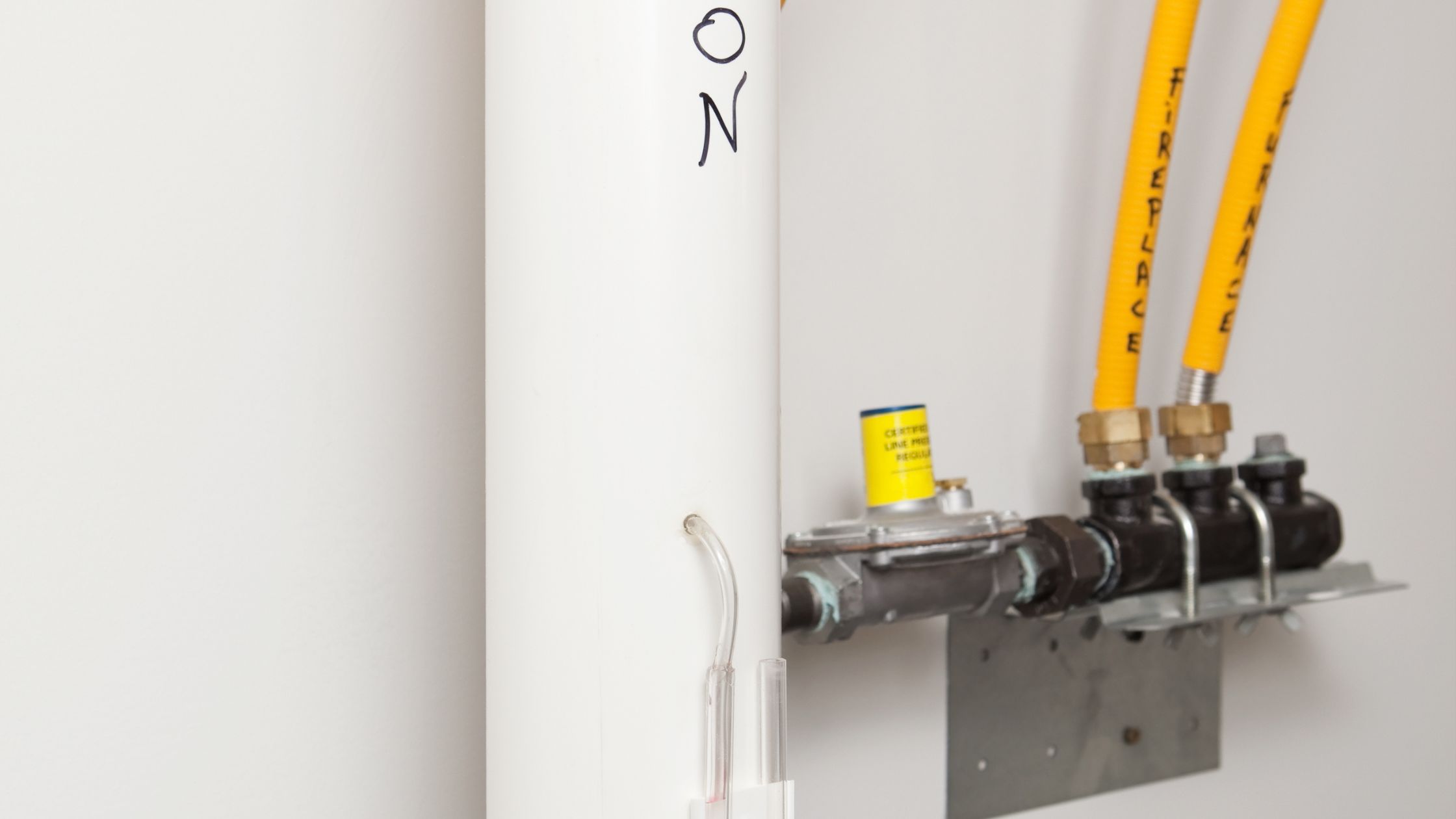
Several device types can produce a pCi/L reading, and they differ in what the number represents. Charcoal canister kits absorb radon over 2 to 7 days and give a short-term snapshot — cheap and useful, but sensitive to weather and recent ventilation. Alpha-track detectors sit for 90 days to a year and average out seasonal swings, producing the most honest picture of what your family actually breathes. Consumer digital monitors update continuously and are great for watching trends, though their absolute accuracy varies by brand. Professional continuous radon monitors, the kind used for real estate transactions and post-mitigation verification, log hourly readings under controlled closed-house conditions and produce the most defensible result.
Whichever device you use, the unit on the report is the same picocuries per liter explained above — the difference is how long a window of time the number averages, which is why a 48-hour result and a 6-month result from the same house rarely match exactly.
What To Do With Your Result
- Under 2.0: You are in good shape. Retest every two years, and after any major renovation, foundation work, or HVAC change.
- 2.0 to 3.9: Run a second test, ideally long-term. If it confirms the range, mitigation is a reasonable investment — the WHO would already recommend it.
- 4.0 or higher: Confirm with a second short-term test if you wish, then mitigate. A professionally installed system typically cuts levels by 50 to 99 percent in a single day.
- After mitigation: Retest within 30 days to verify the system works, then every two years — and glance at your manometer monthly to confirm the fan is running.
Quick Answers About Radon Measurements
Is 4 pCi/L actually safe?
No level is truly safe — 4.0 is the threshold where the EPA says the risk clearly justifies the cost of fixing it. Living at 4 pCi/L carries roughly the same lung cancer risk for a never-smoker as dying in a car crash does for the average driver. Below 2.0 is the practical goal most mitigation systems achieve easily.
What is a normal radon level in a house?
The U.S. indoor average is about 1.3 pCi/L, but “normal” is local: in much of Iowa, untreated homes routinely test between 4 and 10, and readings over 20 are not rare. Your neighborhood average, however, says little about your house — two identical homes next door to each other can differ several-fold.
Can I convert my smart monitor reading myself?
Yes. Divide a Bq/m³ reading by 37 to get pCi/L, or multiply a pCi/L reading by 37 to get Bq/m³. Bookmark the conversion if your device came from an overseas retailer.
Not Sure What Your Number Means for Your Home?
DSM Radon provides professional radon testing and licensed mitigation across the Des Moines metro. Send us your test result and we will interpret it for free — and if your home needs a system, you will get an honest quote and guaranteed post-installation results. Call (515) 210-4407 or get your free quote.