

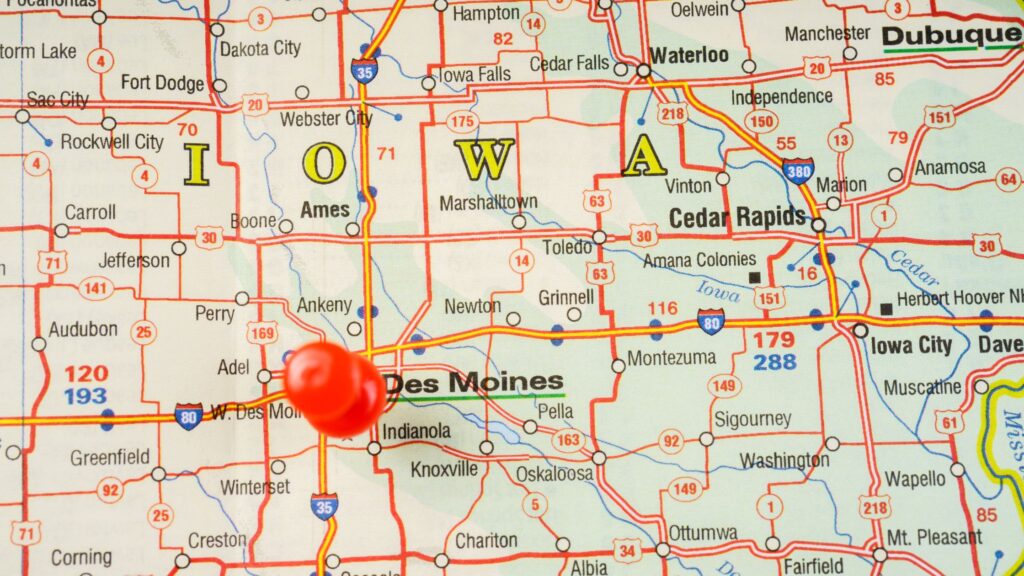
If you live in or around Des Moines, you may be wondering why the city has high radon levels and how it affects your home and family. Radon is a colorless, odorless, radioactive gas that forms when uranium in soil and rock breaks down. Since radon can’t be smelled or seen, it often goes unnoticed until testing reveals elevated levels. It can enter buildings through cracks in foundations and gaps around pipes, accumulating to dangerous levels over time.
In this article, we’ll explain why Des Moines has high radon levels, outline the health risks, and highlight the importance of radon testing and mitigation. We will also show how DSM Radon provides expert solutions to keep your indoor air safe.

What Is Radon and Why Does It Matter
Radon is a radioactive gas formed from the decay of uranium in soil and rock. It enters homes through cracks in foundations. Invisible, odorless, and tasteless, it can only be detected through testing. Long-term exposure to high levels of radon increases the risk of lung cancer, especially for non-smokers.
- Naturally Occurring: Radon forms from the breakdown of uranium in soil and rock, entering homes through the foundation.
- Invisible and Odorless: Radon is undetectable by human senses, making testing essential to assess risk.
- Health Risk: Long-term exposure to radon increases lung cancer risk, even for non-smokers.
- Common in High-Risk Areas: Regions like Des Moines have high radon potential due to geological factors.
Radon is a dangerous, invisible gas with health risks, especially in areas like Des Moines. Testing and mitigation are essential for protection.
Why Des Moines Has High Radon Levels
Several key factors explain why Des Moines has high radon levels compared to many other areas:
- Geological Conditions: The soil around Des Moines contains uranium‑rich minerals that decay into radon gas.
- Soil Porosity: The local soil allows radon to move easily through tiny gaps and into buildings.
- Foundation Types: Many homes in the area have basements or crawl spaces, which provide pathways for radon entry.
- Climate Patterns: Temperature and pressure changes in the Midwest can draw radon into indoor spaces.
Because of these conditions, radon can build up to unsafe levels without proper ventilation or mitigation systems.
Health Risks of Radon Exposure
Radon exposure poses serious risks to your health, especially with long‑term exposure. The main health concerns include:
- Lung Cancer Risk: Radon is the second leading cause of lung cancer after smoking, according to the EPA.
- No Immediate Symptoms: You cannot detect radon without testing, as it has no smell or taste.
- Increased Danger Over Time: The longer you are exposed, the greater your risk of developing health issues.
Since radon is undetectable by smell or sight, only a professional test can determine if your home has elevated levels. That is why regular testing matters, especially in a Zone 1 state like Iowa.
Importance of Radon Testing in Des Moines
Testing is the first step in identifying radon problems. Professional radon testing helps you determine whether your indoor air contains unsafe radon levels. It is recommended for:
- All homes, regardless of age or style.
- Properties with basements, slab foundations, or crawl spaces.
- Homes after renovations or structural changes.
- Homes before buying or selling a property.
Without accurate testing, you cannot know if your family is at risk. Certified radon professionals use reliable testing devices to measure radon levels and provide actionable results.

What Radon Mitigation Does
Radon mitigation involves installing systems that reduce radon gas levels inside your home or building. These systems work by:
- Redirecting gas from beneath the foundation
- Improving ventilation to reduce indoor concentrations
- Sealing cracks and gaps that allow radon entry
Mitigation systems are customized based on your home’s layout, foundation type, and radon levels. When installed and maintained correctly, they significantly lower radon concentrations and protect your indoor air quality. Learn more about Professional Radon Mitigation In Des Moines for Safer Living.
How DSM Radon Helps Homeowners
DSM Radon provides professional radon testing as well as mitigation services in the Des Moines area. Their certified technicians tailor solutions to each home’s needs, ensuring proper installation and performance. Services include:
I. Certified Radon Testing and Accurate Reporting
Advanced testing equipment provides precise radon measurements for a reliable assessment of your home’s radon levels year-round and consistently. This ensures that you are fully informed about the potential risks and can take appropriate actions.
II. Custom Mitigation System Design and Installation
DSM Radon installs personalized mitigation systems to reduce radon concentrations based on your home’s unique layout and needs. These systems are tailored for maximum efficiency to ensure long-term protection against radon exposure.
III. Follow-up Assessments and Monitoring
After installation, DSM Radon conducts regular follow-up testing and monitoring to ensure the system’s continued effectiveness and a safe indoor environment. This ongoing service helps maintain radon levels within safe limits, providing peace of mind for homeowners.
By choosing DSM Radon, you ensure expert guidance and reliable protection for your family’s health.
Conclusion
Understanding why Des Moines has high radon levels is essential for every homeowner in the area. The region’s geology, soil conditions, and home construction styles make radon problems more common, but they are also preventable. Regular radon testing and effective mitigation systems provide real protection against this invisible risk. For trusted radon testing and mitigation services tailored to Des Moines and surrounding communities, rely on DSM Radon to safeguard your home and family with proven solutions.
FAQs
1. Why does Des Moines have high radon levels?
Des Moines has high radon due to the natural soil composition and its EPA Zone 1 designation, which indicates elevated radon potential.
2. How often should I test my home for radon?
Experts recommend testing every two years or after significant renovations or changes to ventilation.
3. Can mitigation systems eliminate radon?
Mitigation systems significantly reduce radon levels but may not eliminate it. They lower the concentrations to safe levels.
4. Is professional radon testing necessary if I already have a home radon kit?
Professional testing provides more accurate results and ensures reliable measurement for mitigation decisions.