
Radon can accumulate inside commercial buildings without warning because this radioactive gas has no color or odor. Consequently, businesses cannot identify elevated levels through ordinary observation. Commercial Radon Testing provides a practical way to measure indoor radon, identify potential concerns, and make informed decisions about mitigation. Whether you manage an office, school, industrial facility, apartment complex, restaurant, or commercial property, professional testing can help protect occupants and support healthier indoor environments. Furthermore, regular testing can reveal hidden radon concerns before they become overlooked problems. By obtaining accurate measurements, property owners can understand indoor conditions, evaluate risks, and determine appropriate next steps for their buildings.
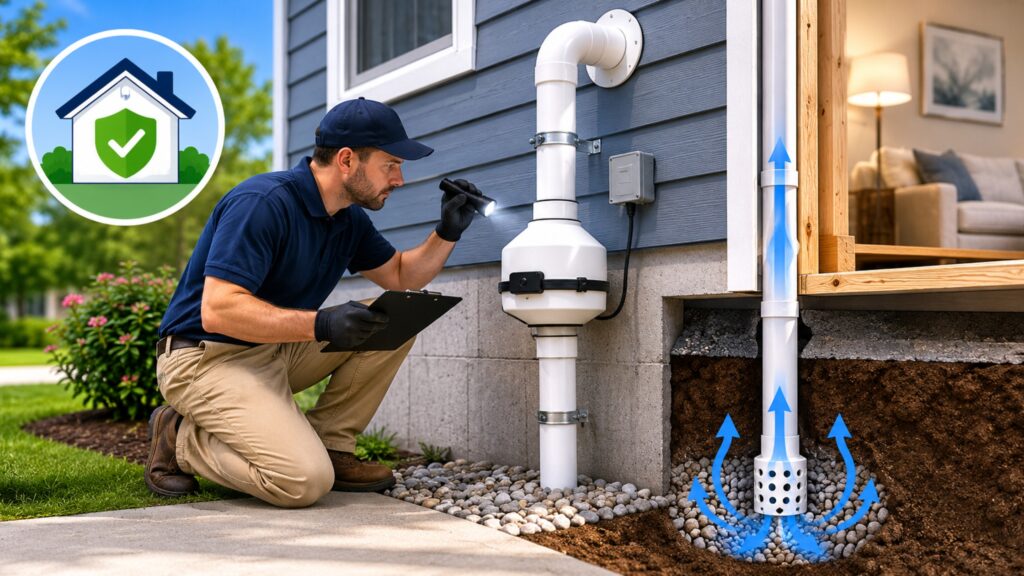
Why Commercial Radon Testing Matters
Commercial buildings can have complex layouts, multiple occupied areas, different ventilation patterns, and several potential entry points. Therefore, a single reading may not represent conditions throughout an entire facility.
Professional testing helps property owners understand where radon may accumulate and whether additional investigation makes sense. Moreover, accurate results give building managers useful information before they consider mitigation or other corrective measures.
DSM Radon provides radon testing for offices, schools, apartment complexes, condominiums, industrial plants, commercial real estate buildings, churches, and other properties.
Understanding Commercial Radon Risks
Commercial radon can enter buildings silently, creating potential concerns because occupants cannot detect this radioactive gas through ordinary senses.
- Radon Enters Through Openings.
- Gas Can Accumulate Indoors.
- Occupants May Face Exposure.
- Warning Signs Remain Invisible.
Understanding these risks encourages businesses to test commercial properties rather than relying on assumptions about indoor radon levels.
How Professional Radon Testing Works
Professional radon testing follows a careful process that helps commercial property owners obtain reliable measurements. Each stage supports accurate assessment, clearer decisions, and appropriate follow-up actions for buildings and occupants.
1. Identify Testing Areas
Professionals first review the building layout, occupancy patterns, and lower-level spaces. They identify suitable rooms where testing devices can measure radon conditions accurately and consistently throughout occupied commercial areas safely.
2. Select Appropriate Locations
Testing locations should reflect building conditions and potential radon entry points. Professionals place devices strategically, avoiding unsuitable areas that could interfere with accurate measurement results or compromise reliable readings.
3. Place Testing Devices
Professionals install approved testing devices according to established procedures. These devices collect air samples over a defined period, creating measurements that reflect radon concentrations within selected areas accurately and consistently.
4. Monitor Testing Period
The testing period depends on the selected method and property requirements. Short-term testing provides quicker results, while long-term testing offers broader information about changing radon conditions over extended periods.
5. Review Results
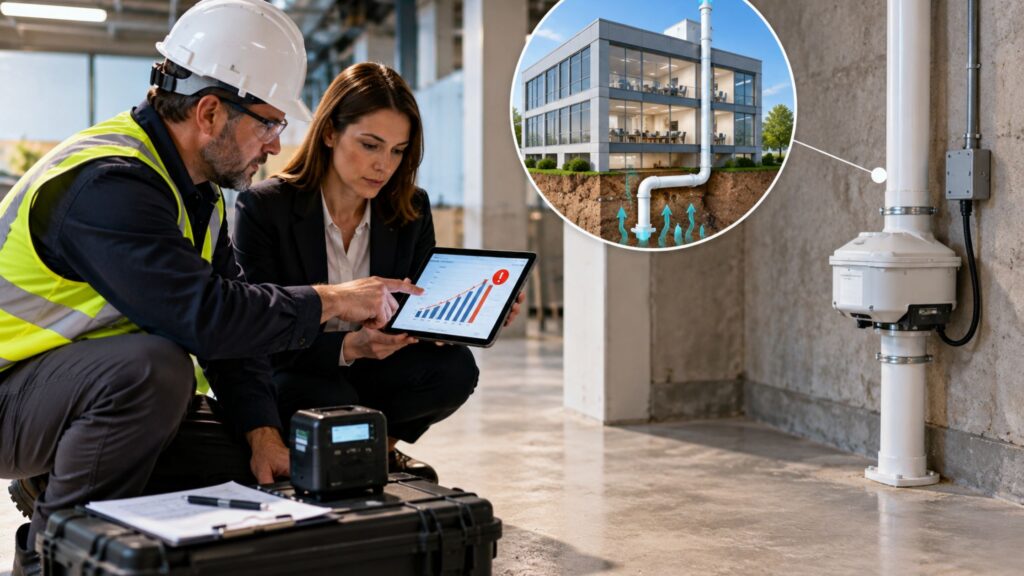
After testing concludes, professionals evaluate recorded measurements and explain the findings. Property owners can then use this information to determine whether additional testing, investigation, or mitigation may help guide decisions.
Reliable testing helps property owners understand radon conditions, respond appropriately, and maintain healthier commercial environments through informed decisions and timely action.
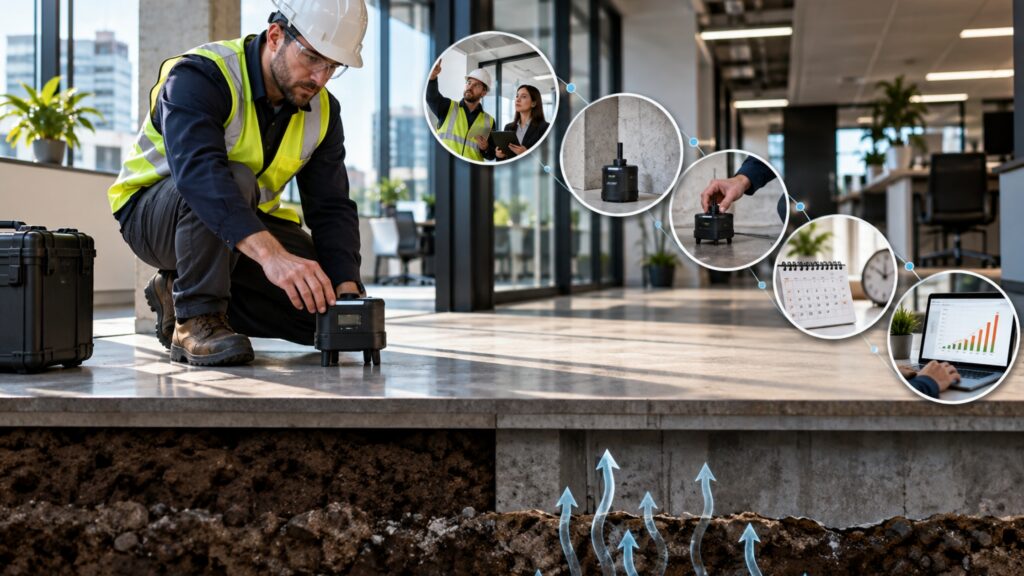
Where Should Commercial Buildings Be Tested?
The right testing locations depend on the building. However, professionals generally prioritize occupied areas and spaces where radon could accumulate.
Potential testing locations may include:
- Offices and employee workspaces.
- Classrooms and school areas.
- Ground-level occupied rooms.
- Basements and lower levels.
- Apartment and multifamily units.
- Industrial work areas.
- Commercial real estate properties.
- Areas near foundations or potential entry points.
Schools deserve particular attention because students and staff spend extended periods inside the building. DSM Radon specifically provides testing services for schools and HUD multifamily projects.
Short-Term vs. Long-Term Testing
Businesses often need to balance speed with useful information. Short-term testing can provide an initial picture within a relatively short timeframe, making it useful when a property requires timely information.
Long-term testing, on the other hand, measures radon over an extended period. Consequently, it can provide a broader view of changing conditions and help identify longer-term exposure patterns.
The right approach depends on the property, objective, occupancy, and circumstances. Therefore, property managers should discuss testing requirements with a qualified professional rather than selecting an approach solely based on convenience.
When Should a Business Consider Testing?
Businesses should consider testing when property conditions change, previous measurements exist, or radon levels remain unknown within spaces.
- After Major Renovations: Renovations can change airflow and create pathways that allow radon entry inside buildings.
- When Building Use Changes: Changes in occupancy or building use can alter ventilation and radon conditions.
- During Property Transactions: Testing supports due diligence by providing useful information about indoor radon conditions.
- After Elevated Results: Follow-up testing helps property managers compare measurements and determine whether conditions remain consistent.
Regular testing helps businesses understand radon conditions and make informed decisions that support safer environments.
What Happens After Elevated Results?
Elevated radon results provide valuable information, helping property owners understand conditions and determine appropriate next steps for their commercial building.
- Review elevated results with qualified radon professionals.
- Consider additional testing when professionals recommend confirmation.
- Investigate possible radon entry points throughout buildings.
- Choose mitigation solutions based on building characteristics.
- Install systems that safely exhaust radon outdoors.
- Address openings that may allow radon entry.
- Monitor conditions after completing mitigation measures.
Taking prompt action after elevated results can help protect occupants and improve commercial indoor environmental conditions.
Choosing the Right Radon Professional
Experience matters when testing complex properties. Choose a provider with commercial expertise, broad property experience, and testing and mitigation services. DSM Radon serves Des Moines and surrounding communities, including Ankeny, Johnston, Urbandale, Clive, Waukee, West Des Moines, and Norwalk, providing professional radon solutions.
For additional information, businesses can also review DSM Radon’s radon testing services and commercial radon mitigation guidance.
Conclusion
Radon can remain hidden while occupants continue using a commercial building every day. Therefore, testing gives property owners a practical way to replace assumptions with measurable information.
Professional Commercial Radon Testing can help businesses identify potential concerns, understand building conditions, and determine whether further action makes sense. Ultimately, working with an experienced provider makes the testing process more organized and actionable.
DSM Radon offers professional radon testing and mitigation for commercial and residential properties, helping businesses and property owners across the Des Moines area take informed steps toward safer indoor environments.
Frequently Asked Questions
1. What is commercial radon testing?
Commercial radon testing measures indoor radon levels using professional testing devices.
2. How long does a commercial radon test take?
Testing duration varies, with short-term tests taking days and long-term months.
3. What should a business do if radon levels are elevated?
Businesses should consult professionals for testing, investigation, or mitigation recommendations.
4. Does DSM Radon test commercial properties?
DSM Radon tests commercial properties throughout Des Moines and surrounding communities.