

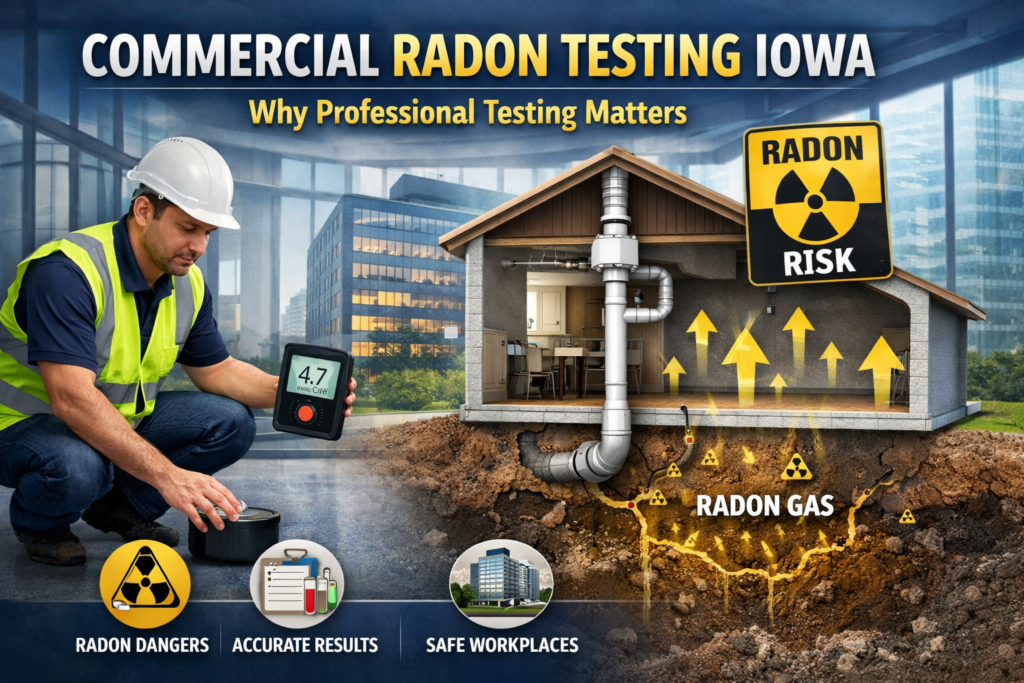
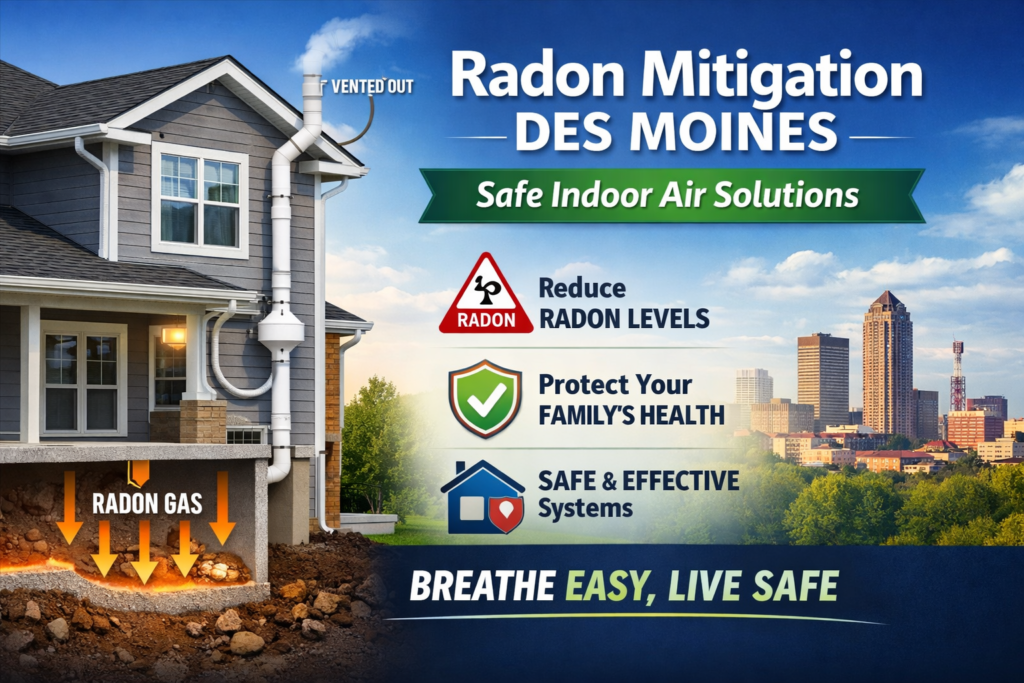
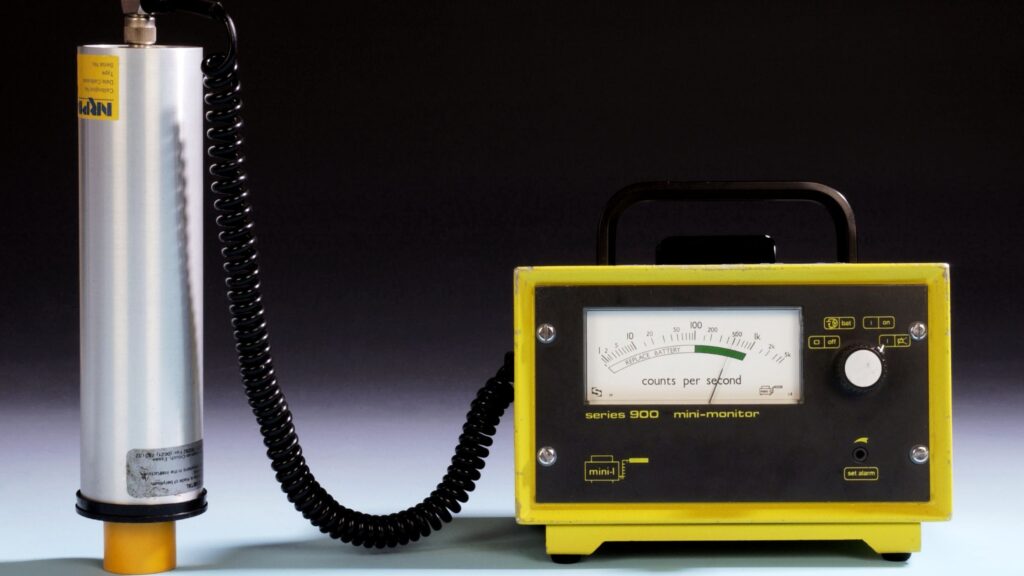
Radon gas poses a hidden threat in many Iowa homes, and at-home radon testing Ankeny gives you a straightforward way to understand your indoor air quality. Because radon is invisible, odorless, and dangerous to long-term health, testing your home for this gas should be a priority. Moreover, regular home radon testing helps ensure that your family breathes safer air while protecting your property value. With expert guidance from trusted providers, you can test with confidence and act promptly if elevated levels are detected.
In this complete guide, you’ll learn what radon is, why testing at home matters, how the process works, what to expect from professional services, and why local expertise makes a real difference.
Understanding Radon: The Invisible Threat in Your Home
Radon is a naturally occurring radioactive gas that forms as uranium in soil and rock breaks down. Because it moves through the ground, it can enter your home through foundation cracks, pipe gaps, or spaces beneath the slab. Once inside, radon can build up and create health risks.
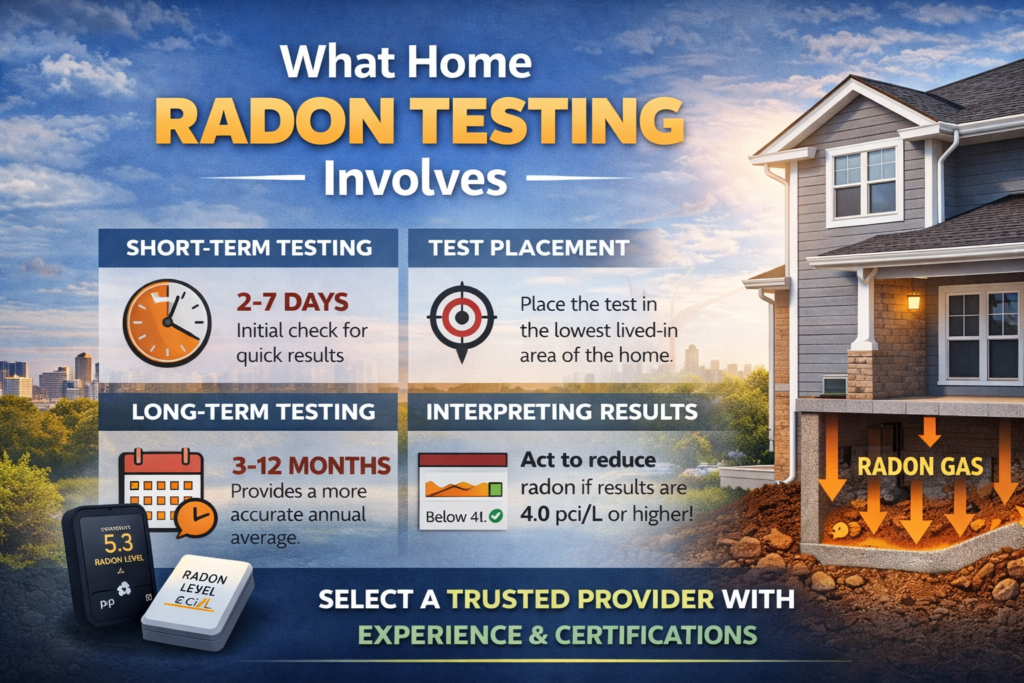
Unlike many indoor pollutants, radon has no smell or colour. Therefore, proper testing is the only reliable way to confirm its presence. The U.S. Environmental Protection Agency (EPA) recommends action if indoor radon levels exceed 4.0 picocuries per liter (pCi/L). Levels above this often require mitigation to reduce risk.
Why At Home Radon Testing Ankeny Matters
If you live in or around Ankeny, including neighbouring areas like Des Moines, regular home radon testing is essential because the region’s soil conditions often result in elevated radon levels. Testing matters for several reasons:
- Protecting Health: Professional radon testing reveals dangerous levels that could increase lung cancer risk over time.
- Peace of Mind: Accurate testing reassures you that your family is breathing safer air every day with greater peace of mind.
- Real Estate Needs: Radon testing is increasingly part of home inspections during buying and selling.
- Informed Action: Testing guides the next steps, including professional mitigation if radon levels are too high.
Without testing, you cannot know whether your home has elevated radon. Therefore, taking that first step with reliable testing is both proactive and protective. Learn more about Radon Mitigation for Public Projects Ankney.
What Home Radon Testing Involves
At home radon testing typically involves either short-term or long-term measurement methods. Each provides vital information about the level of radon in your living space.
1. Short-Term Testing
Short-term tests measure radon over a brief period, usually two to 90 days. They deliver faster results, so they suit quick checks and real estate transactions. However, results may vary with the weather and daily household activity.
2. Long-Term Testing
Long-term tests stay in place for more than 90 days, giving a clearer picture of your home’s average radon exposure through multiple seasons. Because radon levels can fluctuate, long-term tests often offer more reliable insight.
3. Placement Matters
Place the test in the lowest livable area, away from drafts, windows, and vents for accurate readings, and keep it undisturbed throughout the entire testing period to avoid false spikes and ensure consistent, reliable results.
4. Closed-House Conditions
Keep doors and windows closed as recommended during testing to avoid skewed results, especially during storms, high winds, or heavy HVAC usage, so the monitor captures true indoor radon levels without interference.
Professional radon testing services place devices in strategic locations within your home and then analyze results to determine your exposure risk accurately.
Professional vs. DIY Radon Testing: What You Should Know
Many DIY kits exist for radon testing, but they often come with limitations. User error and inconsistent placement can lead to inaccurate results. Conversely, professional services use advanced monitoring equipment that captures continuous data and delivers precise digital analysis. Certified experts also interpret your results and recommend next steps based on your specific situation.
Furthermore, professional home radon testing avoids guesswork and ensures that devices are monitored correctly throughout the testing period.
How At Home Radon Testing Ankeny Works Step by Step
A professional radon testing service typically follows these steps to ensure accurate readings, clear reporting, and the right next actions:
- Initial Consultation and Scheduling: Certified experts plan test placement and timing based on your home’s layout.
- Device Installation: Radon monitors are placed in the lowest livable areas of your home to capture indoor levels accurately.
- Continuous Monitoring: Devices run for the recommended period (short or long term) to gather data.
- Result Evaluation: Technicians retrieve the monitors and quickly analyze the results to determine your radon levels.
- Consultation and Next Steps: You receive a complete report and advice on whether mitigation is necessary.
By following this thorough process, professionals help you understand what your test results mean and how to act on them.
What to Do After Testing
After testing, your next steps depend on the results, so you can act quickly, protect health, and plan with confidence:
- Normal Levels: If your home’s radon level is below the EPA action threshold, you still should test every two years.
- Elevated Levels: If testing shows radon above 4.0 pCi/L, mitigation should follow. Specialists install systems that reduce radon to safe levels.
- After Renovations: Test again after remodeling, foundation repairs, or HVAC upgrades, since airflow changes can affect radon levels.
Regular follow-up and monitoring ensure that mitigation systems remain effective over time.
Choosing the Right Radon Testing Provider
When selecting a company for at home radon testing Ankeny, look for these qualities:
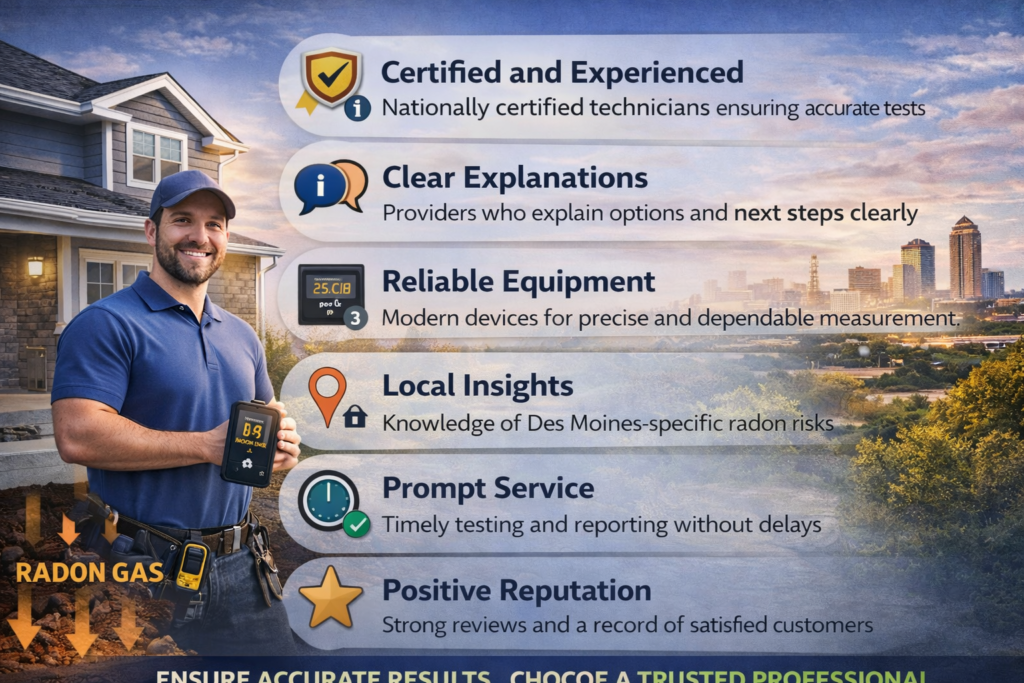
- Work with professionals certified in radon measurement and safety.
- Choose providers familiar with local soil and building conditions.
- A reliable team explains results and next steps plainly.
- Ideally, find a provider that offers both testing and mitigation if needed.
Opting for local specialists means your testing and mitigation solutions match your home’s unique needs.
Conclusion
Reliable home radon testing plays a crucial role in protecting your indoor air quality and ensuring your family’s long-term health. Whether you choose short-term or long-term testing, professional assessment helps you make informed decisions and act quickly if elevated radon is detected. Regular testing, combined with expert mitigation when necessary, keeps your home safe and comfortable.
For trusted at home radon testing Ankeny and professional radon services, trust the experienced team at DSM Radon to provide accurate testing, clear explanations, and dependable solutions for your home’s air quality needs.