
How Long Does a Radon Test Take? A Complete Guide

Radon is an invisible, odorless gas that enters homes through foundation cracks, floor drains, and other openings. Because you cannot detect it without testing, homeowners need reliable methods to measure indoor radon levels. If you wonder, How Long Does a Radon Test Take, the answer depends on the testing method and your property’s requirements. Generally, […]
What Does pCi/L Mean? Radon Measurement Explained
If you have just received a radon test result, your first question is probably: what does pCi/L mean, and is my number bad? The short version: pCi/L stands for picocuries per liter, the standard American unit for measuring how much radioactive radon gas is in your air. The number tells you how many radioactive decay […]
Commercial Radon Testing Iowa: Why Professional Testing Matters
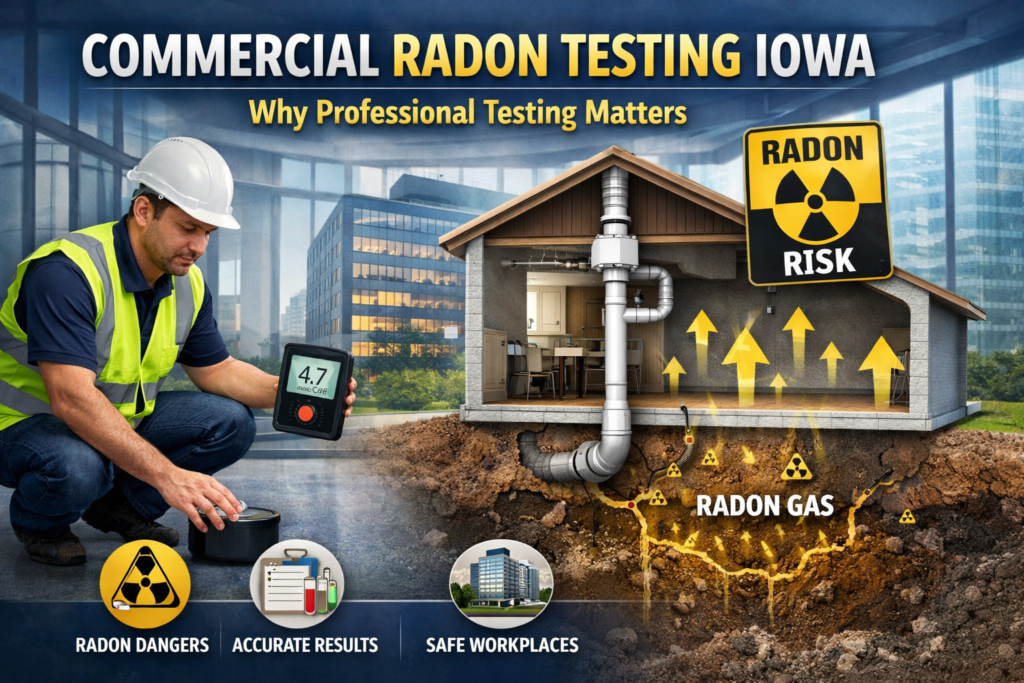
Commercial buildings in Iowa face a unique challenge that many property managers overlook: radon gas exposure. Because radon is invisible, odorless, and undetectable without specialized equipment, it remains a silent threat in many offices, schools, multi-family units, and other large structures. Fortunately, commercial radon testing Iowa services conducted by certified experts reveal dangerous levels and […]
Understanding the Origins and Risks of Radon
Radon is a naturally occurring radioactive gas that silently enters homes, schools, and workplaces. You cannot see it, smell it, or taste it, yet it poses serious health risks over time. Because radon is the second leading cause of lung cancer, families often ask: Where does radon come from? Understanding its origins and pathways helps […]
Is Radium a Gas? Understanding Its Properties and Risks

No, radium is not a gas. Radium is a soft, silvery-white metal that is solid at room temperature, and it would only turn to gas at extreme heat, roughly 1,700 °C. The gas to worry about is radon, which radium produces as it decays and which can build up inside homes. Radium is often surrounded […]
Radium vs. Radon: Understanding the Key Differences and Health Risks

Radium is a radioactive metal found in soil and rock. Radon is the gas that radium’s decay produces. Radium stays in the ground, while radon escapes into the air and can build up indoors. When discussing environmental radioactivity, the terms radium and radon often arise. However, many confuse these two distinct elements. This article clarifies […]
Radon Debunked: Separating Myths from Facts

Radon is a naturally occurring radioactive gas that comes from the decay of uranium found in soil, rock, and water. This invisible, odorless, and tasteless gas can seep into homes, potentially posing significant health risks to the inhabitants. One of the most concerning aspects of radon is that it is undetectable without proper testing. While […]
Understanding Acceptable Radon Levels: A Complete Guide

Radon is a radioactive gas you can’t see, smell, or taste—but it’s a leading cause of lung cancer, responsible for thousands of deaths each year. Found in every state and homes of all ages, radon poses a serious health risk. Whether you’re a homeowner, renter, or property manager, understanding radon is essential. This guide explains […]