

You cannot see radon, and you cannot smell it. However, radon exposure can still build quietly in indoor air and reshape your long-term risk. Therefore, the cost of ignoring radon exposure rarely shows up as one dramatic moment. Instead, it grows through delayed action, repeated uncertainty, and preventable harm.
Moreover, radon exposure affects homes, workplaces, schools, and multifamily properties because people spend hours indoors every day. Consequently, you should treat radon exposure as an operational safety issue, not a “later” project. When you act early, you protect health, reduce disruption, and regain control.
Why Radon Exposure Feels Easy to Ignore at First
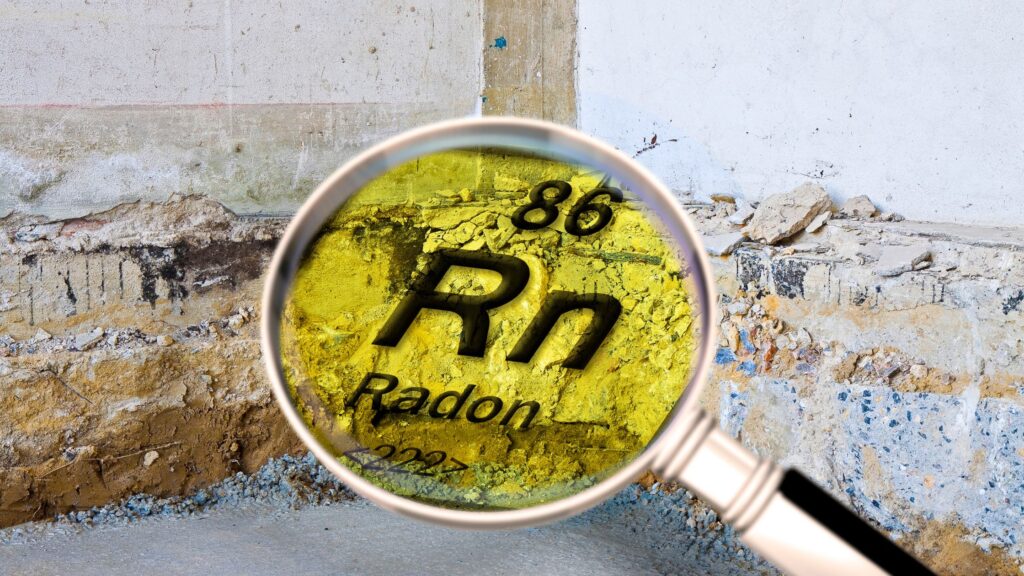
Radon enters buildings through cracks, joints, sumps, and utility openings. Additionally, radon exposure often rises in lower levels because pressure differences pull soil gas inward as the building “draws” air. As a result, a property can look and feel normal while radon exposure quietly increases in the spaces people use every day.
However, people often delay action because they expect symptoms or obvious warning signs. Therefore, they underestimate radon exposure until a test forces the conversation. Once you rely on guessing instead of measuring, you accept the cost of ignoring radon exposure as a long-term gamble—one that stays invisible until it becomes urgent.
The Health Burden You Cannot Schedule Away
Radon exposure increases lung cancer risk over time, and the risk rises further when tobacco smoke enters the picture. Consequently, each month of unmanaged radon exposure adds avoidable risk for families, tenants, and employees—especially for people who spend long hours indoors or use lower-level rooms daily. Moreover, long-term exposure does not feel urgent at the moment, which is why early testing matters more than most people expect.
Additionally, radon exposure creates stress because it stays invisible and hard to judge without data. Therefore, people lose trust in a space when they feel unsure about what they breathe at home, at work, or in shared buildings. When you lead with proper testing, simple explanations, and clear next steps, you replace fear with facts, and you turn uncertainty into a plan people can follow. Learn more about Health Effects of Long Radon Exposures.
The Operational Impact on Workplaces and Public Buildings
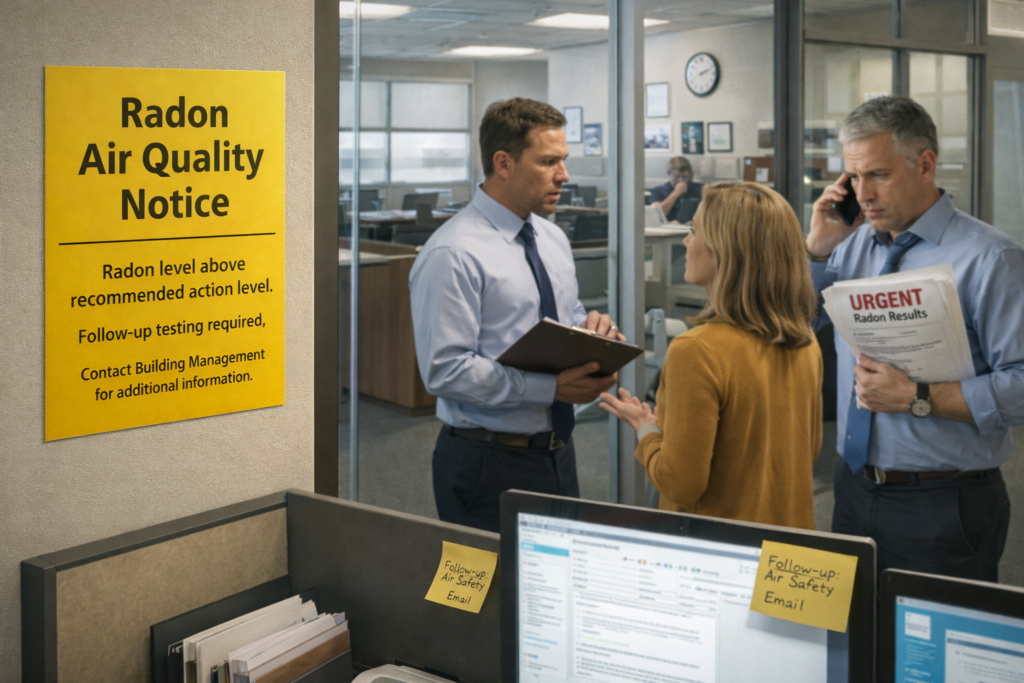
Workplaces and public buildings run on predictability. However, radon exposure introduces uncertainty, and that uncertainty disrupts routines, decisions, and trust—even before anyone sees a visible problem.
A. Attendance and productivity: Staff confidence drops when air safety feels unclear, so focus and performance can suffer.
B. Complaints and escalations: One concern can trigger repeated follow-ups, documentation requests, and constant coordination.
C. Leadership distraction: Managers shift from running operations to managing risk conversations, updates, and next-step pressure.
D. Late-action disruption: Delayed testing leads to rushed mitigation timelines, tighter scheduling, and preventable downtime.
E. Reputation and compliance pressure: Schools, childcare, and public facilities face higher expectations, so weak documentation can damage trust quickly.
Therefore, early testing, clear documentation, and timely mitigation protect operations, reduce noise, and keep confidence high across every stakeholder.
The Property and Transaction Friction That Follows Delay
Real estate timelines reward preparedness. However, radon exposure surprises buyers, sellers, and property managers because it appears during inspections and compliance steps. Consequently, late testing can stall a transaction, complicate negotiations, and force rushed mitigation under tight deadlines.
Additionally, multifamily housing adds complexity because radon exposure varies across units and levels. Therefore, you need a plan that fits the building layout, occupancy patterns, and documentation needs. When you postpone that plan, you amplify the cost of ignoring radon exposure through confusion and rework.
Hidden Rework: When You Skip Steps
Many owners try quick fixes first. However, ventilation tweaks or sealing alone rarely replaces a proper strategy when radon exposure stays elevated. Consequently, you risk repeating tests, repeating conversations, and repeating disruptions.
Therefore, you should follow a clean sequence that reduces radon exposure with less chaos:
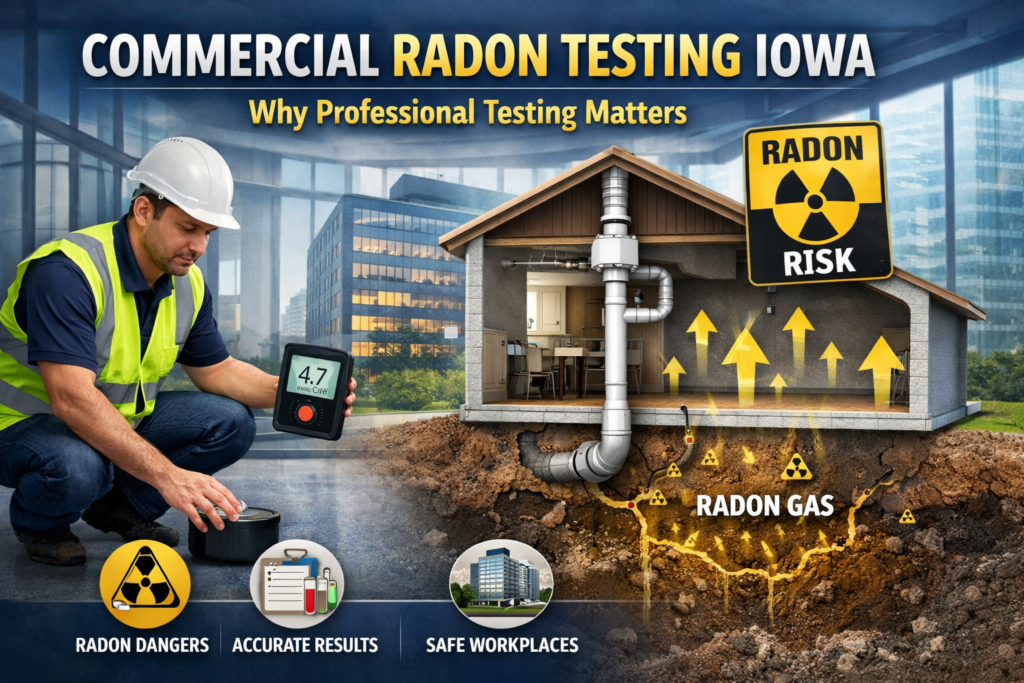
i. Test with clear conditions. Additionally, place devices correctly and follow closed-house guidance to avoid misleading results.
ii. Confirm the decision point. Consequently, you act on evidence instead of anxiety.
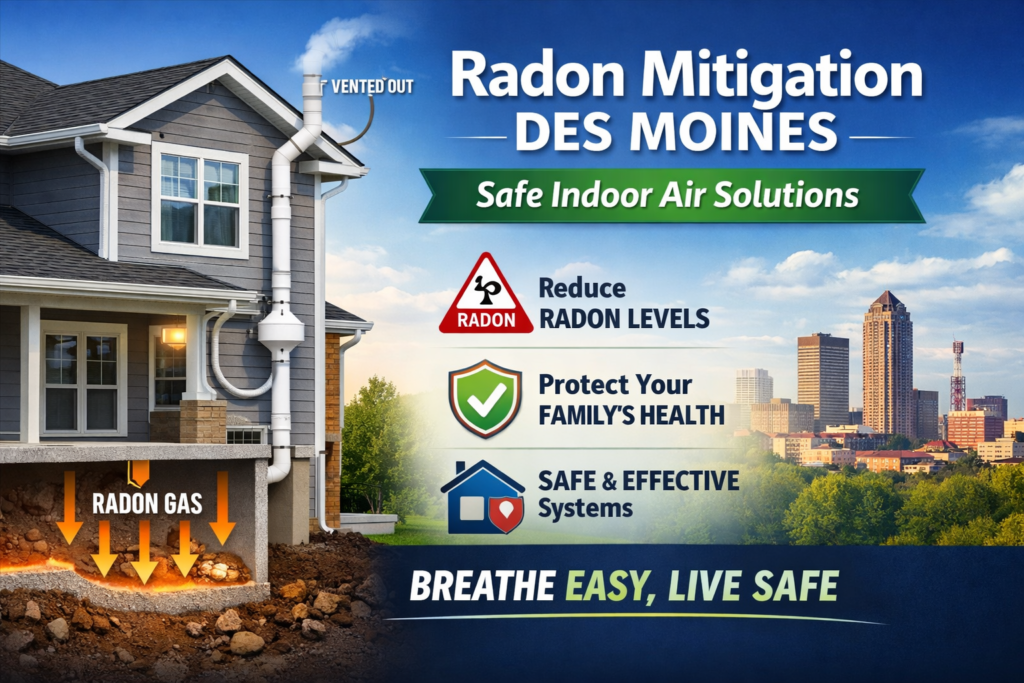
iii. Mitigate with a designed approach. Moreover, active systems typically pull radon from beneath the structure and vent it outdoors, which directly reduces radon exposure in occupied zones.
iv. Retest to verify improvement. Therefore, you prove performance instead of assuming success.
v. Maintain and recheck on a schedule. Additionally, fans, seals, and pathways need periodic review so radon exposure stays controlled over time.
When you skip steps, you pay the cost of ignoring radon exposure again and again through uncertainty.
Radon Exposure Does Not Stop at Air Alone
Some properties face waterborne radon exposure, especially with certain well-water setups. Additionally, you may need additional solutions when the building design traps air or when occupancy patterns keep lower levels active. Consequently, a one-size plan can miss the real driver of radon exposure.
Therefore, you should match the solution to the building type:
a. Residential spaces: Moreover, basements and crawlspaces often need focused attention because radon exposure concentrates there.
b. Commercial facilities: Consequently, long operating hours increase cumulative radon exposure for staff.
c. Schools and multifamily projects: Additionally, you often need structured documentation and consistent follow-up testing.
Therefore, you get the best outcome when you treat radon exposure like a building-specific issue, choose the right system for the space, and confirm performance with retesting and routine follow-ups.
Conclusion
You never win by waiting out radon exposure, because radon exposure stays invisible and it never pauses for busy schedules. Therefore, you reduce risk fastest when you test early, mitigate when needed, and verify results with follow-up retesting.
If you want this handled end-to-end with clear documentation and dependable results, DSM Radon makes the process simple. Their team supports professional radon testing, custom radon mitigation systems, waterborne radon solutions, and long-term system checkups—so you do not have to guess, chase steps, or hope the fix holds. Contact Des Moines Radon to protect your building, your people, and your peace of mind.