

The economic cost of radon exposure in Iowa grows quietly in basements, schools, and workplaces. Iowa’s radon survey found that 71.6% of tested homes exceeded the EPA action level of 4 pCi/L. Therefore, many families carry risk before they even suspect a problem. In this guide, you will learn where costs actually come from, how delays cause costly disruption, and how testing and mitigation reduce risk with clear documentation.

Radon Levels Change Over Time and Cause
Radon levels shift because daily conditions change how air moves through a building. Here’s how:
- Weather pressure changes: Shifting pressure pulls more soil gas into lower levels today.
- HVAC and fan airflow: Fans change indoor pressure and can draw radon inside faster.
- Seasons and closed windows: Tighter homes trap gases longer, so readings climb in winter.
- Foundation cracks and sumps: Small openings and sump pits provide easy radon entry paths.
- Remodels and layout changes: Renovations alter airflow patterns, so radon levels can rise later.
Therefore, you should retest after major changes to keep decisions accurate.
Radon Reality for Iowa: Higher Stakes
Radon enters buildings from the ground, and pressure differences pull it inside. Consequently, two houses on the same street can show different results. Iowa carries a bigger challenge because the EPA designates it as an entire Zone 1 state, and the Iowa Radon Survey reports 71.6% of homes tested above 4 pCi/L. Therefore, the economic cost of radon exposure in Iowa touches more households, more often, and with less warning.
Moreover, radon stays invisible and odourless, so people delay action. As a result, exposure can continue for years before a test confirms the risk. When you shorten that delay, you also shrink downstream cost. In addition, early testing protects families from “surprise” results during real estate deadlines. Consequently, you control scheduling, documentation, and decisions instead of reacting under pressure. Learn more about Economic Impact of Radon.
How the Economic Cost of Radon Exposure Adds Up
People often ask for one number. However, the economic cost of radon exposure in Iowa does not act like a single invoice. Instead, it builds through multiple cost buckets that compound over time, such as:
1) Direct Health-System Pressure
Radon exposure increases lung cancer risk, so public health agencies push prevention through testing and mitigation. Therefore, families often face appointments, follow-ups, and long recovery timelines when radon contributes to disease risk.
2) Lost Productivity and Daily Disruption
Health uncertainty drains focus. Consequently, households lose productive time while searching, worrying, and postponing decisions. Workplaces also lose efficiency when teams manage uncertainty instead of operations.
3) Real Estate Delays and Negotiation Drag
Real estate deadlines turn uncertainty into friction. For example, a buyer may request testing late in a transaction, and the schedule tightens immediately. Therefore, the economic cost of radon exposure in Iowa often spikes during listing, inspection, or closing.
4) Commercial, School, and Multi-Family Risk Stacking
Larger buildings amplify complexity. Moreover, stakeholders expect documentation that proves you acted responsibly. Consequently, facility leaders benefit from a repeatable plan that avoids confusion and protects compliance records.
Therefore, the economic cost rarely comes from one big event. Instead, it grows through repeated delays, disrupted schedules, and preventable uncertainty.

Action Levels that Drive Clear Decisions
You need a simple decision rule, especially when people feel anxious. The EPA recommends fixing a home at 4 pCi/L or higher. Additionally, the EPA recommends considering a fix between 2 and 4 pCi/L, because no known safe level exists. The levels are:
- Below 2 pCi/L: Retest periodically, especially after renovations.
- 2–4 pCi/L: Consider mitigation based on exposure time and occupants.
- 4 pCi/L or higher: Plan mitigation and schedule installation quickly.
- After mitigation: Retest to verify results and keep records.
As a result, you replace guesswork with a repeatable standard. Moreover, you protect families, reduce transaction friction, and cut long-term disruption with one clear ladder of action.
A Proven Workflow to Reduce the Economic Cost
You can treat radon like any other risk-control project. First, you measure. Next, you decide. Then, you fix. Finally, you verify. This approach reduces confusion and keeps the plan moving.
A) Step 1: Test the Right Spaces
Test the lowest lived-in level of the building. Moreover, follow the test instructions closely for accurate results. If you manage a facility, you should map zones and test by use case, because airflow differs across rooms.
B) Step 2: Interpret Results with the EPA Ladder
When the test result lands below 2 pCi/L, you still benefit from periodic retesting. When results land between 2 and 4 pCi/L, you should consider mitigation based on exposure time and occupant risk.
C) Step 3: Install the Right Mitigation Method
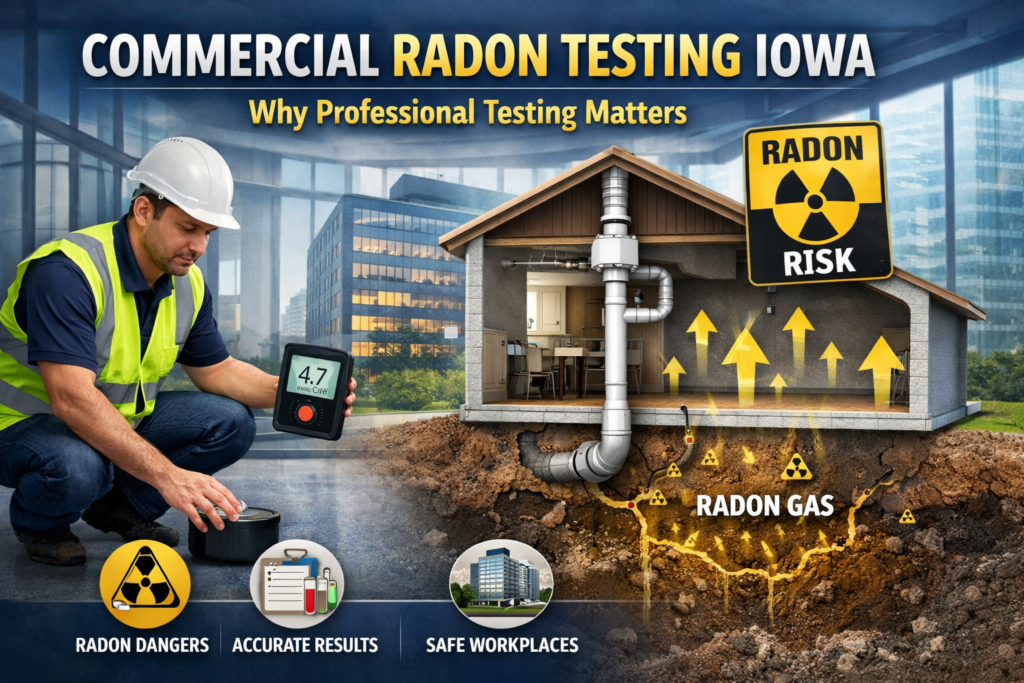
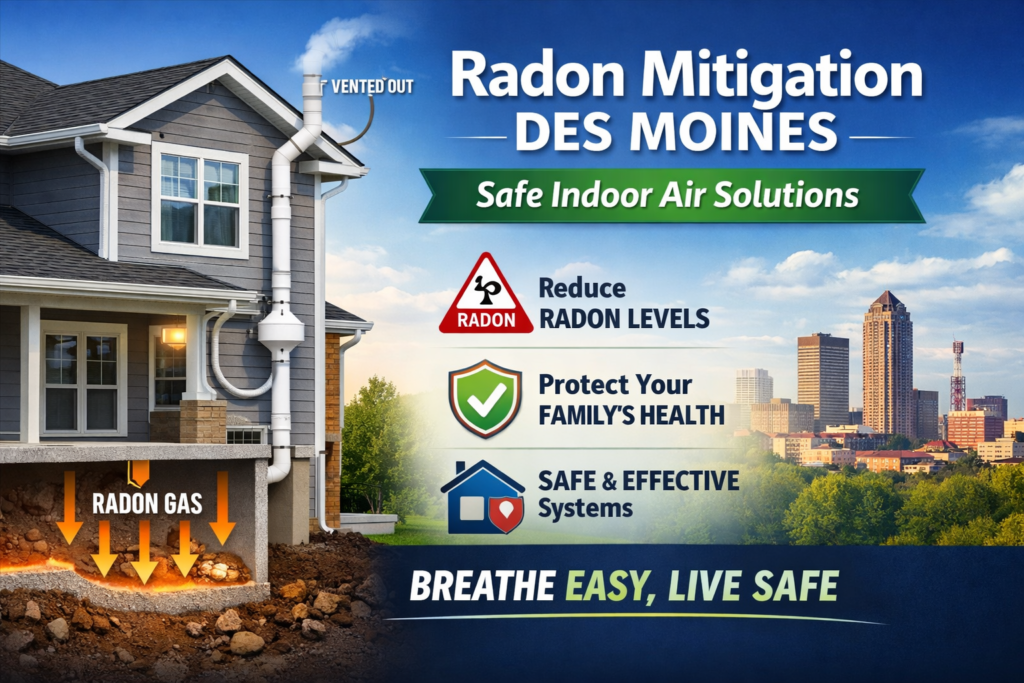
A common method uses a vent pipe and fan to pull radon from beneath the home and vent it outside. Therefore, many properties reduce radon without major structural changes. You should plan the installation to stay minimally invasive and visually clean.
D) Step 4: Verify Performance After the Fix
Verification closes the loop. Consequently, you should retest after mitigation to confirm that the system reduced radon. You should also retest after major building changes, because pressure patterns can shift.
Therefore, this workflow turns a hidden risk into a controlled process with measurable results. Moreover, it reduces delays, protects occupants, and strengthens documentation for future decisions.
Conclusion
The economic cost of radon exposure in Iowa increases when people delay testing, mitigation, and verification. Therefore, you should test early, follow the EPA action ladder, and document results after mitigation. When you build that habit, you protect health, reduce disruption, and defend property value. For testing, mitigation, and verification across Iowa, contact DSM Radon. Moreover, early action helps you avoid last-minute real estate stress and scheduling gaps. In addition, clean documentation makes decisions faster and keeps compliance and resale conversations simple.