

Understanding Iowa Radon Zone 1 is crucial for your health and safety in Iowa. Radon, a colorless, odorless radioactive gas, forms from uranium decay in soil and rock. It can enter buildings through cracks and accumulate to dangerous levels. Since radon can’t be detected by sight or smell, understanding radon zoning and professional testing is essential.
This article explains what the Iowa Radon Zone 1 means, why it matters, and how services like Des Moines Radon can help protect your home and loved ones with accurate testing, clear results, and proven mitigation steps that reduce long-term exposure risks for families and occupants.
What Does “Iowa Radon Zone 1” Mean?
The United States Environmental Protection Agency (EPA) defines radon “zones” across the country to show where elevated radon levels are more likely. Zone 1 is the highest category, indicating the greatest potential for indoor radon levels above the EPA’s recommended action level. In the case of Iowa:
- Every county in Iowa is classified as EPA Zone 1, which indicates a higher potential for elevated indoor radon levels.
- This means that the state has a very high potential for elevated indoor radon concentrations.
- Zone 1 designation suggests that a significant number of homes could have radon levels above 4 picocuries per liter (pCi/L), the level at which action is recommended.
Put simply, Iowa Radon Zone 1 means that nearly all properties in the state should take radon seriously. Because Iowa sits entirely in the highest-risk zone, every property owner should test for radon gas to confirm safety.
Why Iowa Has High Radon Levels
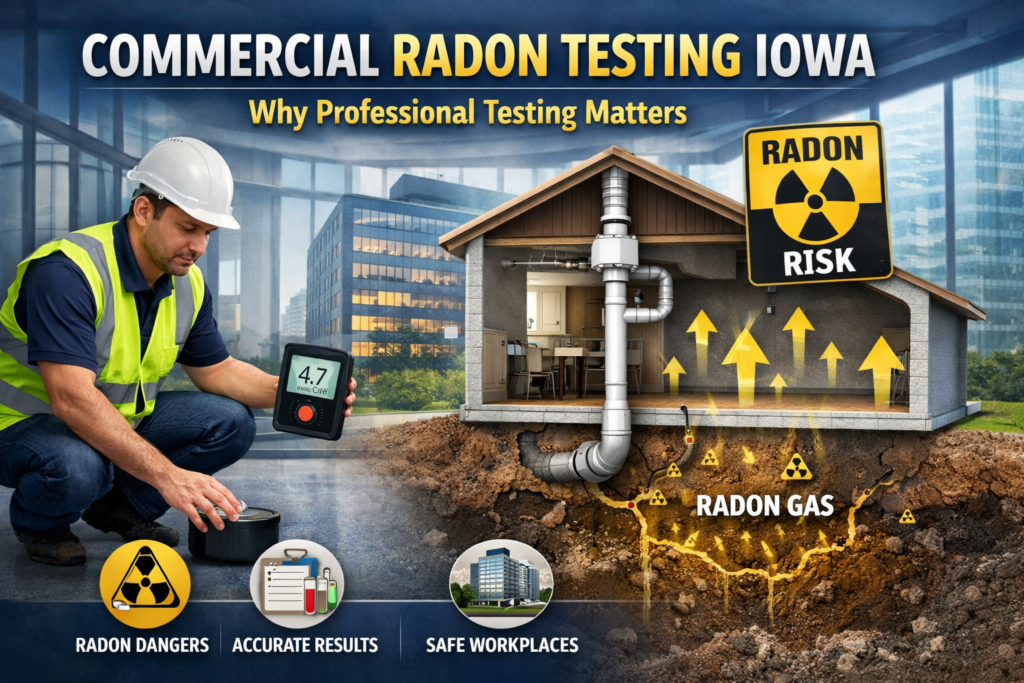
Iowa’s geology contributes to high radon potential. Soil and rock contain uranium, which decays into radon gas. Radon moves upward through soil and enters buildings through foundation gaps, often exceeding safe levels in Iowa homes.
- Geological Composition: Uranium-rich soil and rock lead to high radon production.
- Soil Permeability: Soil types like clay allow radon to seep into buildings.
- Home Construction: Basements and crawl spaces trap radon gas.
- Climate Fluctuations: Temperature changes increase radon movement into homes.
Statistics show that roughly 70% of Iowa homes may have radon levels at or above the EPA’s action guideline of 4 pCi/L. This is significantly higher than the national average.
Health Risks and Radon Exposure
Radon exposure is dangerous because it increases the risk of lung cancer. In fact, radon is the second leading cause of lung cancer after smoking. Long-term exposure to high radon levels can damage lung tissue and significantly increase cancer risk.
- Lung Cancer Risk: Radon is a leading cause of lung cancer, especially in non-smokers, across the U.S.
- No Immediate Symptoms: Radon exposure has no immediate symptoms, making it hard to detect.
- Cumulative Effect: The longer you’re exposed, the higher your risk of health complications.
Since radon is undetectable by smell or sight, only a professional test can determine if your home has elevated levels. That is why regular testing matters, especially in a Zone 1 state like Iowa.
Importance of Radon Testing and Mitigation
Knowing your radon level is the first step toward a safer indoor environment. Professional radon testing provides precise measurements of radon concentration. If elevated levels are found, radon mitigation systems can drastically reduce indoor radon, sometimes by more than 90%. Testing is especially vital:
- When buying or selling a home.
- After renovations.
- Every two years for existing mitigation systems.
- Following significant changes to a property’s airflow patterns.
Whether it’s residential, commercial, or public buildings like schools, radon testing ensures that dangerous gas levels are detected early and handled effectively.

How Professional Radon Services Can Help
Des Moines Radon is a trusted provider of radon testing, mitigation, and support in the Des Moines metro area. Their certified experts offer tailored solutions with precise testing, mitigation system design, and installation services. Here’s what professional services typically include:
- Certified radon testing: That accurately identifies radon levels.
- Custom mitigation solutions: To reduce gas concentrations.
- Follow‑up testing and maintenance: After installation.
- Advice and education: To help you understand radon risks and prevention.
By choosing qualified professionals, you ensure that both detection and remediation are handled to the highest safety standards.
Signs Your Home Needs Radon Mitigation
Even without visible signs of radon, your home may still have elevated levels. You should consider mitigation if:
- Your radon test shows levels above 4 pCi/L
- You live in an older home with foundation cracks
- Your basement or crawlspace lacks proper sealing
- Radon testing reveals fluctuating but high readings
Prompt mitigation protects your indoor environment and reduces health risks over time.
Conclusion
Understanding Iowa radon zone 1 helps homeowners recognize that Iowa carries some of the highest radon risks in the United States. Because the entire state is classified as Zone 1, every property—whether newly built or decades old—should be tested for radon. Regular radon inspection and mitigation deliver peace of mind while lowering health risks. For expert radon testing, mitigation systems, and continued support, trust DSM Radon to safeguard your home and family with proven solutions tailored to Iowa’s unique radon challenges.
FAQs
1. What does “Iowa Radon Zone 1” imply for homeowners?
It means the whole state is at high risk for elevated indoor radon levels, and that testing is recommended for all properties.
2. How often should I test my home for radon?
Professionals suggest testing every two years or after significant home changes that affect airflow.
3. Can mitigation systems really lower radon levels?
Yes. Properly installed mitigation systems can significantly reduce radon levels in most homes when maintained and monitored.
4. Is it necessary to test even if my neighbor’s home tested low for radon?
Yes. Radon levels can vary widely even between nearby homes; only testing your own property gives accurate results.