


Parents naturally focus on visible safety threats such as traffic, falls, and illness. However, radon creates a different kind of risk because it develops silently inside homes. Therefore, families in Iowa need a calm, structured approach that treats radon as an indoor air quality issue rather than a crisis. This guide explains how pediatric exposure differs from adult exposure, why lowa homes require special attention, and how parents can reduce long-term risk through clear, repeatable steps.

What Radon Is and Why It Matters for Kids
Radon is a natural gas that forms underground as rocks and soil break down. It can seep into homes through cracks and openings, and since it has no smell, color, or taste, it can accumulate without detection. This makes testing essential to determine indoor radon levels and ensure safe air quality for families.
Radon matters more for kids because exposure risk grows through time and repetition, not through immediate symptoms. Children breathe faster than adults and take in more air relative to their size, so long-term exposure can carry more impact during lung development. Additionally, kids often spend long hours in consistent indoor zones like bedrooms, playrooms, or finished basements, which can increase cumulative exposure when radon concentrates in lower levels.
Why Lowa Homes Often Have Higher Radon Levels
Lowa homes often show higher radon readings because the ground conditions and everyday living patterns support indoor buildup.
- Soil and geology conditions: Iowa’s soil allows radon gas to move easily upward and enter homes through foundation openings.
- Basements and lower living spaces: Many lowa homes use basements for play and living, which increases exposure time.
- Winter closed-window living: Cold months reduce ventilation, allowing radon to build up indoors more consistently.
- New homes are not immune: Modern construction and tight sealing can trap radon just as easily as older homes.
Therefore, lowa families protect children best when they test regularly and respond early instead of relying on assumptions.
Radon Reduction Options That Work in Iowa Homes
Radon reduction works best when you follow a step-by-step plan instead of relying on quick fixes. Therefore, Iowa families should focus on solutions that create measurable results and stay stable across seasons.
1) Install a Mitigation System
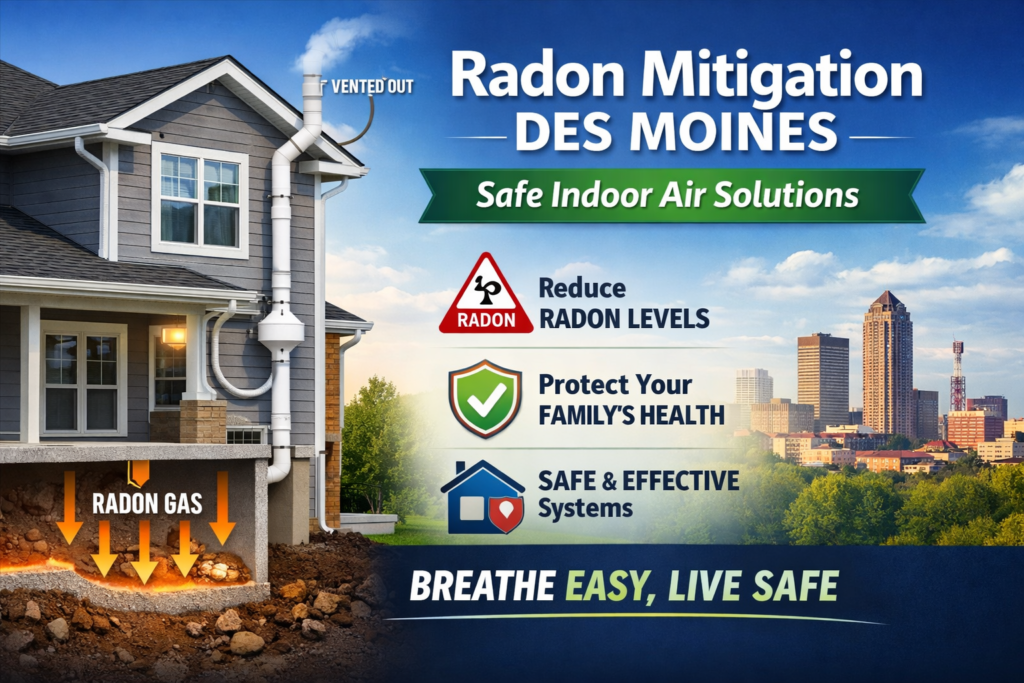
A mitigation system pulls radon from beneath the home and vents it safely outside. It targets the entry route, so it reduces the source pressure driving radon indoors. This approach delivers consistent improvement that you can confirm through testing.
2) Seal Gaps as Support
Sealing cracks and openings reduces common radon entry points around the foundation. However, sealing alone rarely lowers levels enough in most Iowa homes. Use sealing to support the main system and strengthen overall performance.
3) Balance Airflow and Pressure
Some homes pull soil gases inside due to pressure differences and airflow patterns. A professional checks how air moves through the home and where suction occurs. This step improves stability and helps results hold through winter conditions.
4) Retest to Confirm Results
You should test again after mitigation so you can verify the actual drop. Levels can settle after installation, so follow the recommended timing window. Retesting proves the system works and keeps decisions evidence-based.
5) Maintain it Routinely
You should treat the system like a safety device and check it periodically. Keep the vent pathway clear and monitor the system indicator as instructed. Simple maintenance protects performance and preserves long-term confidence.
When you combine mitigation, support sealing, airflow control, and retesting, you create a reliable radon plan that protects families year after year.

When to Get Professional Help and What to Look For
You should involve a professional when radon results stay elevated, when you need a reliable fix, or when your home layout makes DIY decisions uncertain. These quick checks help you know when to act and what to keep for long-term confidence.
- If a test shows levels in an action range or stays elevated on a repeat test, you should plan mitigation instead of delaying decisions.
- If children spend time in a basement bedroom or play area, you should treat elevated readings as a higher priority due to daily exposure time.
- If the provider explains the plan clearly, inspects the foundation pathways, and designs a system for your home layout, you can trust the work more.
- If the provider gives written details on the installed system, placement choices, and what to expect after installation, you gain better control.
- If you keep test dates, test locations, pre-mitigation results, and post-mitigation results together, you create strong documentation for future retesting.
Professional help works best when you act on clear results, choose someone who explains the system logically, and keep before-and-after records that prove improvement. Learn more about Radon Exposure and Breathing Problems.
Conclusion
Parents can reduce pediatric radon exposure risk lowa by testing early, acting on confirmed results, and retesting after home changes. Therefore, the safest approach stays simple: measure first, choose the right reduction option, and verify the outcome with a follow-up test. If you want professional support with radon testing or radon mitigation in Des Moines and nearby Iowa communities, DSM Radon provides residential and commercial services with a process that focuses on clear communication, clean installation choices, and measurable post-work verification.

FAQs
1) Why does pediatric radon exposure require special attention?
Children inhale more air for their size and spend long hours indoors. Therefore, repeated exposure during lung development carries a greater long-term impact.
2) Should parents test if children rarely use the basement?
Yes, because radon can move between levels and change with the airflow. Additionally, family routines often shift seasonally without notice.
3) Is short-term testing enough for families?
Short-term testing works for quick decisions, but long-term testing provides a stronger average exposure picture. Consequently, timelines should guide test choice.
4) How often should families retest after mitigation?
Families should retest after installation and after major home changes. Moreover, periodic retesting maintains long-term confidence in indoor air safety.