

Radon health concerns rise fast in Iowa because many homes can trap an invisible gas that increases lung cancer risk over time. In fact, many people focus only on smoking when they search for the causes of lung cancer in Iowa, yet radon exposure quietly adds serious risk in many Iowa properties. Moreover, Iowa’s geology and common basement living spaces can increase the chance of indoor radon buildup if homes go untested. Therefore, this guide explains the major lung cancer risk drivers in Iowa and shows how to reduce radon exposure through testing, smart decisions, and proven mitigation.

The Causes of Lung Cancer in Iowa: the Full Risk Picture
People develop lung cancer through a mix of long-term exposures and individual vulnerability. However, risk does not remain fixed. You can still reduce impact when you identify the biggest drivers and control the factors you can measure early.
1) Tobacco Smoking Remains the Largest Risk Driver
Smoking contributes the largest share of lung cancer cases. Additionally, it damages lung tissue and increases sensitivity to other hazards. Consequently, radon exposure becomes more dangerous when smoking exists in the same household.
2) Secondhand Smoke Raises Risk in Shared Environments
Secondhand smoke exposes non-smokers to carcinogens in homes, vehicles, and workplaces. Therefore, smoke-free indoor policies protect families and tenants. Moreover, reduced smoke lowers the compounding effect of radon exposure in shared spaces.
3) Occupational Exposures Add Long-Term Pressure
Certain jobs expose workers to dust, fumes, and chemicals over long periods. Moreover, older buildings may introduce additional environmental risks. Therefore, employers should improve ventilation, enforce protection, and maintain consistent safety documentation.
4) Outdoor Air Pollution Contributes to Chronic Inflammation
Air pollution increases risk through repeated irritation and inflammation of lung tissue. Consequently, people benefit from better indoor filtration and controlled exposure timing. Additionally, airflow decisions can influence radon exposure inside buildings.
Lung cancer risk in Iowa rarely comes from one cause. Instead, it builds through combined exposures over time. However, you can still reduce overall risk by controlling what you can measure.
Why Radon Matters So Much in Iowa Homes
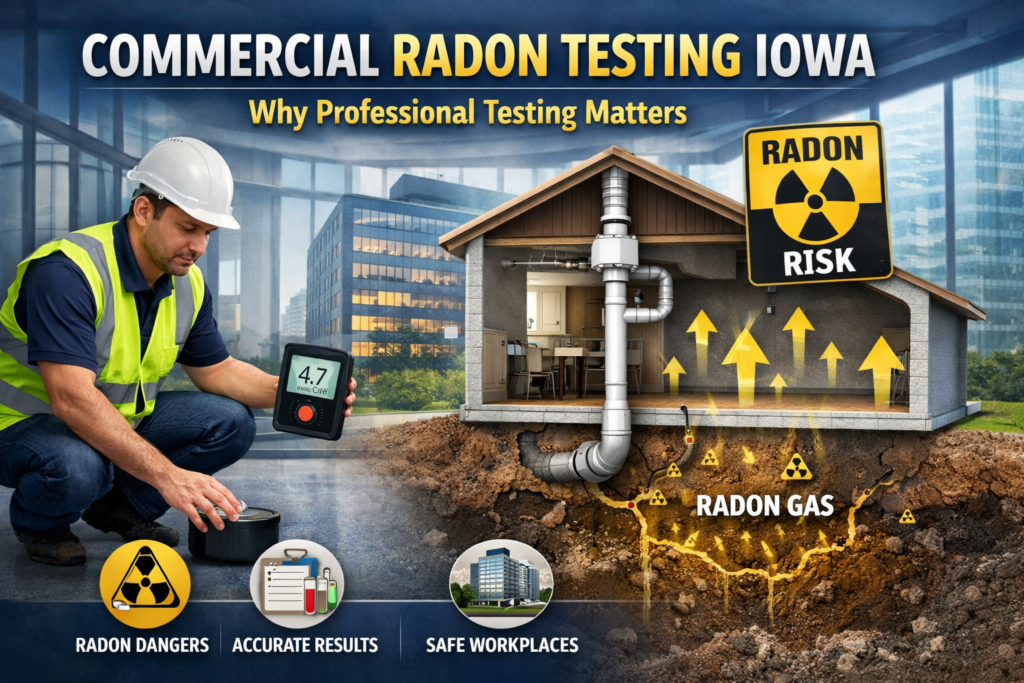
Radon can affect any Iowa home, so you should confirm radon exposure early to protect your health. Here is how:
- Radon enters through foundation gaps: seeping in via cracks, sumps, and crawl spaces, leading to potential exposure buildup without warning.
- Testing confirms real risk: You cannot smell radon or guess levels from maps. A test gives the only reliable radon exposure number.
- Smoking increases the danger: Smoking and radon exposure together raise lung risk faster. So, current or former smokers should test first.
- Iowa risk is high, yet homes vary: High potential exists across many areas, but each home differs. So, measure radon exposure inside your property.
Test early, then reduce radon exposure to strengthen radon health.

Increasing Radon Health Risk and Indoor Buildup
Radon health risk increases with time and indoor buildup because exposure often continues quietly for months or years. Radon enters from the soil and accumulates indoors when a building traps air, especially in basements and ground-level rooms. Additionally, closed-window seasons and pressure differences can pull more radon inside, which can raise indoor concentrations without any visible warning signs.
Moreover, radon levels can change as a home “breathes” through weather shifts, HVAC use, and everyday living patterns. Renovations, added insulation, or changes to ventilation can also alter airflow paths and increase indoor buildup. Therefore, consistent testing and periodic retesting protect radon health by confirming that radon exposure stays controlled over time. Learn more about Understanding Radon Disclosure Effect on Iowa Home Sales.
Radon Exposure: How it Increases Lung Cancer Risk
Radon exposure increases lung cancer risk through repeated inhalation of radioactive particles that damage lung tissue over time.
1) Radioactive decay inside the lungs: Radon breaks down into particles that lodge in lung tissue and release radiation.
2) Damage builds with long-term exposure: Continued radon exposure increases cellular damage as exposure time extends.
3) Smoking multiplies the impact: Smoking combined with radon exposure raises lung cancer risk more than either factor alone.
4) No early warning signs appear: Radon exposure causes harm silently, without immediate symptoms or irritation.
Lung cancer risk rises when radon exposure remains untested and unmanaged over long periods.
How to Protect Your Family: Testing First, then Mitigation
Radon health improvement starts with testing because testing gives you a real number. Additionally, testing protects homebuyers and sellers because it replaces assumptions with evidence. Most importantly, testing shows your true radon exposure level, not an estimated one. Here is how to do it:
Step 1: Choose the Right Test Type
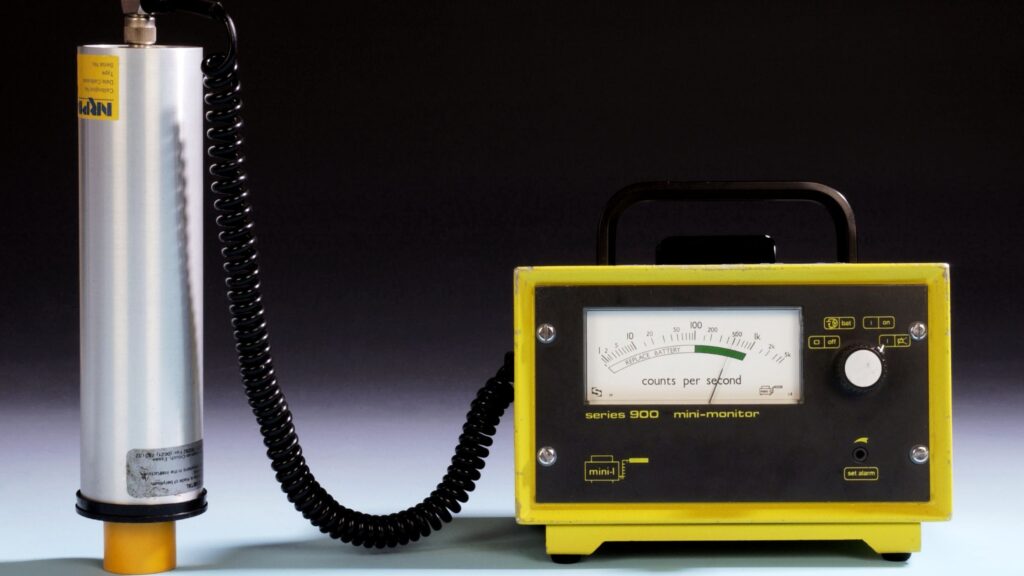
Use testing to get a real indoor number instead of assumptions. Short-term tests typically run from about two days up to 90 days. Long-term tests improve accuracy because radon exposure changes by season and daily conditions.
Step 2: Take Action When Results Show Elevated Levels
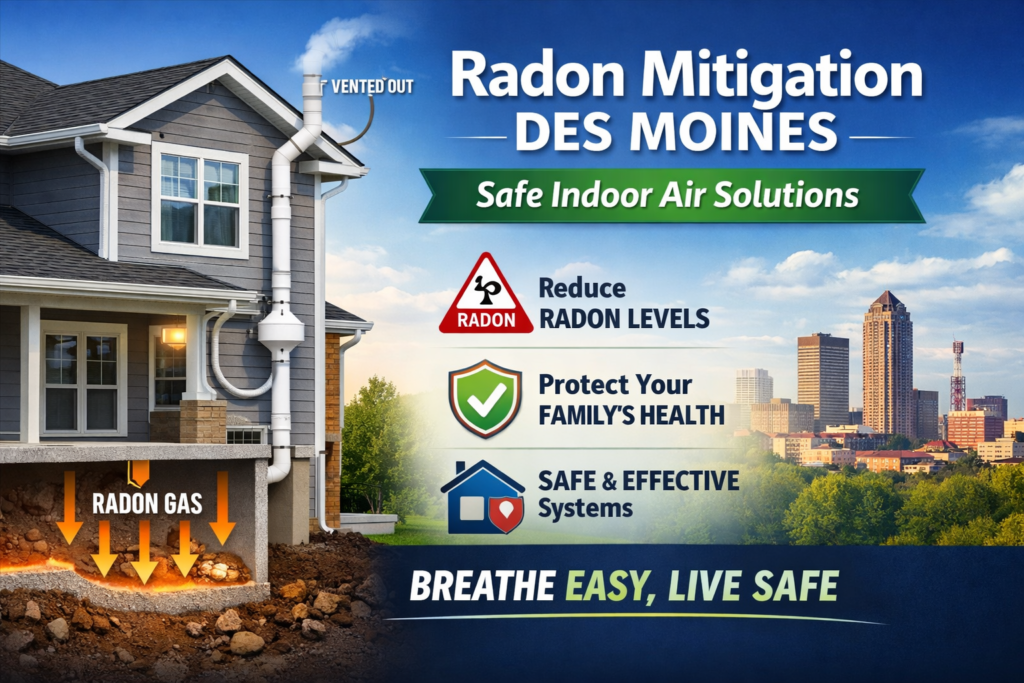
Avoid “quick fixes” that do not address the source. Use a proven mitigation method that reduces pressure under the foundation. This approach vents radon safely to the outside through a dedicated pathway.
Step 3: Retest After Mitigation and Keep Monitoring
Confirm performance with a follow-up test after installation. Retest periodically because building changes can alter air movement and radon entry. Renovations, HVAC changes, and foundation shifts can change radon exposure levels.
Testing, mitigation, and retesting create a closed loop that replaces uncertainty with measured control over radon exposure.

Conclusion
When you study the causes of lung cancer in Iowa, you see smoking, secondhand smoke, occupational hazards, pollution, and genetics. However, you can measure and reduce one of the most overlooked drivers through radon health action that starts with testing and ends with verified mitigation. Therefore, you should treat radon exposure as a fixable indoor air risk, because long-term radon exposure raises preventable risk in many Iowa buildings.
If you want clear testing, mitigation planning, and reliable next steps, DSM Radon can help you protect your home or facility by identifying radon exposure and reducing it with professional radon testing and mitigation support.