
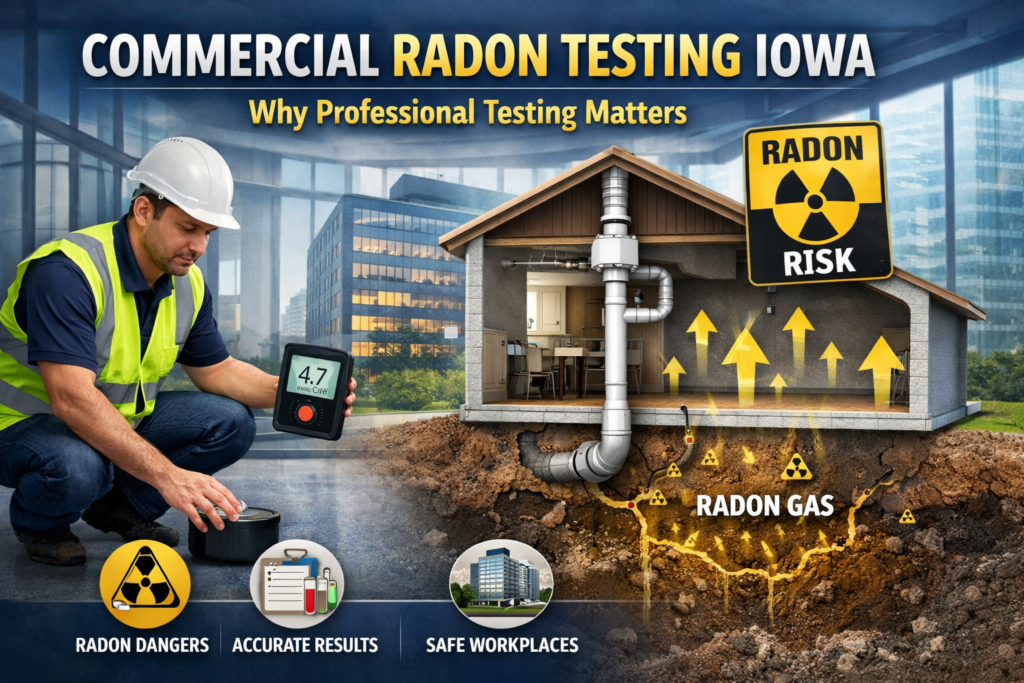
Radon can affect indoor air quality in Iowa homes because it enters silently and builds up without any smell, color, or taste. Moreover, you cannot judge exposure by how new or clean a house looks. Therefore, you need testing to understand your actual level, and you need a verified plan if the reading rises. This guide explains how radon moves into a home, what conditions increase buildup, and which steps reduce exposure with confidence.

How Radon Builds Up and Why It Matters
Radon affects health because exposure often happens slowly and repeatedly, not in one dramatic moment. Therefore, the risk increases when you spend months or years breathing air from the same enclosed rooms. Additionally, the danger is easy to ignore because you cannot see symptoms that point directly to radon. Consequently, many families only discover the issue when they test during a home purchase, renovation, or basement upgrade.
Basements matter because homes often pull air from the soil through the lowest level, especially when the structure creates pressure that draws soil gas inward. Moreover, daily habits can intensify the pattern when you use the basement as a bedroom, office, or play area. Therefore, you should treat lower-level readings as a practical indicator of household exposure and make decisions based on how you actually use that space.
Why Iowa Homes Often Face Higher Buildup Potential
Radon can build up in Iowa homes because basement design, seasonal habits, and pressure changes often work together.
- Basements: Many Iowa homes use basements, so air sits closer to soil entry points. Consequently, radon can collect faster in lower rooms.
- Winter Living: Cold months keep windows shut, so fresh air exchange drops indoors. Therefore, radon can build up during long closed periods.
- Heating Pressure: Heating shifts pressure, so homes can pull soil gas through small gaps. As a result, radon can enter through cracks and penetrations.
- Finished Basements: Finished basements get daily use, so exposure time rises quietly. Moreover, bedrooms and offices increase the risk versus storage spaces.
Therefore, you reduce uncertainty when you test the lowest level and take action based on how your household uses that space daily.
When Radon Becomes a Home Concern
Radon becomes practical to address when test results and daily living patterns increase exposure, like:
- Elevated Test Results: Higher readings signal a need for timely action.
- Finished Basement Living: Daily basement use increases long-term exposure potential.
- Home Purchase or Sale: Real-estate decisions require clear radon documentation.
- Post-Renovation Changes: Renovations can shift airflow and raise levels.
Therefore, you reduce risk fastest when you test, act, and verify results.

How Radon Exposure Impacts Health in Iowa Homes
Radon exposure can affect health quietly because it builds indoors without smell or visible signs. Moreover, Iowa home layouts and daily living patterns can increase exposure time in lower-level spaces.
1. Long-Term Lung Exposure
Radon enters the lungs through breathing and stays active for long periods. Consequently, repeated exposure can increase health risk even without clear early symptoms. Therefore, long-term indoor air quality becomes a daily safety priority for families.
2. Increased Risk in Enclosed Spaces
Radon concentrates in closed indoor areas when fresh airflow is limited. As a result, basements and lower rooms often show higher exposure than upper levels. Moreover, frequent use of these spaces can raise cumulative risk across months.
3. Greater Impact With Daily Occupancy
Health risk rises when people spend many hours indoors regularly. Therefore, home offices, bedrooms, and play areas can increase exposure time significantly. Consequently, everyday living patterns influence overall risk more than people expect.
4. Higher Sensitivity for Children and Seniors
Developing lungs and aging lungs can respond more strongly to indoor exposure over time. As a result, vulnerable household members may face greater concern in high-radon spaces. Moreover, consistent prevention becomes especially important for long-term household safety.
5. Delayed Symptoms and Detection
Radon exposure shows no immediate warning signs in how you feel day to day. Therefore, health effects may appear years later, which delays awareness and action. Consequently, testing becomes the only reliable safeguard for informed next steps.
Therefore, you protect your household best when you test early, address elevated results promptly, and verify improvements with follow-up measurements.
Why Testing Confirms Radon Risk
Testing gives the only dependable proof because radon stays invisible and unpredictable indoors.
- Radon Has No Warning Signs: Radon has no smell, taste, or color in indoor air. Therefore, you need a measurement to confirm real exposure.
- Home Appearance Misleads: New or clean homes can still trap high radon levels. Consequently, assumptions fail without an actual test result.
- Levels Change By Season: Weather and closed-house habits can shift radon buildup quickly. Moreover, testing captures what your home shows in real conditions.
- Basements Skew Exposure: Lower levels often collect higher readings than upstairs rooms. Therefore, testing the lowest livable level improves accuracy.
Therefore, you stay confident when you test first and re-test after changes. Learn more about Protect Your Home with Experienced Radon Specialists in Ankeny.
Reduce Radon Risk With Follow-Up
You reduce radon risk best when you treat the process as a cycle, not a one-time step. Therefore, you start with a reliable test, you complete mitigation when results call for it, and you confirm improvement with a follow-up measurement. Moreover, verification removes doubt because it proves the fix worked in your specific home, not just in theory. Follow-up also keeps you protected as conditions change. Additionally, renovations, HVAC upgrades, and finished basements can shift airflow and pressure patterns over time.

Conclusion
Radon stays manageable when you treat it as a measurable home safety issue and follow a clear routine: test, interpret results, fix elevated levels, and verify performance with follow-up testing. Moreover, you protect your household best when you base decisions on how you actually use basements and lower rooms throughout the year. If you want a reliable radon solution in Iowa that supports both testing and mitigation with a clear process, choose DSM Radon as your trusted partner for professional radon guidance and next-step support.