


Public infrastructure projects must protect people at scale, so teams need to manage indoor air risks with the same discipline they apply to fire safety, accessibility, and structural performance. Radon creates a unique challenge because it stays invisible, enters through common foundation pathways, and can rise or fall as building pressure changes. Therefore, leaders who plan early avoid late surprises, operational disruption, and public trust issues. This guide explains how to manage radon implications for public infrastructure projects with a workflow that fits design, construction, and long-term facility operations.
Why Radon Becomes a Bigger Issue in Public Buildings
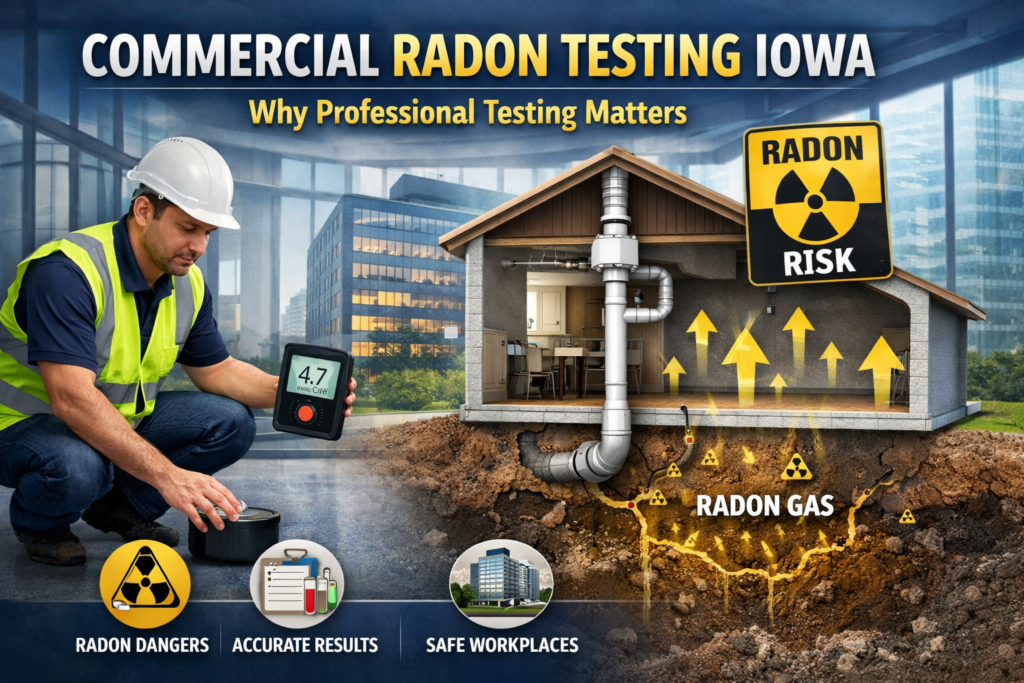
Public facilities serve many occupants for long hours, so even a single high-reading zone can affect a large group. Moreover, public buildings often include basements, tunnels, mechanical rooms, and slab-on-grade wings that create multiple pressure zones. As a result, the building can pull soil gas through cracks, joints, sumps, and utility penetrations. Additionally, renovations and expansions can change airflow patterns, so radon levels may shift after the project finishes.
Therefore, teams should treat radon control as ongoing risk management, with scheduled testing, clear documentation, and maintenance built into operations.
Where Radon Impacts Project Outcomes
Radon management influences more than health conversations. It also shapes schedule confidence, cost control, and documentation quality.
A) Design Choices can Reduce or Increase Radon Pathways
Design teams control details affecting soil gas entry. Slab joints, penetrations, and below-grade wall connections can stay tight or porous. Drainage and sump design can create pathways if sealing and detailing are skipped. Treating these details as performance items lowers future mitigation load.
B) Construction Quality Controls the Real-World Result
Crews create radon entry points when they rush patching, leave gaps around penetrations, or treat sealing as “finish work.” Mitigation systems may need more power and complexity. However, simple checkpoints lock in better outcomes without slowing the job.
C) Public Accountability Demands Clear Proof
Public owners must answer to stakeholders, auditors, and community members. Teams need clean records showing what they tested, where, what they found, and actions taken. Complete documentation avoids confusion during leadership changes and future remodels.
Effective radon management integrates design, construction quality, and clear documentation, ensuring smooth project execution, cost control, and long-term accountability, while safeguarding health and compliance.
A Radon-Ready Workflow that Fits Public Projects
You can manage radon effectively when you use a repeatable process that matches your project phases.
1) Start with a Building Risk Profile
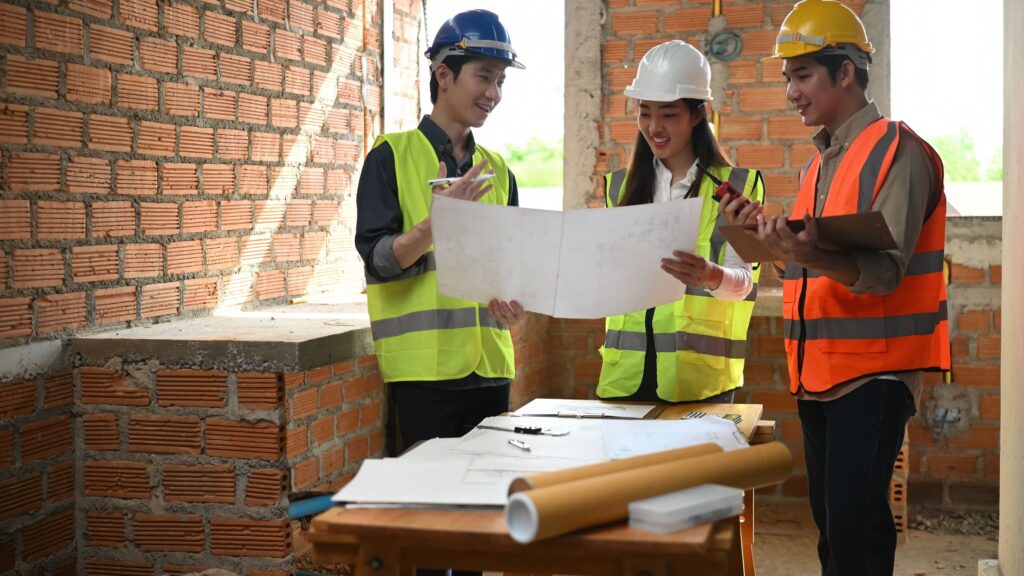
Start with the foundation type, the lowest occupied level, and how people use the space. Then identify priority areas like classrooms, offices, patient rooms, and staff spaces. Moreover, map pressure zones and ventilation, because HVAC decisions can change radon behavior. Early documentation sets testing expectations and response planning.
2) Integrate Testing into Milestones, not Guesswork
Testing works best when teams tie it to milestones and decision gates. Use a simple timeline:
- Baseline testing is for existing facilities before major renovation, so teams understand the starting condition.
- Post-construction verification testing is conducted before full occupancy, so teams confirm performance under real operation settings.
- Routine re-testing should be done after handoff, so teams catch changes caused by settling, HVAC adjustments, or space reconfiguration.
Additionally, teams should plan testing locations around real occupancy. For example, focus on the lowest occupied level and daily-use rooms, not storage zones.
3) Choose Mitigation Options that Match the Facility
Mitigation must fit the structure, site, and operations. Many slab foundations use sub-slab depressurization, yet public facilities may need specialized routing, noise control, and equipment placement. Therefore, treat mitigation as an engineered system, and plan routes, fan power, and sealed penetrations early to avoid rework.
4) Verify Performance and Lock it into Closeout
Verification should not feel optional. Instead, it should function like commissioning: measure, confirm, document, and file. Additionally, teams should record construction changes because field updates often explain performance differences. When the closeout package includes verification results, stakeholders can trust the building’s safety story.
5) Build a Maintenance Plan that Survives Staff Turnover
Radon control can drift when teams ignore maintenance. Fans can fail, seals can degrade, and building pressure can change as operations evolve. Therefore, a simple maintenance rhythm protects performance:
- Inspect mitigation components on a defined schedule.
- Track building changes that affect foundations or ventilation.
- Re-test at planned intervals, especially after renovations.
- Keep records accessible for audits and stakeholder questions.
Keep owners assigned, follow the checklist, and re-test after changes, so radon control stays stable and defensible. Learn more about Post-Renovation Radon Testing.
Documentation that Makes Projects Defensible
Public owners win trust when documentation stays organized and clear. Create a “Radon Control Packet” that includes:
- Testing scope, dates, and locations.
- Device types and testing durations.
- Results and thresholds used for decisions.
- Mitigation plan details and installation notes.
- Post-mitigation verification results.
- Maintenance schedule and re-test cadence.
Moreover, keep the packet updated after any remodel that affects the lowest level, because those changes can alter radon behavior quickly.
Common Mistakes that Raise Cost and Risk
Teams can prevent most project headaches when they avoid these patterns:
- Teams wait until occupancy to test, so fixes disrupt operations.
- Teams treat sealing as optional, so radon pathways remain active.
- Teams skip verification, so stakeholders question the outcome.
- Teams ignore maintenance, so performance declines silently over time.
However, teams can fix these issues with early planning, clear checklists, and accountability at each phase.

Conclusion
Radon planning becomes easier when teams treat it as a standard project system with testing, mitigation readiness, verification, and maintenance. When you manage radon implications for public infrastructure projects early, you protect occupants, stabilize schedules, and strengthen public confidence. Moreover, you reduce long-term operational friction when you document decisions and maintain systems consistently. DSM Radon supports this kind of practical, measurable approach by helping public and commercial facilities plan testing, mitigation, and ongoing performance with clear documentation and professional execution.