

Radon is a colorless, odorless, radioactive gas that naturally occurs from the breakdown of uranium in soil and rocks beneath the ground. Because you cannot detect it with your senses, radon can quietly build up indoors, and often, homeowners do not know radon levels in home until they measure it. This invisible gas is not just an abstract concern — it’s a well-documented health risk when present at high concentrations over time.
In fact, radon is considered the second leading cause of lung cancer after smoking, according to health authorities, which makes understanding and managing radon levels in the home critically important for families everywhere.
What Are Radon Levels in Home and Why They Matter
Radon enters homes through cracks in foundations, gaps around pipes, sump pits, or other openings that connect the indoors with the underlying soil. As a gas, it accumulates especially in areas with poor ventilation, such as basements, crawlspaces, and lower-level rooms. Without proper testing, these radon levels in home can remain hidden, yet they pose significant long-term health concerns.
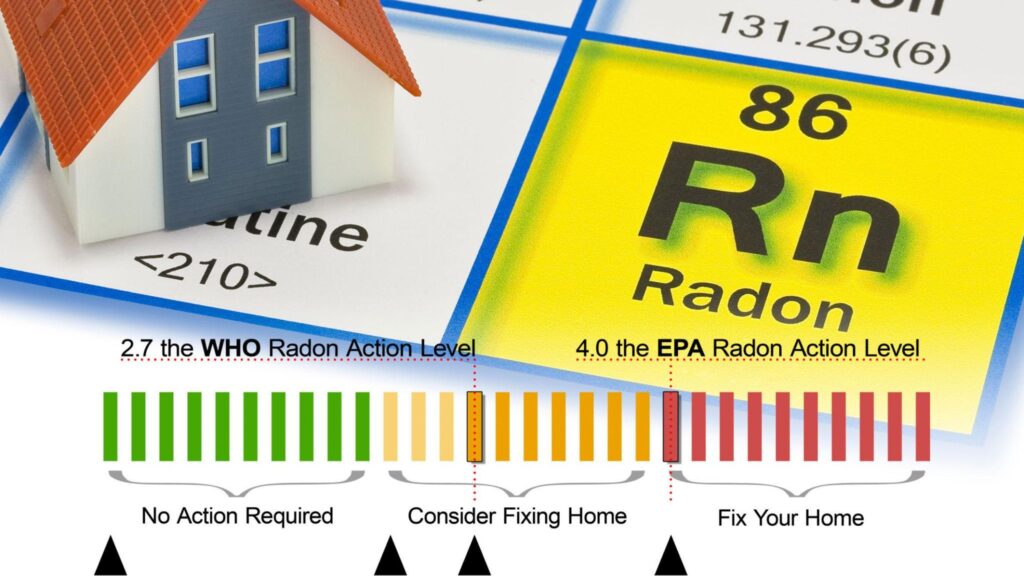
The U.S. EPA recommends that radon concentrations above 4 picocuries per liter (pCi/L) be mitigated, and suggests considering mitigation even at levels between 2 and 4 pCi/L to reduce health risks further.
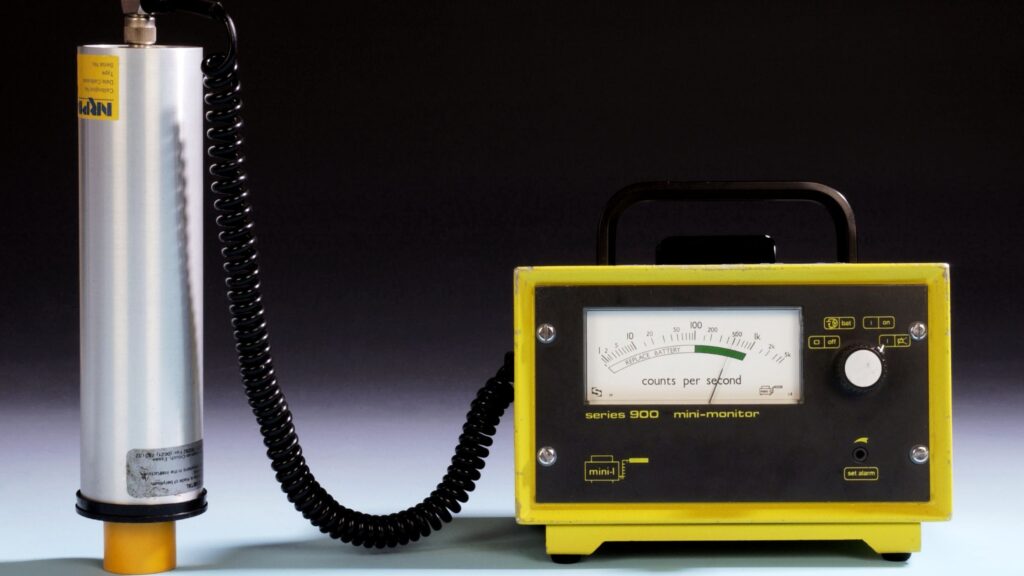
Because radon is invisible and tasteless, the only reliable way to know your home’s radon levels is through proper testing. Professional radon testing detects concentrations accurately and informs what step to take next if levels are elevated.
Testing to Know Your Radon Levels in Home
Testing is the first and most important step in managing radon risk. Without measurements, you simply cannot know whether radon levels in home are safe or hazardous. Moreover, even homes in the same neighborhood can have very different radon concentrations, depending on soil conditions, ventilation, and building structure.
There are two main types of radon tests:
a) Short-term tests: These typically run for 2–7 days and provide a quick snapshot of radon levels in home.
b) Long-term tests: These run for several months and capture fluctuations due to weather or daily habits, offering a more complete picture.
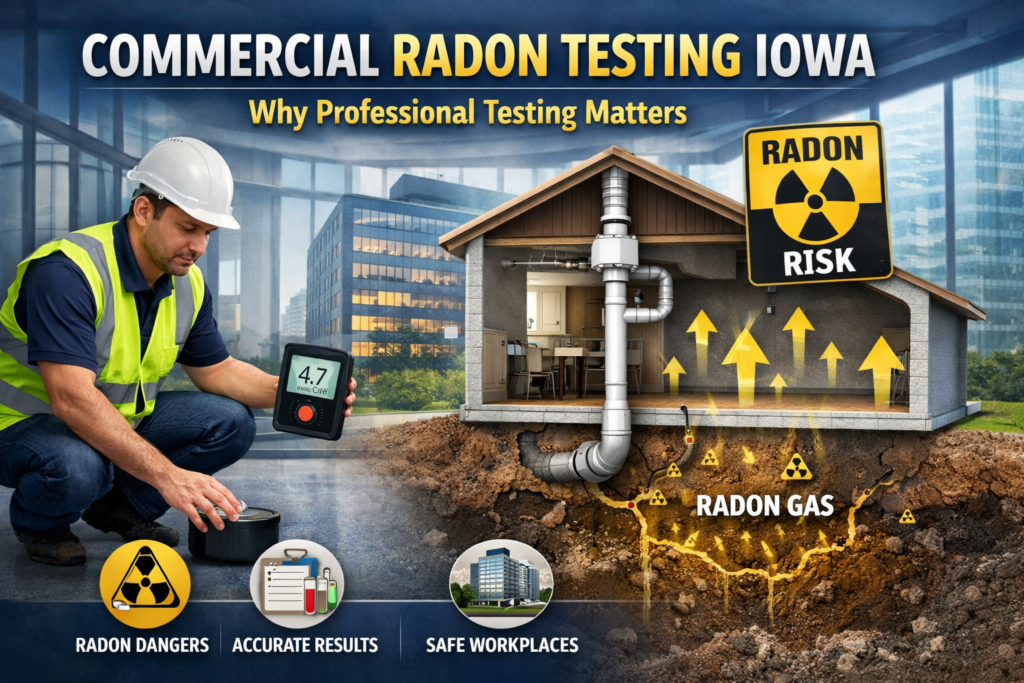
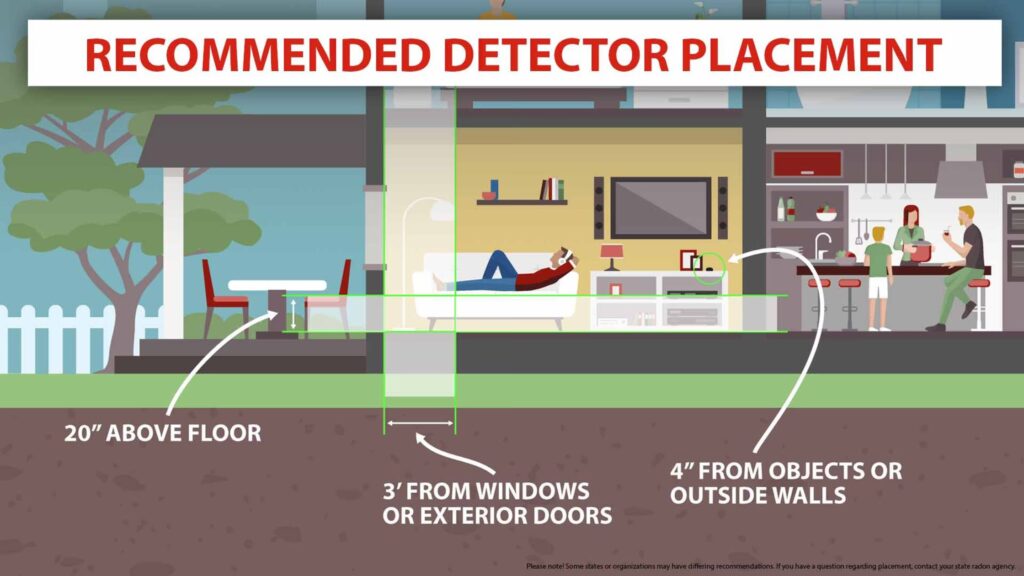
Professional testing also ensures accurate deployment of devices in the proper locations, usually the lowest livable level of a house, where radon tends to gather. Learn more about Radon Mitigation Installation for Safer Air.
When Radon Levels in Home Are High
If testing reveals elevated radon levels in home, taking action is essential. Long-term exposure to high radon can damage lung tissue and significantly increase the risk of lung cancer, especially among non-smokers. Because radon can accumulate unnoticed, even seemingly healthy indoor air may still be dangerous without testing and mitigation.
Thankfully, numerous solutions are proven effective at lowering radon levels and protecting indoor air quality. These strategies range from structural changes to professional mitigation systems designed to continuously reduce radon entry and concentration.
Practical Ways to Reduce Radon Levels in Home
When testing reveals elevated radon, you must take targeted action to reduce exposure and protect indoor air quality effectively.
1. Improve Home Ventilation
Increasing airflow in the house — such as opening windows, using fans, and ensuring vents are unobstructed — can help lower radon temporarily. However, natural ventilation alone is generally not sufficient for long-term radon reduction when levels are high.
2. Seal Cracks and Openings
Sealing cracks in floors and walls, gaps around service pipes, and other openings can reduce the pathways through which radon enters the living space. While this will not eliminate radon entirely, it makes mitigation systems more effective.
3. Use Active Radon Mitigation Systems
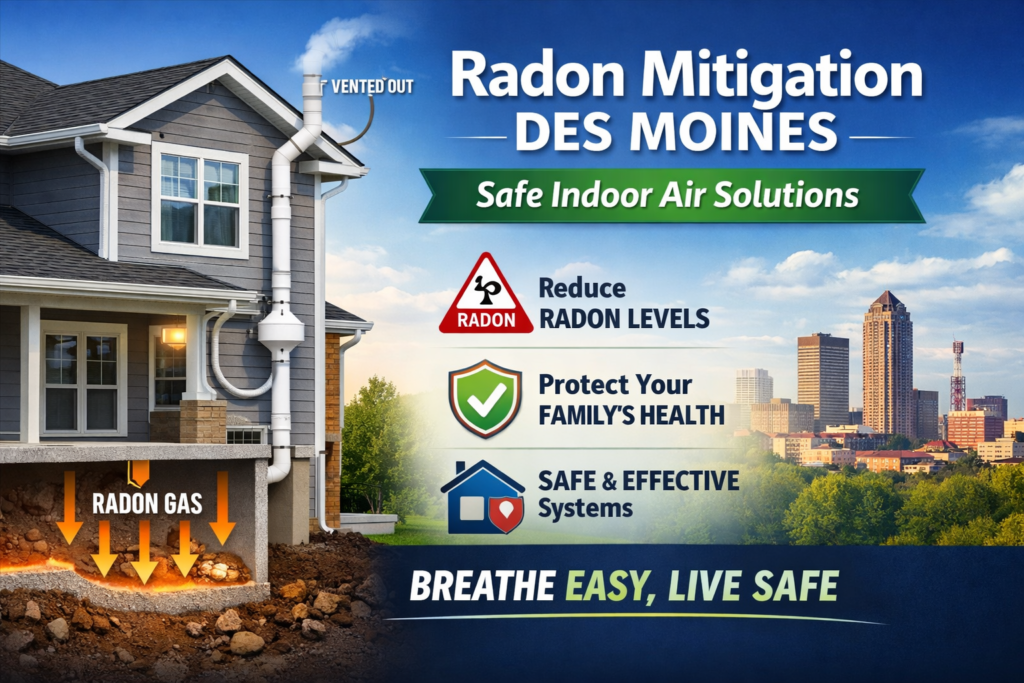
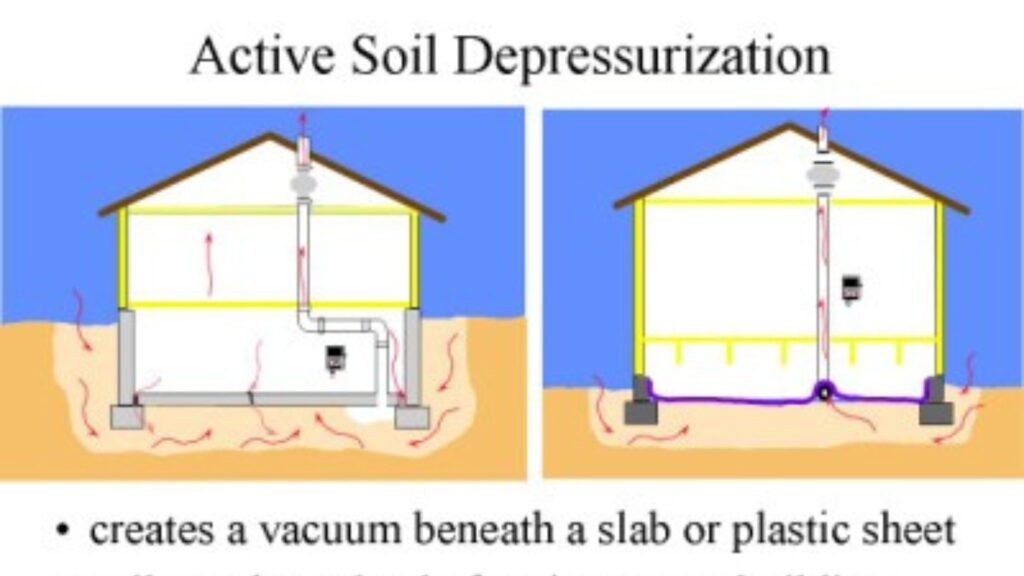
The most effective method to lower radon levels is to install an active soil depressurization (ASD) or other professional radon mitigation system. These systems use vent pipes and fans to draw radon gas from beneath the foundation and safely vent it outdoors above the roofline, preventing it from entering the home.
4. Consider Waterborne Radon Treatment
Radon can also dissolve into household water from wells or groundwater sources. Specialized water treatment systems — such as aeration tanks or activated carbon filters — help remove radon from water before it reaches faucets.
Together, these strategies create a layered defense that lowers radon entry, improves air safety, and helps maintain healthier living conditions over time.
Keeping Radon Levels in Home Low
Once a professional mitigation system is installed, ongoing maintenance and periodic retesting keep it working at full strength and help ensure radon levels in home stay consistently safe. These systems rely on key components like the fan, seals, and vent piping, and over time those parts can loosen, wear, or lose efficiency.
In addition, follow-up testing every two years helps you verify the system still performs as intended and catches rising radon levels in home early. Moreover, you should retest sooner if you finish a basement, remodel the foundation, change HVAC ventilation, or notice any system changes—because even small structural updates can shift airflow and affect radon behavior.
Why Professional Expertise Matters
While DIY strategies can help temporarily, professional testing and mitigation services provide reliable, lasting results. Trained radon specialists test accurately, design tailored mitigation systems, and verify performance after installation. They ensure that radon levels in home are not only reduced but also remain below recommended safety thresholds.
Professional services also include solutions for both residential and commercial properties, air purification, and support for air and waterborne radon issues — offering comprehensive protection for all building types.
Conclusion
Understanding and acting on radon levels in home is one of the smartest steps you can take to protect indoor air quality and long-term health. Because radon stays invisible while it builds up, you need accurate testing and a proven plan to reduce it.
If you want real confidence—not guesses—work with DSM Radon, a local team focused on precise radon testing, reliable mitigation, and complete indoor air quality support. They don’t just install a system; they help you identify the source, apply the right solution for your home type, and guide you on retesting and upkeep so results stay consistent.