


Radon is a naturally occurring radioactive gas that forms in soil and rock and can seep into homes without warning. Iowa has some of the highest radon levels in the United States, which makes mitigation a common and necessary step for many homeowners. However, even after installing a mitigation system, some homes experience radon re-entry—a situation where radon levels rise again over time.
Radon re-entry in Iowa homes is not unusual. Changes in soil pressure, home structure, ventilation, or system performance can allow radon to find new pathways inside. Because radon is invisible and odorless, homeowners may not realize levels have increased unless they retest. Understanding how and why radon re-entry happens helps you protect your home long after mitigation is installed.

How does Radon Re-Entry?
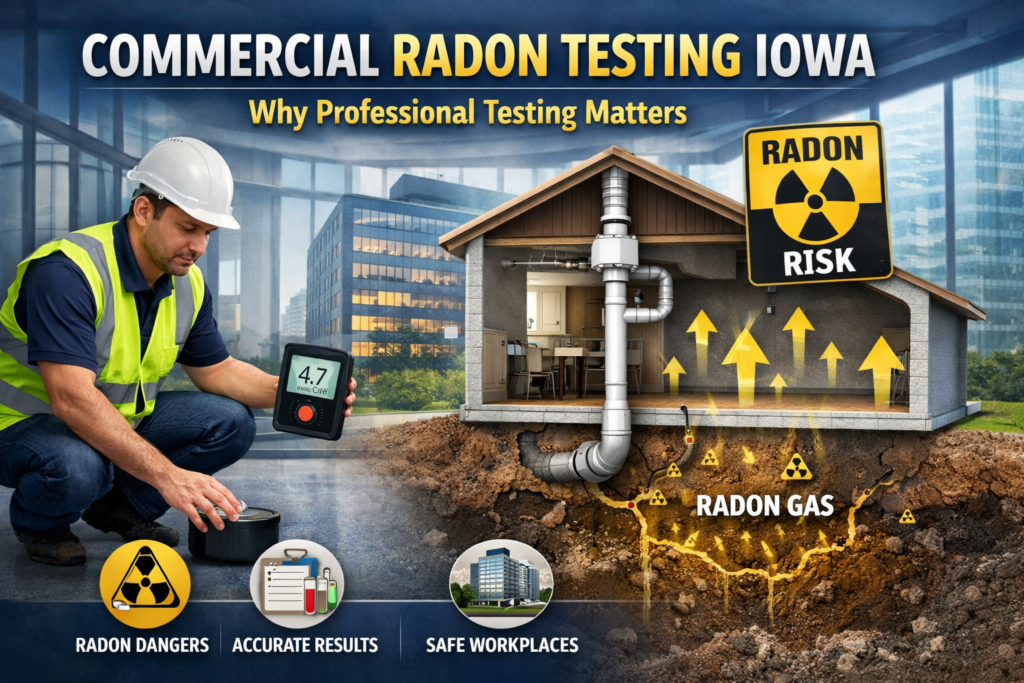
Radon re-entry occurs when radon gas begins to accumulate inside a home again after mitigation has already been completed. A mitigation system reduces radon by redirecting soil gases away from the foundation. However, it does not eliminate radon at the source. Over time, radon can re-enter if:
- New cracks form in the foundation.
- Soil conditions shift around the home.
- Ventilation patterns change.
- The mitigation fan weakens or fails.
- Home renovations alter airflow or pressure.
In Iowa, expansive soils and seasonal weather changes make these shifts more likely. As a result, homes that once tested safe can later show elevated radon levels if not monitored.
Why Radon Re-Entry Is Common in Iowa Homes
Iowa’s geology plays a major role in radon behavior. Uranium-rich soils release radon continuously, and pressure differences pull that gas toward buildings. Even a properly mitigated home remains in constant contact with radon-producing soil. Several Iowa-specific factors contribute to radon re-entry:
- Freeze–thaw cycles: Seasonal temperature swings can create new foundation gaps
- Soil movement: Clay-heavy soils expand and contract, changing gas flow paths
- Basement use changes: Finished basements and added insulation affect air pressure
- Aging systems: Fans and seals degrade over time
Because of these conditions, radon re-entry in Iowa homes should be treated as a long-term risk, not a one-time fix.
Signs Radon Levels May Be Rising Again
Radon re-entry usually has no visible warning signs, but certain situations should prompt retesting:
- It has been more than two years since your last radon test.
- You completed basement remodeling or foundation repairs.
- Your mitigation system fan sounds different or stops running.
- You sealed windows, doors, or improved insulation.
- You notice condensation or airflow changes in lower levels.
The only reliable way to confirm radon re-entry is through testing. Without testing, elevated levels can go unnoticed for years.

Short-Term vs. Long-Term Testing After Mitigation
When checking for radon re-entry, test duration matters because radon levels can change day to day and season to season. Choosing the right test helps you understand whether your mitigation system is still working effectively.
a) Short-Term Tests
Short-term tests measure radon levels over 2 to 7 days and provide quick feedback. They are useful for:
- Spot-checking system performance
- Testing after renovations or structural changes
- Confirming suspected radon re-entry
However, short-term tests can be influenced by weather conditions, indoor ventilation, and temporary pressure changes, so results should be viewed as an initial indicator rather than a conclusion.
b) Long-Term Tests
Long-term tests run for 90 days or more and provide a clearer picture of average exposure. These tests are ideal for:
- Confirming ongoing radon re-entry
- Understanding seasonal variations in radon levels
- Making informed decisions about repairs or system upgrades
For Iowa homes, long-term testing offers the most dependable way to confirm that radon levels remain consistently controlled over time. Learn more about Radon Mitigation Iowa.
How to Prevent Radon Re-Entry in Iowa Homes
Preventing radon re-entry is about maintenance, monitoring, and awareness—not just installation.
A) Retest Regularly
Even with mitigation, radon testing should be done every two years. Retesting ensures your system continues to perform as intended and catches rising levels early. Also, retest after major renovations or HVAC changes, because airflow shifts can affect radon levels.
B) Inspect the Mitigation System
Check that the fan is running continuously and the vent pipes remain sealed. Any vibration changes, unusual noise, or power interruptions should be addressed quickly. In addition, confirm the system monitor (if installed) shows normal operation, so you spot issues before levels rise.
C) Maintain Foundation Seals
Seal new cracks in floors, walls, and around utility penetrations. While sealing alone does not stop radon, it supports system efficiency and limits re-entry points. Moreover, keep a simple inspection schedule, so small gaps do not turn into recurring leaks.
D) Avoid Pressure Changes Without Testing
Major changes to insulation, HVAC systems, or basement layouts can alter pressure balances. Always test after structural or ventilation updates. Therefore, test within a few days of completing the change, so you can confirm the new setup stays safe.
These four habits keep radon control reliable over time. When you retest on schedule, monitor the system, maintain seals, and test after major changes, you catch problems early and protect indoor air quality with confidence.
Common Mistakes That Lead to Radon Re-Entry
Many homeowners assume mitigation is permanent. Common oversights include:
- Skipping follow-up radon testing.
- Ignoring aging system components.
- Finishing basements without reassessment.
- Disconnecting mitigation fans to save energy.
- Assuming low past readings guarantees future safety.
Radon control works best when treated as ongoing home maintenance.

Conclusion
Radon re-entry in Iowa homes is a real and manageable risk. While mitigation systems are highly effective, changing soil conditions, home upgrades, and system wear can allow radon levels to rise again over time. Regular testing, system checks, and awareness are essential to maintaining a safe indoor environment.
By treating radon monitoring as a long-term responsibility rather than a one-time task, homeowners can protect their families from unnecessary exposure. To learn more about radon testing, mitigation, maintenance, and long-term protection strategies, visit DSM Radon. and stay informed about keeping your home safe.