
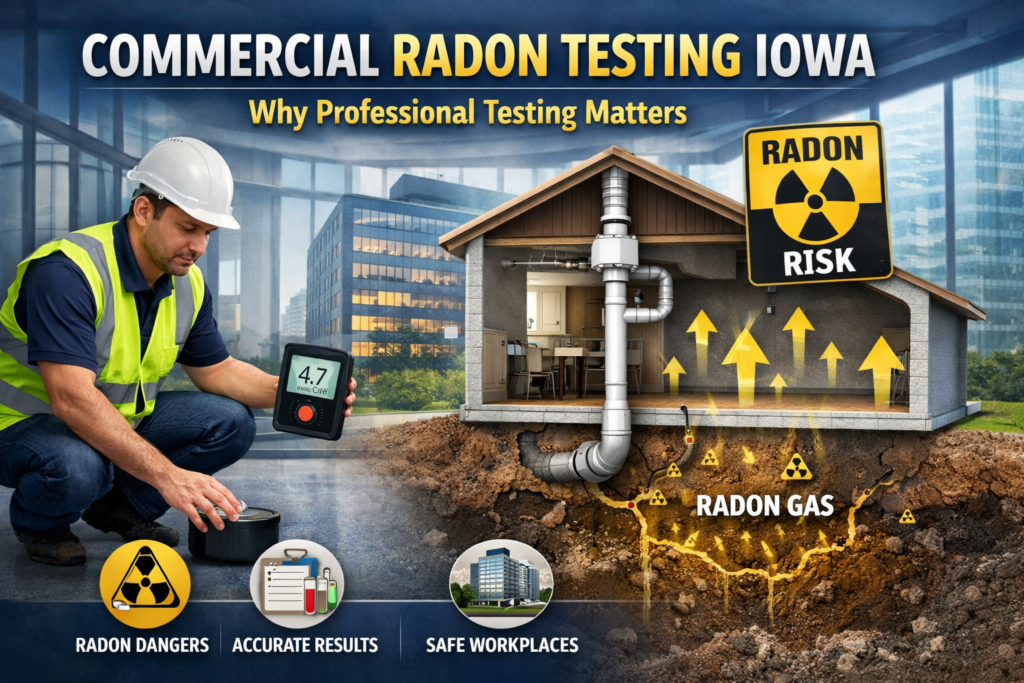
Commercial buildings in Iowa face a unique challenge that many property managers overlook: radon gas exposure. Because radon is invisible, odorless, and undetectable without specialized equipment, it remains a silent threat in many offices, schools, multi-family units, and other large structures. Fortunately, commercial radon testing Iowa services conducted by certified experts reveal dangerous levels and guide the next steps toward protection. Moreover, relying on professional radon testing ensures accurate results and tailored solutions for your commercial property.
In this article, you’ll learn what radon is, why commercial testing matters, how professionals conduct tests, and how trusted Iowa specialists handle every step — from assessment to mitigation planning.
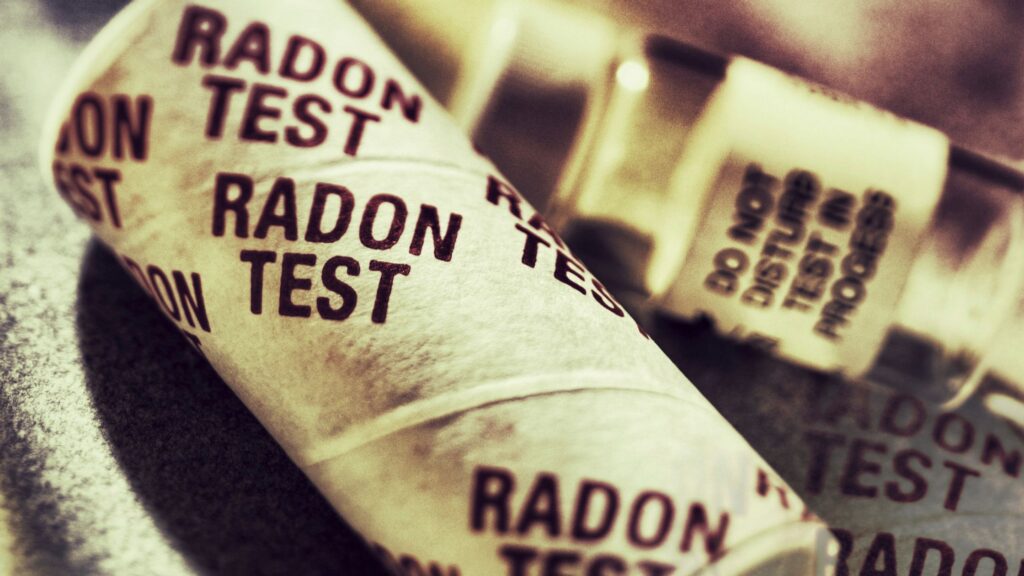
Understanding Radon in Commercial Properties
Radon is a naturally occurring radioactive gas that forms when uranium in soil and rock breaks down. Because it enters through foundation cracks, gaps, and unsealed entry points, radon can build up indoors and create serious health risks. Unlike many pollutants, radon has no smell, taste, or colour, so you cannot detect it without testing.
Health experts link radon to lung cancer risk, second only to smoking. Because people spend long hours in commercial buildings, exposure can affect employees, tenants, and visitors. Therefore, commercial owners need reliable detection and reduction. While some businesses rely on basic air checks, only expert professional radon testing delivers precise readings and clear next steps.
Why Commercial Radon Testing Iowa Is Critical
Commercial radon testing offers several key advantages that go beyond mere compliance:
- Protects Occupant Health: Accurate testing reveals radon levels that may otherwise go undetected, helping protect the health of employees, clients, and occupants.
- Regulatory Preparedness: Some local codes, regulations, and safety policies require regular radon testing and mitigation plans.
- Liability Reduction: Professional radon testing helps building owners document indoor air quality and take action before health incidents occur.
- Property Value and Market Confidence: Properties with tested and documented safe air quality often attract tenants and buyers more easily.
Without expert testing, you can’t know whether radon is present — and because Iowa’s soil composition often produces elevated levels of radon beneath buildings, regular professional testing is simply good business policy.
How Professional Radon Testing Works
Professional radon testing follows a clear, methodical approach that ensures accurate results and informed decision-making while minimizing disruption and meeting commercial documentation requirements:
1. Preliminary Assessment and Planning
First, technicians identify the areas that require monitoring — for example, basements, lower floors, or enclosed spaces with limited ventilation. Next, they determine the best type of test for your property.
2. Short-Term Testing
Short-term tests measure radon levels over a period of days, typically between two and 90 days. These tests provide quick initial results and are useful for rapid evaluation of possible radon issues.
3. Long-Term Testing
For a more complete view of year-round radon exposure, experts use long-term monitoring that runs for more than 90 days. Because radon levels can vary with weather and ventilation, this method often delivers the most reliable measurement.
4. Data Collection and Reporting
Once monitoring ends, experts retrieve the devices, analyze the results, and prepare a detailed report that shows whether radon levels exceed recommended safety thresholds. They then review the results with building owners and offer clear recommendations.
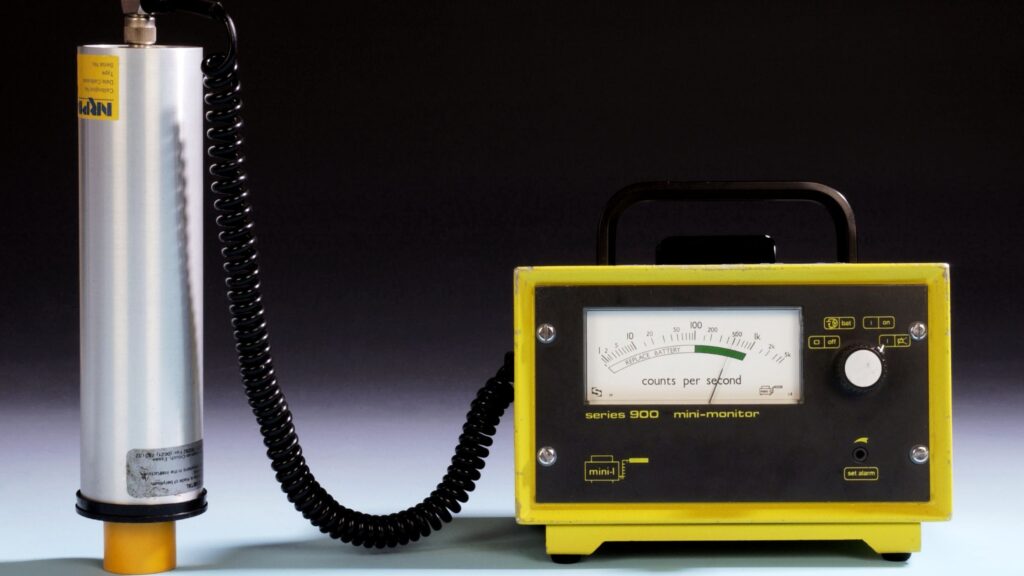
Because radon is invisible and cannot be detected without professional equipment, this methodical process ensures measurements are trustworthy and legally defensible — an important factor for commercial property owners. Learn more about Radon Testing for Industrial Facilities.
When Radon Testing Is Necessary for Commercial Buildings
Commercial radon testing isn’t just for older buildings or those with basements. You should plan professional radon testing when:
- You are preparing to buy or lease a commercial space.
- A tenant requests indoor air quality documentation.
- Structural changes or renovations affect ventilation or foundation integrity.
- Local regulations or safety standards require periodic testing.
- Routine maintenance checks reach the recommended testing interval.
By scheduling regular professional radon testing, you ensure that potential problems are identified early and that mitigation systems — if needed — are implemented before exposure risks grow.
Interpreting Radon Test Results
After completing the testing process, professionals explain the radon concentration levels in your building and offer guidance on the next steps:
- Safe Levels: If radon remains below the recommended action level (typically 4.0 picocuries per liter), ongoing monitoring and periodic retesting may suffice.
- Elevated Levels: If radon exceeds safety thresholds, professionals design a customized mitigation strategy to reduce radon concentrations efficiently.
- Post-Mitigation Verification: After mitigation, professionals retest to confirm radon levels stay consistently within a safe range.
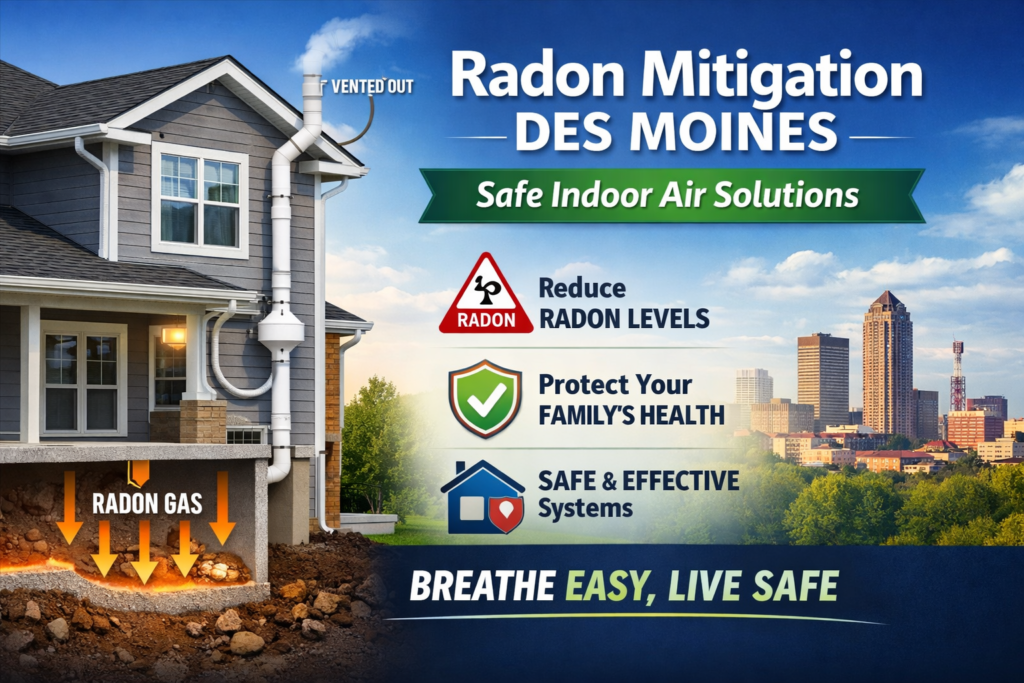
In commercial settings, mitigation plans often involve venting radon away from occupied spaces, sealing entry points, installing advanced fans and piping, and offering ongoing monitoring to verify continued safety.
Choosing the Right Professional Radon Testing Provider
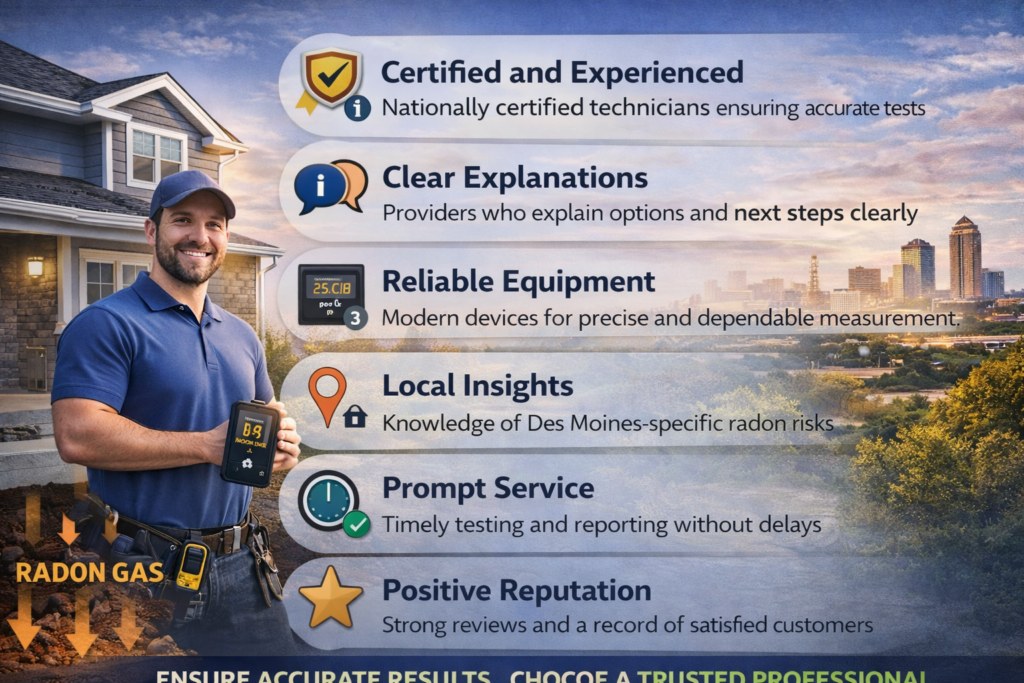
When you select a testing partner for your commercial property, keep the following qualities in mind:
- Technicians should meet the standards of recognized radon credentialing organizations.
- Providers familiar with Iowa’s soil conditions and building types bring valuable expertise.
- Clear results and actionable recommendations build confidence in your next steps.
- Choose a provider who supports testing, mitigation design, and verification.
- Responsive scheduling and consistent updates reduce disruptions to your operations.
These qualities ensure that your commercial radon testing experience is both efficient and professionally executed.
Conclusion
In Iowa’s commercial buildings, radon gas poses a significant yet invisible threat to air quality and occupant health. When you invest in commercial radon testing Iowa and rely on professional radon testing, you safeguard your business, protect employees and customers, and strengthen your property’s value and reputation. Because radon cannot be detected without proper equipment, professional measurement and expert analysis are essential first steps in a complete indoor air safety strategy.
For trusted, certified commercial radon testing and comprehensive radon services, choose DSM Radon — a local leader dedicated to accurate testing, clear communication, and effective protection across Iowa’s businesses and institutions.