
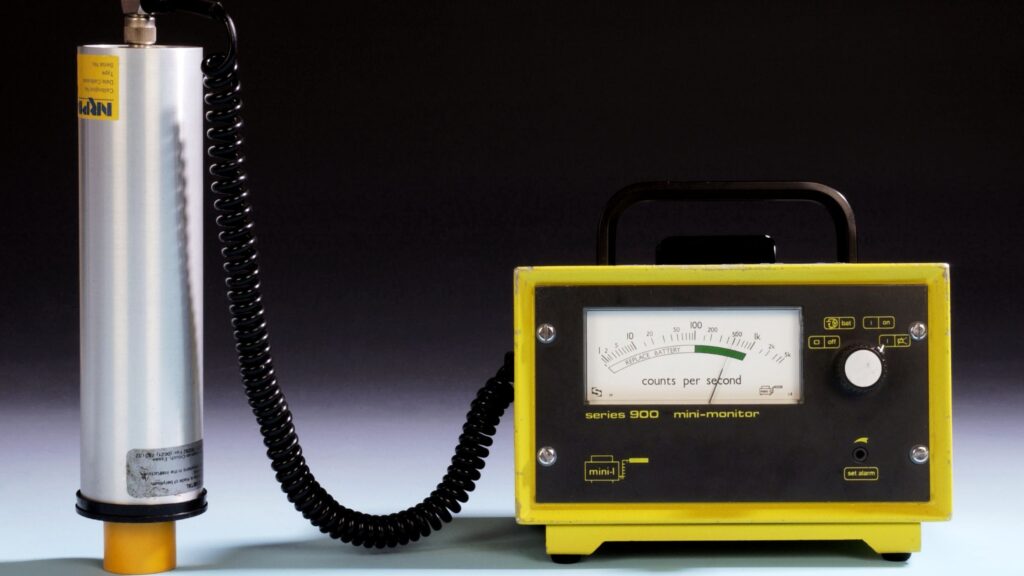
Radon can feel hard to understand because you can’t see it, smell it, or taste it. Therefore, many homeowners search for a fast, reliable starting point. The radon zone map 1993 offers that first direction by placing every U.S. county into a risk group based on expected indoor radon potential. However, you must read the map correctly, or you may assume you’re safe and delay a radon test. This guide explains what the radon zone map 1993 tells you, what it cannot confirm, and how to use it as a practical plan for testing, follow-ups, and safer indoor air for homes, workplaces, and schools.
What the Map Measures
EPA created the map to help agencies and property groups focus radon risk-reduction work across the country. Additionally, EPA used several data sources to assign zones, such as indoor radon test results, local geology, aerial radioactivity, soil factors, and common foundation styles. Consequently, the map shows county-level potential, not a guaranteed reading for one specific address.
Because the map works at a broad county scale, it cannot account for the small details that change indoor radon, including foundation cracks, sump pits, nearby soil flow, or HVAC pressure differences. Therefore, you should use it as a starting signal to set testing urgency and guide building policies, not as a final diagnostic answer.
EPA Zones Explained Simply
The radon zone map 1993 places every U.S. county into one of three EPA zones:
a) Zone 1: Highest potential, where average indoor screening results can rise above 4 pCi/L.
b) Zone 2: Moderate potential, where average indoor screening results often sit between 2 and 4 pCi/L.
c) Zone 3: Lower potential, where average indoor screening results often stay below 2 pCi/L.
These ranges help officials explain risk and set priorities. However, your safest decision still comes from your own radon test result, because a zone label cannot guarantee what happens inside your specific building.
Why the Map Can’t Replace Testing
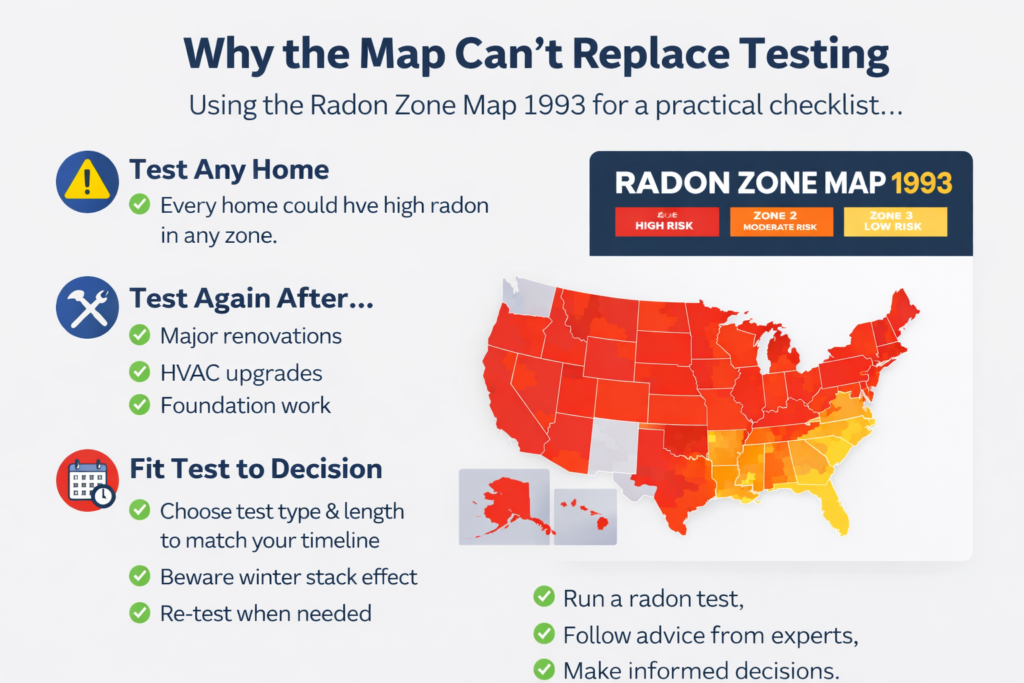
People often treat the radon zone map 1993 like a pass-or-fail label for a home. Meanwhile, EPA warns against that assumption, because any home can show high radon in any zone. Therefore, you should test even in a lower-potential county, and you should retest after major changes such as renovations, HVAC upgrades, or foundation work that changes airflow.
Additionally, weather and seasonal “stack effect” can raise or lower indoor radon, especially during colder months when homes stay closed. Consequently, one short test may not show your long-term exposure, so you should pick a test method that fits your timeline and the decision you need to make.
You get the most value from the radon zone map 1993 when you connect it to a practical checklist:
Map Purpose
You get the most value from the radon zone map 1993 when you connect it to a practical checklist:
A. Set urgency, not certainty
If your county falls in Zone 1, schedule testing sooner and treat the result as a priority for follow-up.
B. Guide policy for shared buildings
Because the map helps target resources, schools, and multi-family teams can plan testing across sites with a clear system.
C. Plan construction protections
Builders and owners can add radon-resistant features more consistently when the county zone signals higher potential. Additionally, this planning supports teams managing multiple projects across a region.
D. Communicate risk to occupants
A simple zone label helps explain why you plan testing, mitigation verification, and retesting intervals in workplaces and shared spaces.
Therefore, when you use the zone as a starting signal and use testing as proof, you make safer decisions with less guesswork and more confidence.
Testing Strategy
A smart radon plan starts with where people spend time and how the building moves air. Therefore, you should place test devices at the lowest livable level, because lower levels often pull soil gas more directly.
You should also match the test length to your goal:
i. Short-term testing (usually 2–7 days): Supports fast decisions during real estate timelines or early screening.
ii. Long-term testing (usually 91 days to 1 year): Provides a steadier average and captures seasonal changes.
Consequently, when you need higher confidence, you should use a longer test window or confirm with follow-up testing. Learn more about Radon Testing for Industrial Facilities.
Targeted Mitigation
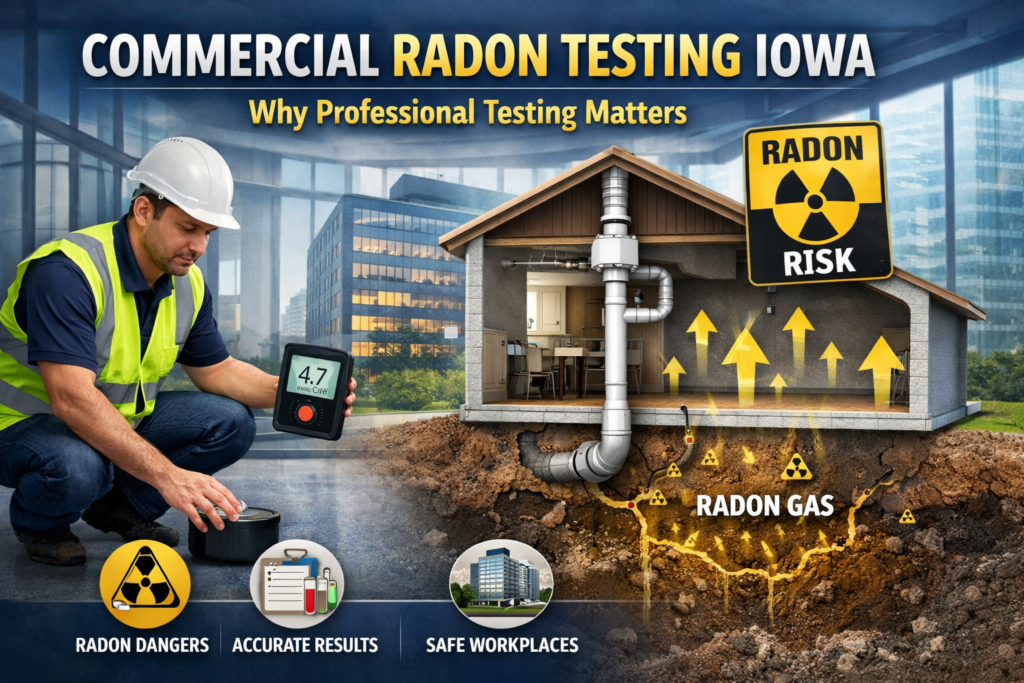
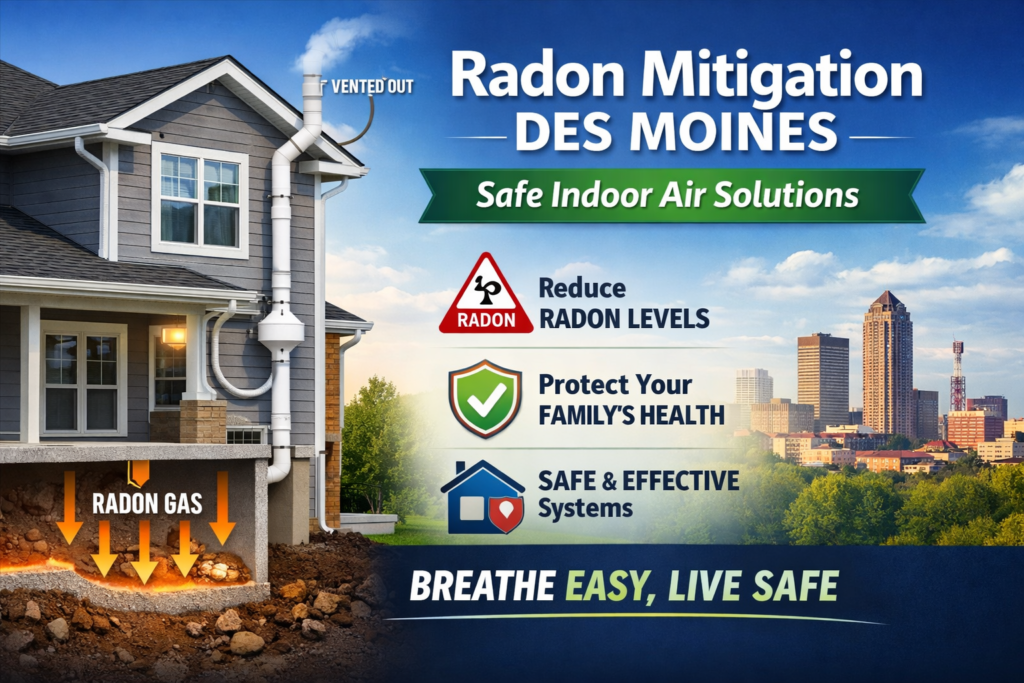
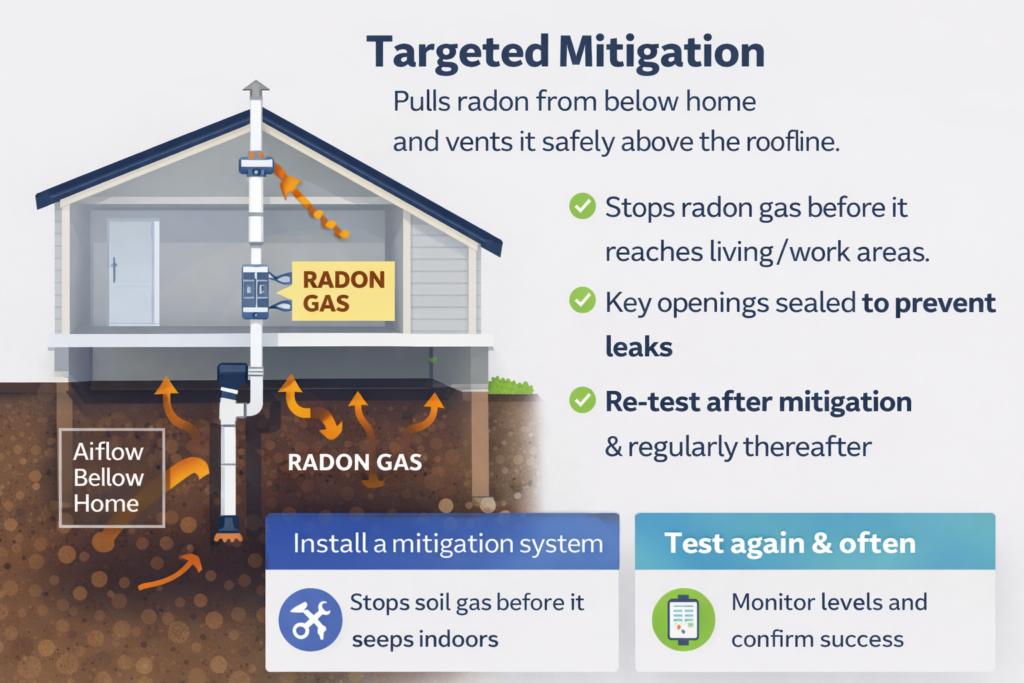
When a radon test shows high levels, you need a system that stops soil gas before it reaches living or work areas. Therefore, professionals often use active soil depressurization, which pulls radon from beneath the building and vents it safely above the roofline. Additionally, crews usually seal key openings to help the system work better, because fewer entry paths reduce indoor buildup.
However, you should not assume the system solved the problem without proof. Instead, you should test again after mitigation to confirm the new level, and you should retest on a regular schedule to stay confident over time.
Common Mistakes
People repeat the same avoidable mistakes with the radon zone map 1993, so you should watch for these patterns:
- They skip testing in Zone 2 or Zone 3. However, a home in any zone can still test high.
- They trust a neighbor’s result. Meanwhile, foundations, soil paths, and pressure patterns change from house to house.
- They test once and stop. Consequently, renovations and HVAC or mechanical updates can shift indoor radon over time.
- They only think about homes. Additionally, workplaces and schools need structured testing and retesting plans for shared buildings.
Therefore, you protect people best when you use the map as guidance, test each building, and retest whenever conditions change.
Conclusion
When you use the radon zone map 1993 as a planning tool, you make faster, calmer decisions. Moreover, when you pair the map with accurate testing and post-mitigation verification, you protect your home or facility with evidence instead of assumptions. If you want a team that understands real-world building airflow and delivers clear, verified results, choose DSM Radon for professional radon testing and radon mitigation across the Des Moines area, including support for residential homes, commercial facilities, schools, and HUD multi-family projects.