
Radon is a genuine health risk in apartments, not just single-family homes. The U.S. Environmental Protection Agency (EPA) and the Surgeon General recommend that every residence below the third floor be tested for radon. If you live in a ground-floor or basement-level unit, testing is one of the most important steps you can take to protect your long-term health.
Why Radon Is a Real Risk in Apartments
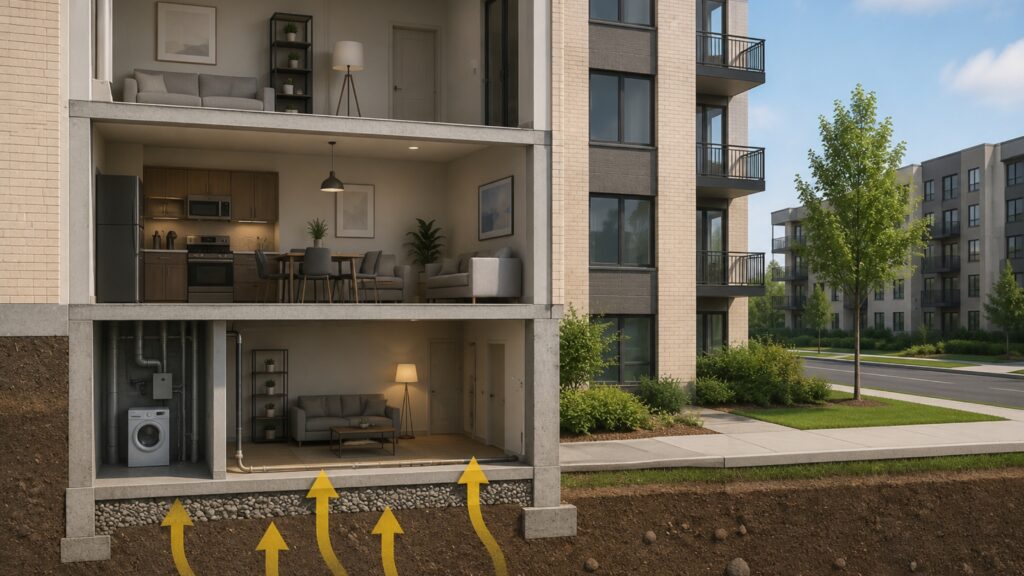
Many renters assume radon is only a problem for homeowners with basements. That assumption is wrong. Radon is a naturally occurring radioactive gas that seeps from soil and rock into any ground-level structure — including apartment buildings. The National Center for Healthy Housing (NCHH) confirms that the EPA and the Surgeon General both recommend testing all residences located below the third floor.
Radon is the second leading cause of lung cancer in the United States, responsible for approximately 21,000 deaths each year according to the EPA. Exposure accumulates silently over months and years, making early testing critical. Living in a multi-unit building does not dilute your risk if your unit is close to the ground.
Does Your Landlord Have to Test for Radon?
No federal law requires landlords to test for radon or disclose radon levels to tenants. This gap in federal regulation leaves most renters without any legal guarantee that their unit has been evaluated. However, a handful of states have stepped in with their own requirements.
Four states currently require landlord radon disclosure: Colorado, Florida, Illinois, and Maine. Outside those states, the legal obligation falls away — but your personal health risk does not. Regardless of where you live, the EPA’s tenant guide encourages renters to request radon test results from their landlord and to conduct their own testing if results are unavailable.
State-by-State Disclosure Requirements at a Glance
| State | Requirement |
|---|---|
| Colorado | Landlords must disclose known radon hazards; CDPHE offers free test kits |
| Florida | Landlords must provide written radon disclosure notice to new tenants |
| Illinois | Landlords must disclose known radon test results upon tenant request |
| Maine | Landlords must test and disclose radon levels in rental units |
Legislation requiring radon disclosure is advancing in additional states, so check your state health department’s website for the most current rules. If you live outside these four states, assume no disclosure will be provided and plan to test independently.
Can You Test Your Apartment Without Landlord Permission?
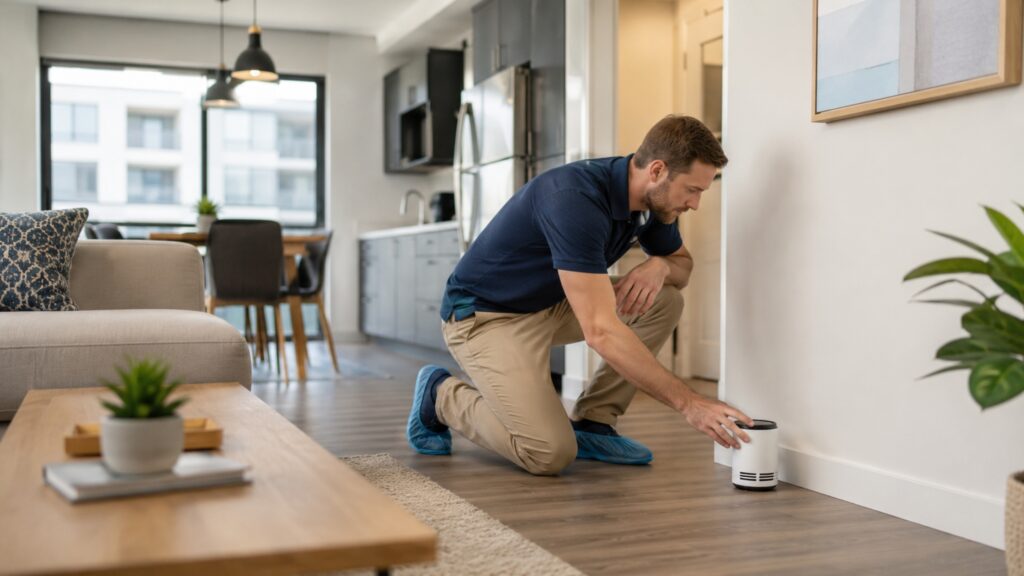
Yes. Renters can generally test for radon in their apartment without landlord permission, since tenants have the right to monitor their own air quality. Purchase a short-term charcoal canister test or long-term alpha-track detector, place it on the lowest livable floor, and follow EPA placement guidelines for accurate results.
In rare cases, a lease may include language that restricts modifications or environmental testing. If yours does, submit a written request to your landlord asking for their documented radon test results before pursuing independent testing. Most landlords will not object to a passive radon detector that requires no installation. If your landlord refuses and your lease does not explicitly prohibit it, testing without permission is generally within your rights as a tenant.
How to Test for Radon in Your Apartment: Step-by-Step
Testing your apartment for radon is straightforward and does not require professional equipment for an initial screening. Follow these steps:
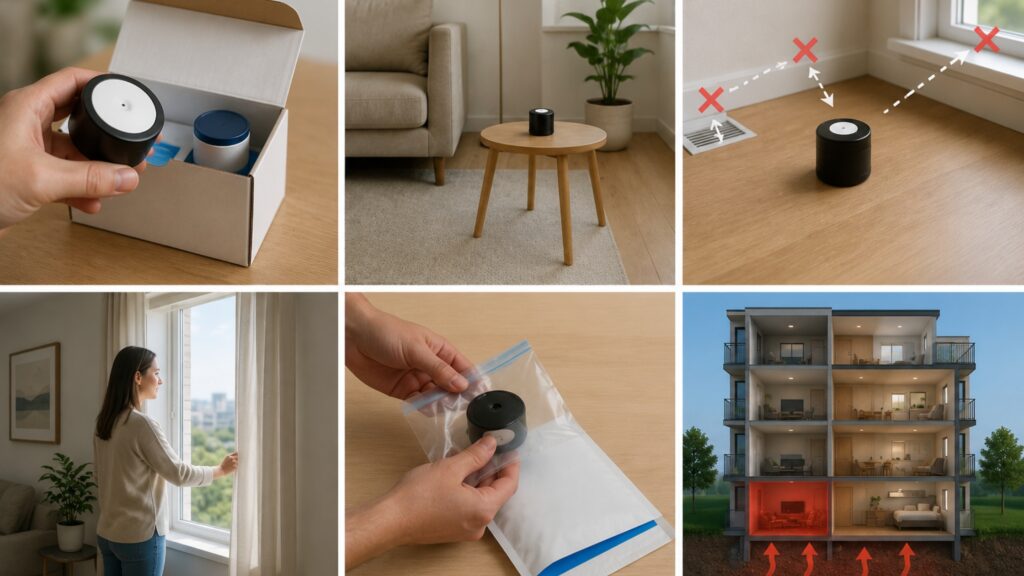
- Buy a certified test kit. Look for kits listed by the National Radon Proficiency Program (NRPP) or the National Radon Safety Board (NRSB).
- Choose the right floor. Place the detector on the lowest livable level of your unit — typically the bedroom or living room closest to the ground.
- Follow placement rules. Keep the detector at least 20 inches above the floor, away from exterior walls, windows, and high-airflow areas like kitchens.
- Leave it undisturbed. Maintain normal living conditions — keep windows and doors closed except for routine entry and exit.
- Mail it to the lab. Most kits include a prepaid envelope. Results arrive within a few days to two weeks depending on test type.
Floor level matters significantly. Ground-floor and basement units consistently show higher radon concentrations than upper-floor apartments because radon enters from the soil directly below.
Short-Term vs. Long-Term Radon Tests: Which Should You Use?
Short-term tests use a charcoal canister and run for 48 to 96 hours. They give you a fast snapshot of radon levels and are a good starting point if you want results quickly or are about to sign or renew a lease.
Long-term tests use an alpha-track detector and run for 90 days or more. They measure your average radon exposure across multiple seasons, which produces a far more accurate picture of your actual annual risk. For renters planning to stay in their unit for six months or longer, a long-term test is the better investment.
If your short-term result comes back at or above 4 pCi/L, follow up with a long-term test before demanding mitigation — a single short-term reading can be influenced by weather and temporary ventilation changes.
Radon Testing Costs and How to Get a Free Test Kit
Retail radon test kits typically cost between $15 and $30 at home improvement stores or online. That price includes lab analysis and return shipping. Professional radon testing by a certified inspector runs between $150 and $300 and is more commonly used in real estate transactions than in rental settings.
Free test kits are available through several programs:
- CDPHE (Colorado Department of Public Health and Environment): Colorado residents can request a free radon test kit directly from the state.
- State health departments: Many states outside Colorado offer subsidized or free kits during radon awareness campaigns, particularly in January (National Radon Action Month).
- Local health departments: County-level programs sometimes distribute free kits to low-income renters.
Learning how much radon testing costs ahead of time helps you budget appropriately and identify free alternatives before spending out of pocket. You can also explore how to get a free radon test kit through your state’s radon program.
What to Do If Your Apartment Tests Above 4 pCi/L
The EPA sets 4 pCi/L as the action level for radon — the concentration at which mitigation is strongly recommended. If your test result meets or exceeds that threshold, take these steps immediately:
- Notify your landlord in writing. Document the test result, the date, and the certified lab that analyzed it. Email creates a time-stamped record.
- Reference the EPA action level. Cite the 4 pCi/L standard explicitly so your landlord understands the request is grounded in federal guidance.
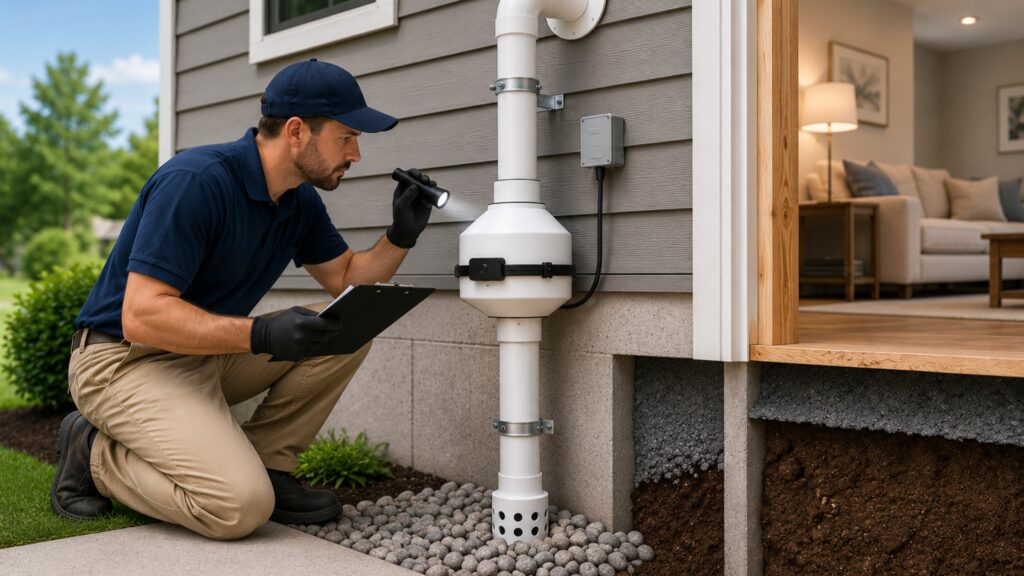
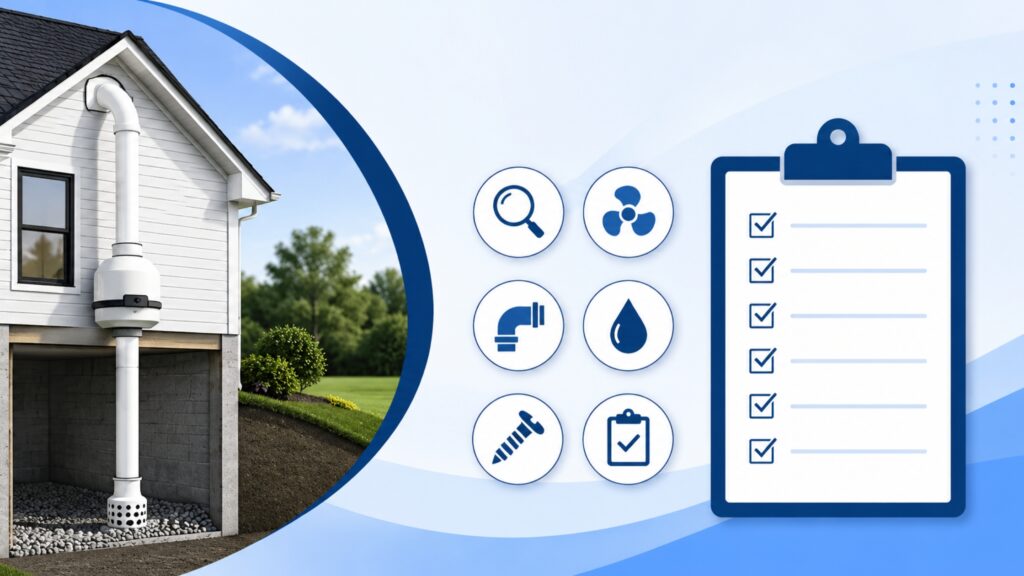
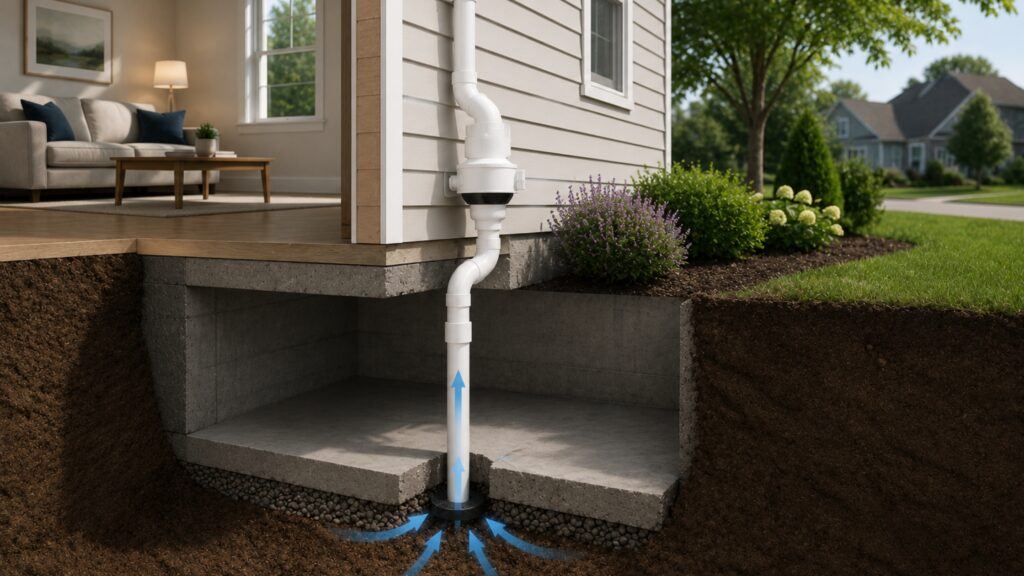
- Request professional mitigation. A qualified contractor can install radon mitigation systems for apartments — most commonly sub-slab depressurization — that reduce levels by up to 99%.
- Understand your tenant rights. If your landlord refuses to act and your state has a habitability statute covering air quality, you may have legal grounds to withhold rent or break your lease. Consult a tenant rights organization in your area.
Mitigation is the landlord’s financial responsibility in most jurisdictions once a hazard is documented. Keep all correspondence and test results on file.
When Is Radon Highest? Seasonal and Floor-Level Factors
Radon levels are typically highest in winter months, when windows and doors stay closed and buildings are tightly sealed. Reduced ventilation allows radon to accumulate indoors rather than dissipating. Testing during winter or in closed-house conditions gives you a worst-case reading, which is the most useful benchmark for health decisions.
Ground-floor and basement units face significantly higher radon concentrations than units on upper floors because radon migrates upward from soil. Units above the third floor rarely show elevated readings, which is exactly why the EPA and NCHH draw the testing threshold at that level. If you live on the first or second floor, treat testing as non-negotiable.
First Signs of Radon Exposure and Health Risks
There are no immediate or visible first signs of radon exposure. Radon is odorless, colorless, and tasteless — you cannot detect it without a test. The health damage it causes is cumulative, building silently over years of exposure rather than triggering acute symptoms.
The only proven health consequence of long-term radon exposure is lung cancer. The EPA estimates that radon causes about 21,000 lung cancer deaths annually in the United States, making it the leading environmental cause of cancer mortality after cigarette smoking. Smokers exposed to elevated radon face a dramatically compounded risk. Understanding the long-term health risks of radon exposure is the strongest motivation for testing proactively rather than waiting for symptoms that will never appear.

FAQs
1. Is radon testing normal for apartments?
Radon testing is not yet universal in apartments, but it is strongly recommended by the EPA and the Surgeon General for all units below the third floor. Awareness is growing, and testing is becoming more common — especially in states with mandatory disclosure laws.
2. Can I test for radon in my apartment without my landlord’s permission?
Yes, in most cases. Tenants generally have the right to test their own air quality using a passive radon detector. Unless your lease explicitly prohibits environmental testing, you can purchase a certified kit and conduct the test yourself.
3. How is a radon test done in an apartment?
Place a certified charcoal canister (short-term) or alpha-track detector (long-term) on the lowest livable floor of your unit, away from windows and high-airflow areas. Leave it undisturbed for the required time period, then mail it to the lab for analysis.
4. What month or season is radon highest in apartments?
Radon levels are typically highest in winter, when buildings are sealed and ventilation is minimal. Testing during winter or under closed-house conditions produces the most conservative and health-relevant results.
5. What are the first signs of radon exposure?
There are no immediate symptoms of radon exposure. Radon has no smell, color, or taste. The only known health effect is an elevated risk of lung cancer, which develops from long-term cumulative exposure — making proactive testing the only reliable protection.
6. Which states require landlords to disclose radon levels to renters?
Colorado, Florida, Illinois, and Maine currently require landlord radon disclosure. No federal law mandates testing or disclosure, so renters in all other states should test independently.
7. How much does radon testing cost for an apartment, and are free kits available?
DIY radon test kits cost $15 to $30 at retail. Free kits are available through the CDPHE in Colorado and through many state and county health departments, particularly during January’s National Radon Action Month.
8. What should I do if my apartment radon test comes back above 4 pCi/L?
Notify your landlord in writing, reference the EPA’s 4 pCi/L action level, and formally request installation of a professional radon mitigation system. If your landlord refuses, consult a local tenant rights organization about your legal options under your state’s habitability laws.