
Radon mitigation system maintenance requires monthly pressure checks, annual seal inspections, and radon retesting every two years. Without these steps, a failing sub-slab depressurization system can allow radon to silently climb back above the EPA’s action level of 4 pCi/L — with no odor, color, or warning sign to alert you.
Why Radon Mitigation System Maintenance Matters
Radon is the second leading cause of lung cancer in the United States, responsible for approximately 21,000 deaths per year according to the EPA. A properly installed sub-slab depressurization system reduces radon levels effectively — but only while it’s working. Fan motors wear out, pipe joints crack, and foundation seals deteriorate over time.
The EPA sets the action level at 4 pCi/L. Once radon climbs above that threshold, your health risk increases significantly. Because radon is invisible and odorless, a failing system gives you no warning without a test or a pressure check. Routine radon mitigation system maintenance is the only way to catch problems before they become health hazards.
Monthly Checks You Can Do Yourself
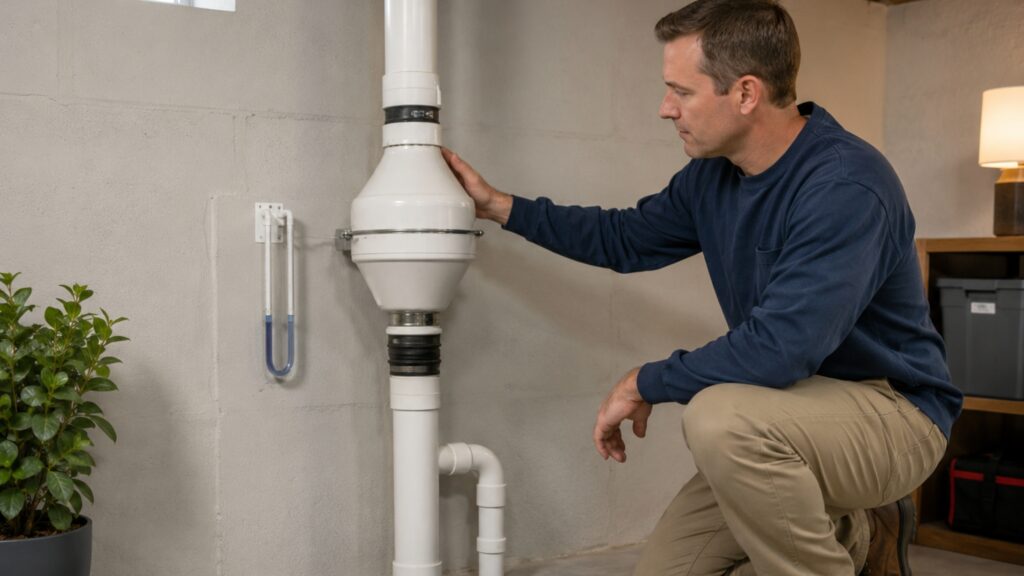
Most radon mitigation systems include a built-in visual indicator — either a U-tube manometer or a small plastic gauge mounted on the PVC pipe. Checking it takes less than 60 seconds and requires no tools. This single monthly habit confirms that your radon fan is generating negative pressure beneath your foundation slab.
If the indicator shows no pressure differential, your fan may have failed. Call an NRPP- or NRSB-certified radon mitigation contractor immediately rather than waiting for your next scheduled retest.
How to Read Your U-Tube Manometer
A U-tube manometer is a small, fluid-filled tube mounted on your radon system’s PVC pipe. Pass: The fluid levels are uneven — one side sits higher than the other, confirming that the fan is pulling a vacuum (negative pressure) beneath the slab. Fail: Both sides of the fluid sit at the same level, which means the fan has stopped creating suction and may have failed entirely.
Check the manometer at the same time each month. Lighting conditions and temperature changes don’t affect the reading, so any flat reading is a reliable failure signal. Document your readings in a simple log so you can spot gradual pressure loss before it becomes a full failure. According to Protect Environmental, consistent uneven fluid levels are the clearest visual confirmation that your system is working correctly.
Listening and Looking: Fan and Pipe Inspection
Stand near the radon fan and listen for 30 seconds. A healthy sub-slab depressurization fan runs with a low, steady hum. Grinding, rattling, or intermittent sounds indicate bearing wear or debris in the fan housing — both require professional attention.
Next, visually inspect the PVC pipe and all pipe joints from the fan down to where it exits the floor or wall. Look for hairline cracks, separation at joints, or moisture staining, which can signal air leaks that reduce system efficiency. Even a small gap in a PVC joint can allow radon-laden air to escape back into living spaces instead of venting outside.
Annual Maintenance Tasks: Seals, Caulking, and Electrical
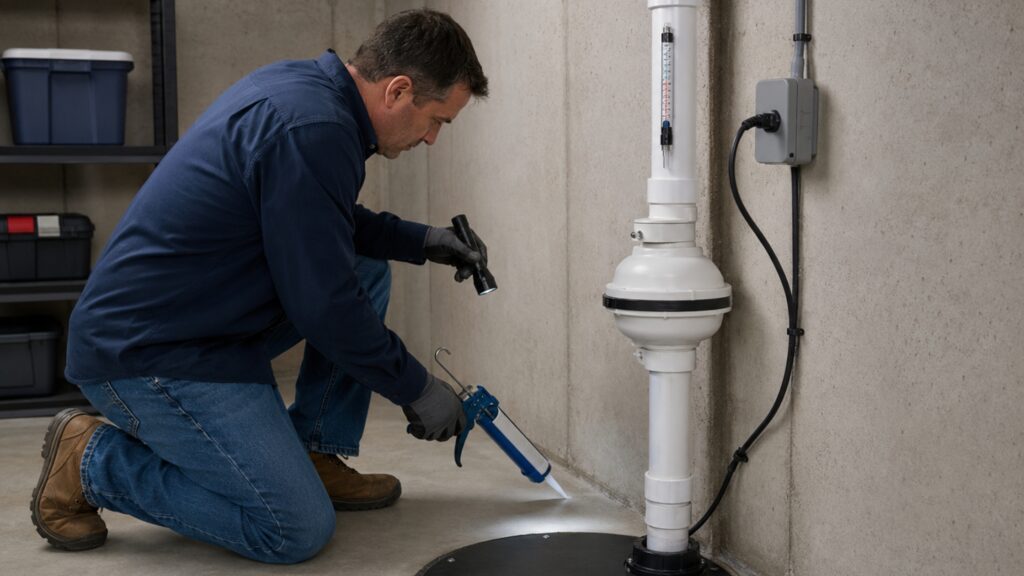
Once per year, inspect every point where radon could enter your home from the soil. This includes the foundation floor-wall joint, any cracks in the concrete slab, and the sump pump cover. Per Lawson Home Services, a loose or cracked sump pump cover is one of the most commonly overlooked radon entry points in homes with mitigation systems.
Apply fresh caulk to any visible cracks or gaps in the foundation. Check that the sump pump cover is airtight and securely sealed. Finally, inspect the electrical connection at the fan unit: look for corrosion on terminals, frayed wiring, or a tripped GFCI outlet. Loose electrical connections can cause intermittent fan operation that a manometer check alone might miss.
Biennial Radon Retesting: The Non-Negotiable Step
The EPA recommends retesting your home’s radon levels every two years, even when your system appears to be functioning normally. Soil conditions shift, homes settle, and fan performance degrades gradually — all of which can allow radon levels to rise without triggering a visible indicator failure.
You have two test kit options. Short-term test kits (2–7 days) give fast results and cost $15–$30 at hardware stores or online. Long-term test kits (90 days or more) provide a more accurate average and are preferred for confirmation testing. Learn more about how to test your home for radon to choose the right kit for your situation.
Retesting is the only method that directly measures whether your system is keeping radon below the EPA’s 4 pCi/L action level. A working manometer confirms fan operation; only a test kit confirms actual radon concentration in your air.
Radon Mitigation System Maintenance Cost Breakdown
Radon mitigation system maintenance is affordable when handled proactively. Here is what homeowners should budget annually:
- DIY short-term radon test kit: $15–$30
- DIY long-term radon test kit: $25–$50
- Professional system inspection: $100–$200
- Fan replacement (parts and labor): $200–$350, per EPA cost guidance
- Caulk and sealant materials: $10–$25
For most homeowners, the realistic annual cost is $25–$75 in DIY test kits and sealant, plus a professional inspection every two to three years. If the fan needs replacement, budget $200–$350 for a certified contractor to source and install a compatible unit. Learn more about radon mitigation system installation cost to understand the full financial picture.
Lifespan of a Radon Mitigation System and When to Replace
The radon fan motor — the system’s only mechanical component — typically lasts 5 to 10 years, depending on run time, humidity exposure, and fan model. PVC piping and fittings can last 20 years or more with no degradation under normal conditions.
Replace the fan when you observe any of these triggers: a flat U-tube manometer reading after confirming power to the unit, grinding or intermittent operation, or a retest showing radon levels above 4 pCi/L despite a seemingly operational system. Repair versus replacement is straightforward: if only the fan motor has failed and the PVC system is intact, a fan swap at $200–$350 restores full function. If piping is cracked or seals have failed extensively, consult a certified radon mitigation contractor to evaluate whether a full reinstall is more cost-effective. For more background, see the EPA radon action level explained.
Printable Radon System Maintenance Checklist
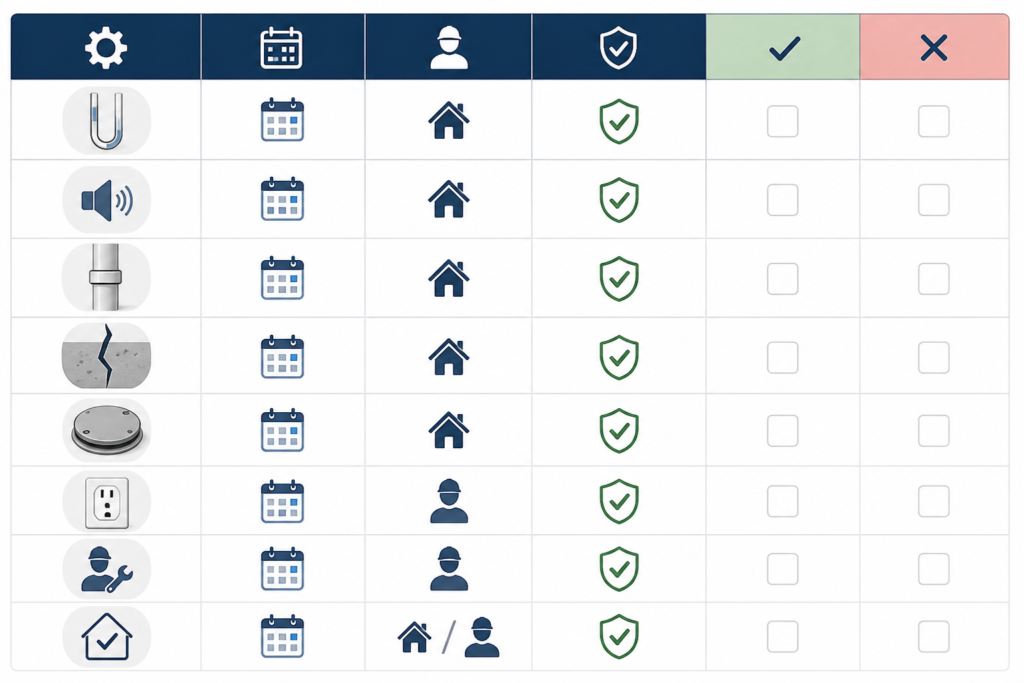
Use this table to track every maintenance task by frequency, responsibility, and pass/fail standard. Boulder County’s government-issued radon system operation and maintenance guidance recommends a documented monitoring plan — this checklist fulfills that requirement for single-family homeowners.
| Task | Frequency | DIY or Pro | Pass Criteria |
|---|---|---|---|
| U-tube manometer / pressure indicator check | Monthly | DIY | Fluid levels unequal (negative pressure confirmed) |
| Fan noise inspection (listen for grinding/rattling) | Monthly | DIY | Steady, low hum — no irregular sounds |
| PVC pipe and joint visual inspection | Monthly | DIY | No cracks, separation, or moisture staining |
| Foundation crack and floor-wall joint caulking | Annually | DIY | All gaps sealed; no visible openings |
| Sump pump cover inspection and seal check | Annually | DIY | Cover airtight, no gaps or cracks |
| Electrical connection inspection at fan unit | Annually | Pro recommended | No corrosion, fraying, or tripped outlet |
| Full professional system inspection | Every 2–3 years | Pro (NRPP/NRSB certified) | Written report; all components pass |
| Short- or long-term radon retest | Every 2 years | DIY or Pro | Result below 4 pCi/L (EPA action level) |
Maintain a radon mitigation system by checking the U-tube manometer monthly for uneven fluid levels indicating suction, inspecting pipe seals and caulking annually, and retesting indoor radon levels every two years using an EPA-approved test kit. Replace the fan if readings flatten or radon levels exceed 4 pCi/L.
FAQs
1. Do radon mitigation systems need to be serviced, and how often?
Yes. Radon mitigation systems require monthly DIY pressure checks, annual seal and caulking inspections, and a professional inspection every two to three years. Skipping service allows gradual failures to go undetected until radon levels rise above the EPA’s 4 pCi/L action level.
2. How do you know if your radon mitigation system is working properly?
Check the U-tube manometer or visual pressure indicator monthly. Uneven fluid levels confirm the fan is generating negative pressure beneath the slab. The only way to verify actual radon concentration is to conduct a short-term or long-term radon test every two years.
3. How much does radon mitigation system maintenance cost per year?
Most homeowners spend $25–$75 per year on DIY test kits and sealant materials. A professional inspection adds $100–$200 every two to three years. Fan replacement, when needed, costs $200–$350 in parts and labor per EPA guidance.
4. What is the lifespan of a radon mitigation system fan?
Radon fan motors typically last 5 to 10 years. PVC piping lasts 20 years or more under normal conditions. Replace the fan when the manometer reads flat, when the fan makes grinding noises, or when a retest shows radon above 4 pCi/L despite apparent operation.
5. Can I maintain my radon mitigation system myself, or do I need a professional?
Homeowners can handle monthly manometer checks, pipe visual inspections, and annual caulking themselves. Electrical inspections, full system evaluations, and fan replacements should be performed by an NRPP- or NRSB-certified radon mitigation contractor to ensure safety and system integrity.
6. What does a U-tube manometer reading tell you about system performance?
A U-tube manometer measures the negative pressure (vacuum) the radon fan creates beneath your foundation slab. Uneven fluid levels mean the fan is working. Equal fluid levels on both sides mean the fan has lost suction and likely failed, requiring immediate professional attention.
7. How often should I retest radon levels after installing a mitigation system?
The EPA recommends retesting every two years. Use a short-term kit (2–7 days) for a quick check or a long-term kit (90+ days) for a more accurate average. Retesting is the only method that directly confirms whether your system is keeping radon below 4 pCi/L.