
Air Purifiers and Radon Gas remain a major concern for homeowners because radon exposure often develops silently inside enclosed spaces. Many people purchase air purification systems expecting complete protection. However, not every device removes radioactive particles effectively. Therefore, understanding how radon behaves indoors becomes crucial before investing in filtration systems.
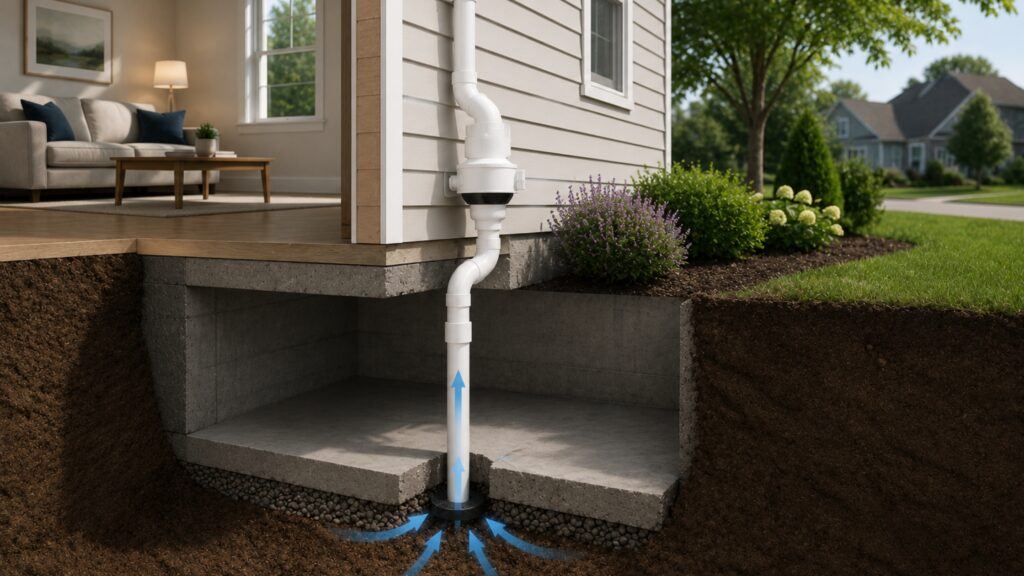
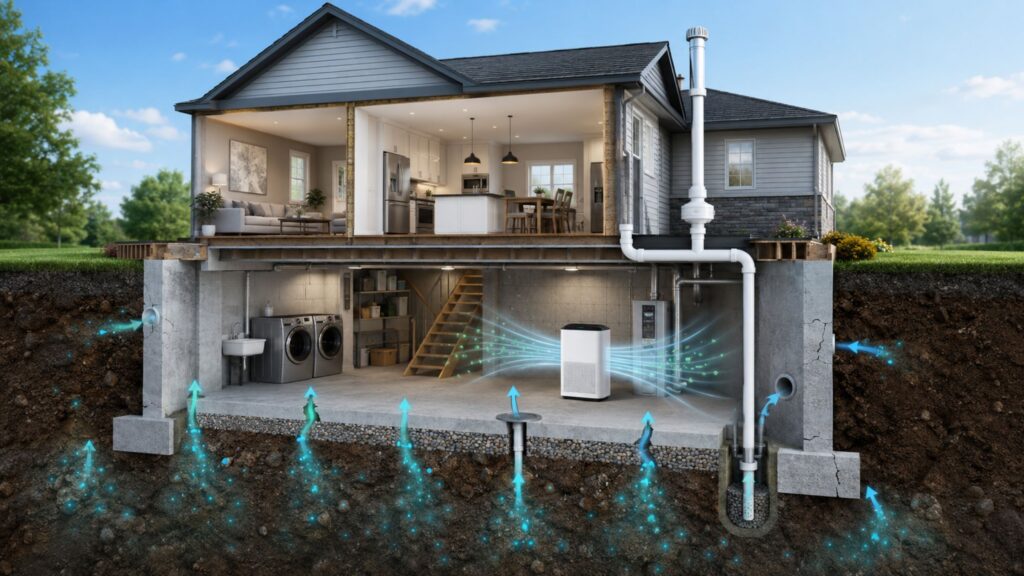
Radon enters through foundation cracks, crawlspaces, sump openings, and basement gaps. Inside, it breaks into radioactive radon progeny that attach to dust and circulate indoors, increasing long-term health risks.
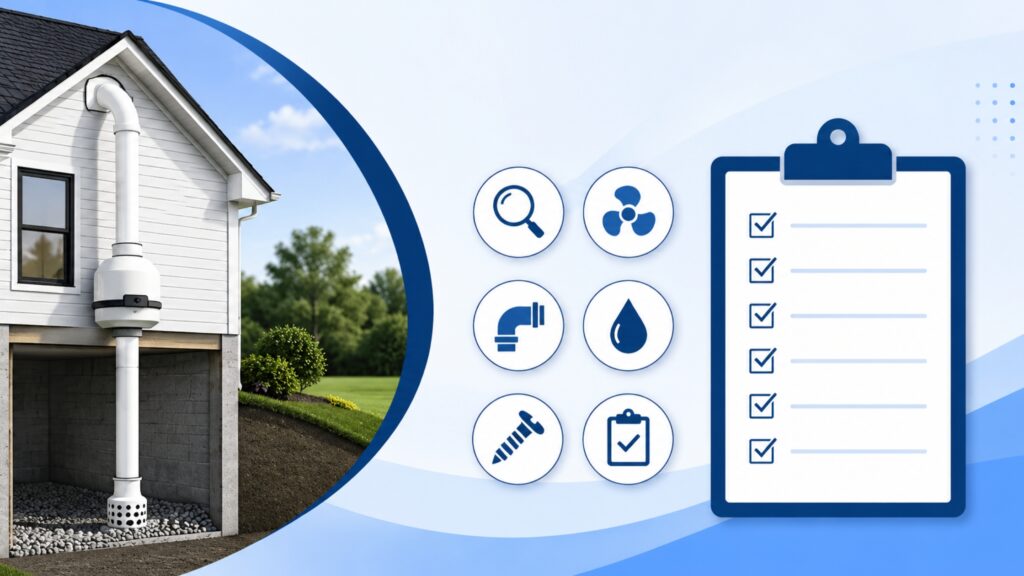
This guide explains how air purifiers work against radon particles, which systems provide better filtration, and why professional mitigation remains the most effective solution.
Radon Defense: Purifiers vs. Gas
Air Purifiers and Radon Gas have a complex relationship because radon is a noble gas, not a standard particulate. While the gas itself is invisible and odorless, it decays into radioactive solids known as radon progeny. These “daughter” particles cling to household dust and smoke, which is where specialized filtration becomes effective.
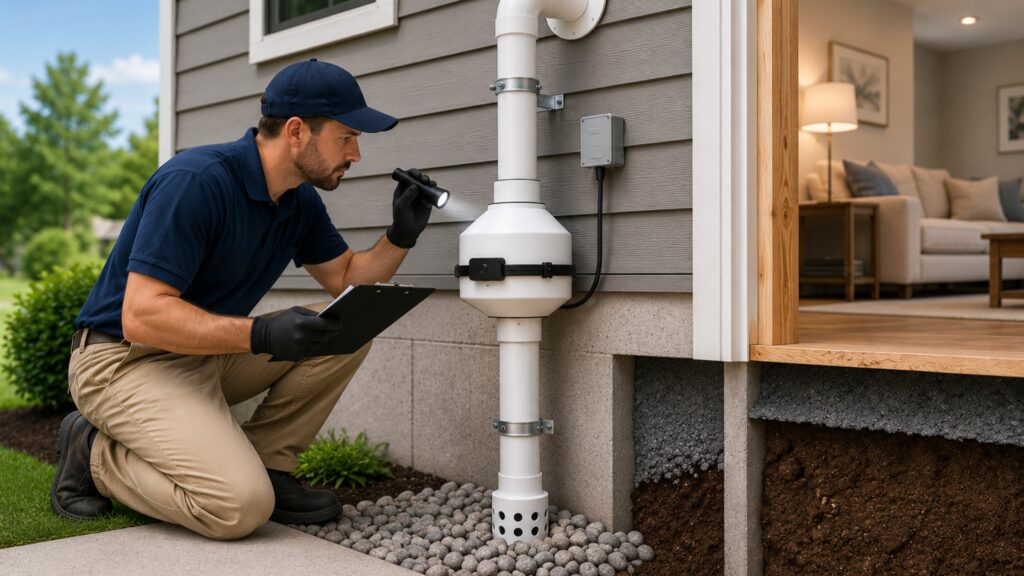
While high-quality air purifiers significantly lower your exposure to these radioactive particles, they cannot physically stop the gas from entering through your foundation. For total protection, purification should be used as a secondary defense alongside professional soil mitigation systems.
How Radon Enters Indoor Spaces
Radon enters buildings through ground pressure differences, with basements and crawlspaces facing the highest risk because they sit closest to the soil.
Common entry points include:
- Foundation cracks.
- Construction joints.
- Utility pipe openings.
- Floor drains.
- Sump pits.
- Crawlspace surfaces.
Rising indoor air pulls radon upward, while poor ventilation traps it, making regular testing essential even in newer homes. Learn more about Fortify Radon-Resistant New Construction.
The Role of Radon Progeny Filters
Radon gas can move through most standard filters because it is not a typical airborne particle. However, when radon decays, it creates radioactive particles that attach to dust and other indoor contaminants.
A. What These Filters Actually Do
Radon Progeny Filters help capture those contaminated particles before people breathe them in. Therefore, they support cleaner indoor air and reduce exposure to radioactive dust.
B. Best Filtration Features to Look For
For stronger performance, choose systems with:
- True HEPA filtration.
- Multi-stage filtration.
- Activated carbon layers.
- Particle monitoring technology.
C. Why HEPA Filtration Helps
HEPA-based systems capture very small particles, including dust, smoke, allergens, pet dander, and fine pollution. As a result, homeowners may notice fresher air and fewer airborne contaminants.
Although these filters help, they cannot stop new radon gas from entering the building. Therefore, professional radon mitigation remains the safest long-term solution.
Basement Radon Purifiers and Their Effectiveness
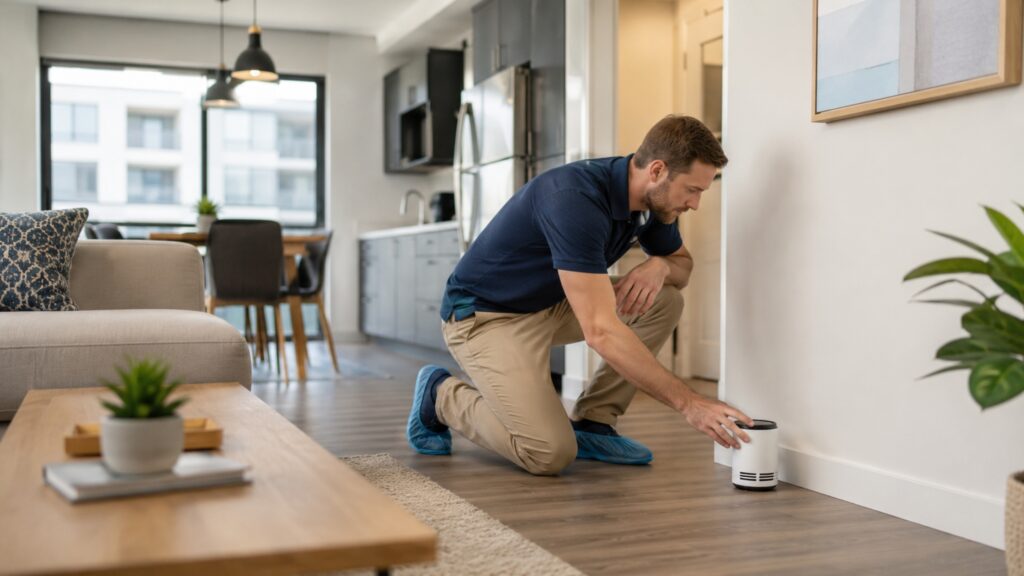
Basements trap the most radon; Basement Radon Purifiers combat this by filtering radioactive particles and improving lower-level air circulation.
Modern Basement Radon Purifiers often include:
- High-capacity HEPA filters.
- Continuous air circulation.
- Smart air quality monitoring.
- Activated carbon filtration.
- Quiet operation systems.
These features improve indoor comfort while helping manage airborne pollutants.
Limitations of Basement Radon Purifiers
While Basement Radon Purifiers clean circulating air, they cannot stop gas intrusion. Use them as supplemental protection alongside professional sub-slab depressurization, the most effective method for diverting radon outdoors.
Choosing the Right Air Purification System
Selecting the right purification system requires understanding filtration strength, room coverage, and airflow efficiency. Therefore, homeowners should compare key features carefully before choosing a unit.
1. HEPA Filtration
True HEPA filters capture extremely small particles, including radioactive dust attached to radon progeny. Therefore, they support cleaner indoor air and improve filtration performance in high-risk spaces.
2. Air Exchange Rate
Maintaining a higher air exchange rate ensures indoor air cycles through the purifier more frequently, allowing the system to rapidly capture radioactive particles while sustaining superior circulation across every room.
3. Activated Carbon Layers
Activated carbon layers help reduce odors, smoke, and chemical pollutants. Although they cannot remove radon gas completely, they improve overall indoor air freshness and comfort significantly.
4. Smart Monitoring Features
Integrated smart monitoring features track airborne particle levels in real time, empowering homeowners to instantly analyze indoor conditions and optimize purifier settings the moment air quality or radon progeny levels shift.
5. Quiet Operation
Quiet operation matters because basement systems often run continuously. A low-noise purifier improves comfort, encourages consistent use, and supports long-term indoor air quality management.
The right purifier improves air quality, but professional testing and mitigation remain essential for reliable radon protection.
Radon Testing: The First Safety Step
Before choosing any air solution, homeowners need accurate radon test results. Since radon has no smell, color, or warning sign, testing gives the clearest picture of indoor safety.
- Test these high-risk areas first: Test basements, crawlspaces, ground floors, renovated areas, and older foundations first.
- Choose Long-Term Testing: Choose long-term testing because radon changes with weather, airflow, and seasons.
- Retest after mitigation: this confirms whether the installed system reduced radon levels effectively.
Radon testing gives homeowners the proof they need before and after taking action. Therefore, regular testing, proper mitigation, and supportive filtration create a safer indoor environment.
Combining Mitigation and Filtration for Better Protection
The safest approach combines mitigation, Basement Radon Purifiers, and filtration to block radon entry and reduce airborne particles.
This combined strategy provides several benefits:
- Lower radon concentrations.
- Cleaner indoor air.
- Better respiratory comfort.
- Reduced airborne contaminants.
- Improved long-term indoor safety.
Consequently, homeowners achieve stronger protection than using either solution independently.
Conclusion
Air Purifiers and Radon Gas require careful understanding because filtration alone cannot eliminate indoor radon exposure completely. Although Radon Progeny Filters and Basement Radon Purifiers help reduce airborne radioactive particles, professional mitigation remains the most reliable long-term solution.
Regular testing, proper ventilation, and advanced filtration systems work together to create healthier indoor environments. Therefore, homeowners should prioritize complete radon management strategies rather than depending solely on purification devices.For more insights into safer indoor environments and smart financial planning resources, visit DSM Radon.