
Radon exposure causes serious indoor air concerns across the United States. According to the United States Environmental Protection Agency, radon remains one of the leading causes of lung cancer among non-smokers. Therefore, homeowners and builders now prioritize smarter construction methods that reduce long-term health risks before occupants move in.
Radon-Resistant New Construction helps prevent harmful gas from entering living spaces through foundation openings and soil contact areas. Moreover, these systems improve Indoor Air Quality while supporting safer and healthier homes. This guide explains how these systems work, why they matter, and which components builders commonly install during modern construction projects.
The Role of Radon-Resistant Construction in Modern Building Standards
Radon forms naturally from decaying uranium, becoming hazardous when trapped indoors. Because it is invisible and odorless, residents often remain unaware of the danger until testing occurs. Modern, energy-efficient homes are more airtight, which can unintentionally increase gas concentrations. Proactive construction strategies effectively reduce exposure risks before they become costly issues. Integrating preventative systems during the initial build is more economical than retrofitting, offering superior long-term value and immediate protection compared to post-occupancy repairs.
Principles and Components of Radon-Resistant New Construction
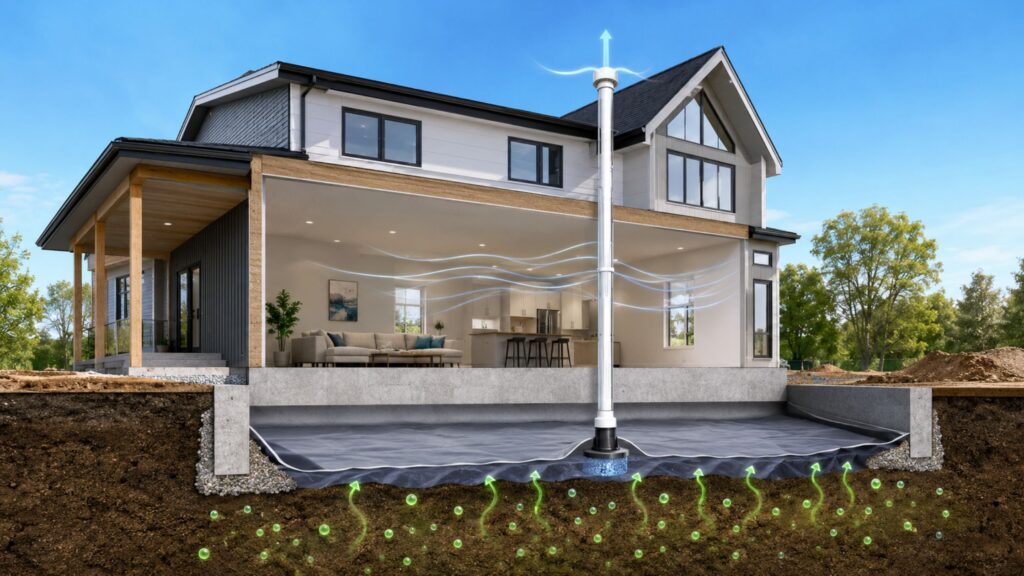
Radon-Resistant New Construction (RRNC) employs techniques to redirect soil gases outside. Key components include gas-permeable layers and durable vapor barriers installed beneath the foundation. Builders seal cracks and install vent pipes to create safe pathways for radon to exit above the roofline. By including electrical junction boxes, contractors allow for easy conversion from passive to active systems if future testing indicates the need for mechanical ventilation.
Passive Radon System Components
A Passive Radon System works without mechanical fans. Instead, it uses natural air pressure differences to move radon gas upward through vent piping.
Most passive systems contain:
- Gas-permeable gravel beneath the slab.
- Polyethylene Vapor Barrier materials.
- Sealed sump pits and foundation openings.
- Vertical vent pipes extending above the roof.
Passive systems provide cost-effective, continuous protection, but homeowners should perform post-construction testing to verify safe levels or determine if an active mitigation upgrade is necessary.
Upgrading Passive to Active Systems
While a passive radon system effectively reduces soil gas movement using natural pressure, certain homes require enhanced airflow control due to high soil concentrations. Consequently, homeowners must conduct post-construction testing to verify indoor safety. If levels remain elevated, a professional can easily install a specialized fan, converting the existing setup into a more powerful active radon mitigation solution to ensure compliance.
Strengthening the Building Envelope Against Soil Hazards
Vapor barriers serve as a critical line of defense in modern construction, acting as a physical shield between the soil and the living space. Here is how these materials improve a home’s overall protection:
- Reinforcing the Gas Barrier: Blocks radon movement and directs soil gases toward proper ventilation systems.
- Preventing Moisture-Related Decay: Stops ground moisture and protects the structure from rot, mold, and humidity damage.
- Ensuring an Airtight Seal: Creates a continuous foundation shield that improves airtightness and overall system performance.
- Securing Long-Term Durability: Prevents punctures and keeps the building envelope protected from sub-slab hazards.
Together, these barriers strengthen radon protection, moisture control, and long-term home safety when installed with professional care.
Radon Mitigation and Indoor Air Quality Benefits
Radon Mitigation systems play a key role in creating safer indoor environments. They lower harmful radon gas levels, improve Indoor Air Quality, and support healthier breathing conditions for families.
1. Reduces Long-Term Radon Exposure
Radon can enter homes through cracks, slab openings, and soil contact areas. Therefore, a proper mitigation system redirects this gas outside before it collects indoors and affects long-term air safety.
2. Improves Household Safety
Many homeowners notice dust or mold first. However, radon remains invisible and odorless, so professional testing and mitigation help families address hidden risks before exposure becomes a bigger concern.
3. Supports Healthier Indoor Air Quality
Cleaner indoor air creates a safer, more comfortable living space by minimizing soil gas accumulation. Additionally, lower radon levels reduce hidden air quality risks that could negatively impact long-term respiratory health.
4. Increases Property Confidence
Homes with pre-installed radon systems can give buyers stronger peace of mind. Moreover, proactive safety features may build trust during inspections, resale discussions, and long-term property planning.
5. Meets Local Building Recommendations
Many areas encourage radon-resistant construction because soil conditions can vary by region. As a result, mitigation planning helps homeowners stay prepared, compliant, and better protected from future concerns.
Overall, Radon Mitigation improves Indoor Air Quality, reduces hidden risks, and creates a safer home environment for long-term protection. Learn more about Radon Testing Services.
Factors Influencing Post-Construction Radon Levels
Even passive systems may need upgrades, so regular radon testing remains essential.
Several conditions may increase radon risks:
- High regional radon zones may naturally release more gas into homes.
- Finished basements can trap radon when airflow and ventilation remain limited.
- Poor sub-slab ventilation may allow radon gas to collect beneath the foundation.
- Cracked foundations create direct entry points for radon from the surrounding soil.
- Improperly sealed crawl spaces can increase radon movement into indoor living areas.
Professional upgrades can reduce elevated radon while preserving the home’s original design.
The Vital Advantage of Professional Mitigation Solutions
Professional radon installation ensures superior system design, impermeable sealing, rigorous testing, and uncompromising long-term protection.
- Expert System Design: Specialists possess mastery over complex soil conditions, diverse foundation types, and critical local radon risks.
- Precision Vent Placement: Contractors execute flawless pipe installation to channel hazardous soil gases securely outside the structure.
- Fortified Sealing: Professionals achieve impenetrable barriers by sealing every crack and opening to thwart radon entry.
- Definitive Post-Installation Testing: Exhaustive testing provides conclusive proof that the system performs optimally after installation.
Overall, professional installation grants homeowners pristine indoor air and unrivaled long-term radon protection.
Conclusion
Radon exposure creates serious long-term health concerns when homeowners ignore early prevention methods. Therefore, Radon-Resistant New Construction offers a practical and cost-effective solution during the building phase. Features like a Passive Radon System, proper Vapor Barrier installation, and professional Radon Mitigation planning help create safer living environments while improving Indoor Air Quality.DSM Radon continues helping homeowners build healthier spaces through reliable radon solutions, testing services, and professional mitigation expertise designed for long-term protection.