
Radon levels can rise without warning because weather changes the pressure around your home and affects how soil gas moves indoors. Weather Effects on Radon matter because this invisible gas can enter through foundation cracks, crawlspaces, sump openings, and basement gaps before spreading into lower living areas. Therefore, homeowners should understand how temperature shifts, storms, soil moisture, wind, and ventilation patterns influence indoor radon readings. In addition, seasonal changes can make levels higher at certain times of the year. This guide explains the key weather factors, why radon levels fluctuate, and when professional testing becomes the safest next step.
How Weather Drives Radon Into Your Home
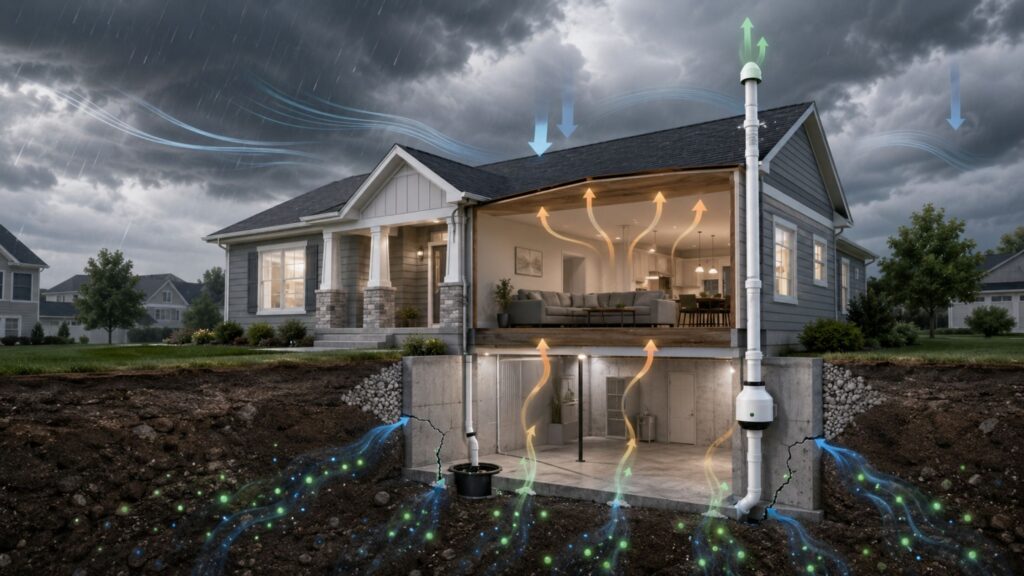
Radon develops naturally when uranium breaks down in underground soil, rock, and groundwater. Because every home has direct contact with the ground, this gas can move upward through small openings in the foundation, basement floor, crawlspace, sump pit, and utility entry points. However, weather conditions often control how quickly radon enters the home.
When outdoor pressure, temperature, wind, and soil moisture change, the pressure around the foundation also changes. As a result, the home may pull more soil gas indoors, especially through lower-level gaps and cracks. Since Iowa has a higher radon risk than many other areas, Des Moines homeowners should not wait for visible warning signs. Regular radon testing remains the safest way to confirm indoor levels and decide whether mitigation is necessary.
The Pressure Paradox: How Your Home “Breathes” in Radon
When outdoor conditions shift, your home’s lowest levels can act like a vacuum. Cold weather, wind, and pressure drops pull odorless soil gas through foundation cracks, making testing essential.
1. Stack Effect
As warm air moves upward through the upper levels of the home, it creates suction near the foundation. This stack effect draws replacement air—and radon—from the soil, often becoming strongest in winter when indoor and outdoor temperature differences are highest.
2. Seasonal Variation
Radon levels can change throughout the year. Winter increases often happen because windows stay closed and heating systems run longer, while summer air conditioning can also trap radon indoors. Long-term testing gives the most reliable average across changing seasons.
3. Barometric Pressure
When barometric pressure drops before storms, soil gases can expand and move more easily. This can cause short-term radon spikes as gas enters the lower-pressure environment inside your home.
4. Relative Humidity
Humidity does not produce radon, but damp conditions often occur with rain, poor airflow, and moisture problems. Crawlspace moisture can point to broader indoor air quality concerns, making proper sealing and professional drainage improvements important.
Because the weather constantly shifts radon levels, professional testing is the only way to ensure your indoor air remains safe year-round.

Why Iowa’s Climate Creates a “Perfect Storm” for Radon
Iowa is geologically predisposed to high radon levels due to the glacial till left behind thousands of years ago. When you combine this soil composition with our extreme Midwestern weather cycles, the risk to Des Moines area homeowners increases significantly.
The dramatic swing from humid, rainy springs to sub-zero winters means your home’s foundation is under constant stress. During a frozen Iowa winter, the “frost cap” prevents radon from escaping the ground naturally. This forces the gas to travel horizontally until it finds the warm, unfrozen earth beneath your basement—effectively funneling high concentrations of radon directly into your living space. This unique combination of geology and climate is why local expertise in mitigation is so critical for Iowa residents.
Timing is Everything: When to Test Your Home for Radon
Radon testing becomes important whenever home conditions change. Since radon levels can shift over time, homeowners should test at key moments:
- Before buying a home
- After finishing a basement * After HVAC changes
- After crawlspace sealing
- After mitigation
- During normal living conditions
- When levels seem elevated
Regular testing helps homeowners catch radon changes early and take action before indoor air quality becomes a concern.
Mastering the Pressure: How Professional Mitigation Stabilizes Radon Levels
Professional mitigation systems proactively manage the pressure imbalances caused by Iowa’s shifting weather. By shifting the “suction” from your living space to a mechanical system, these solutions intercept radon gas before it ever crosses your foundation. This creates a consistent, protective barrier regardless of outdoor temperature or barometric changes.
Precision Engineering for Year-Round Protection
Most professional mitigation systems use active soil depressurization to draw radon from beneath concrete slabs, basement floors, or crawlspaces before it enters the home. Then, the system vents that gas safely above the roofline, where it can disperse outdoors. Installers also seal key foundation openings, sump areas, cracks, and crawlspace gaps to improve suction and reduce indoor air loss. As a result, the system creates steady pressure control and limits radon movement. This approach also prevents the stack effect from pulling harmful soil gas indoors during Iowa’s changing weather, seasonal temperature shifts, storms, and pressure changes. Learn more about Fortify Radon-Resistant New Construction.
Proactive Strategies: Neutralizing Weather-Driven Radon Spikes
The weather can change radon levels quickly. However, homeowners can reduce risk by combining regular testing, simple home maintenance, and professional support.
- Test Lower Areas: Check basements, crawlspaces, and lower rooms to monitor seasonal radon changes.
- Keep Test Records: Compare past and current results to identify repeated weather-related radon patterns.
- Seal Small Gaps: Close visible cracks, sump openings, and utility gaps to reduce unwanted radon entry into your home.
- Maintain Drainage: Move rainwater away from the foundation to reduce soil pressure changes and limit radon movement indoors.
- Control Soil Moisture: Keep the ground near your home balanced, drained, and properly graded.
Regular testing and proper mitigation help homeowners manage radon risk, even when outdoor weather conditions continue changing throughout the year.
Conclusion
Radon levels change because homes interact constantly with outdoor conditions. Temperature shifts, Stack Effect, Seasonal Variation, Barometric Pressure, and Relative Humidity can all influence how soil gas enters and accumulates indoors. However, homeowners can manage that risk with proper testing, smart maintenance, and professional mitigation.
For reliable radon testing, mitigation, waterborne radon treatment, and air purification support in the Des Moines area, DSM Radon gives homeowners a practical path toward safer indoor air and lasting peace of mind.